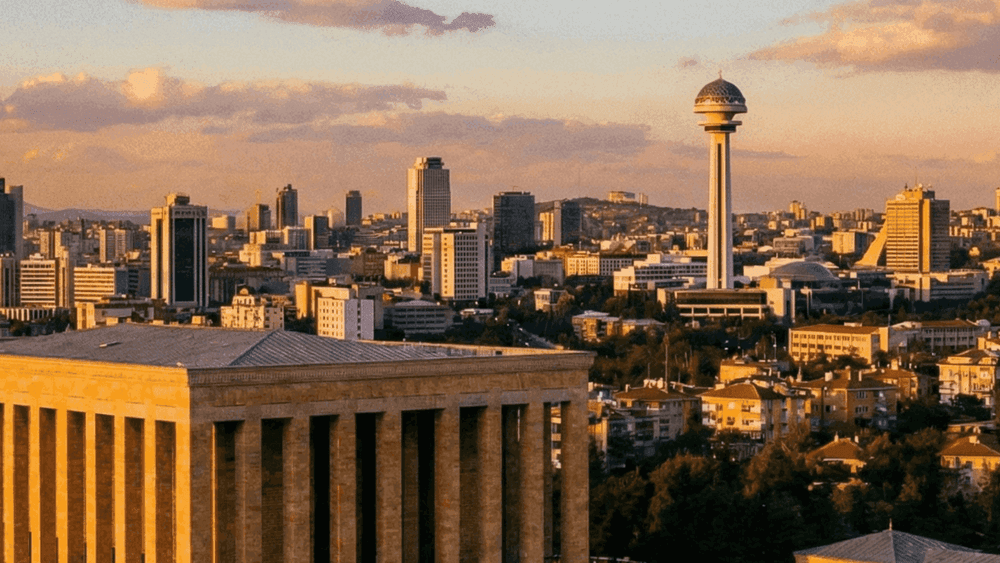
Best Things to Do in Ankara: Anitkabir, the Castle and the Civilizations Museum
A complete guide planning Ankara with realistic distances: Anitkabir, Ankara Castle, the Museum of Anatolian Civilizations, Gordion and Beypazari.
Haritada gezilecek yerler
20 noktaNumaralar yazıdaki sıralamayla eşleşir. Pin’e dokunup yol tarifi alabilirsiniz.
Best Things to Do in Ankara: Anitkabir, the Castle and the Civilizations Museum
Ankara has a reputation problem. Most itineraries treat it as the place you change trains between Istanbul and Cappadocia, a government town with nothing to look at. That reputation survives because Ankara does nothing to fight it. The city does not advertise itself, its sights do not announce themselves from the road, and nobody hands you a skyline.
What is actually here, within walking distance of each other at the foot of one hill: the most complete surviving copy of the Roman Emperor Augustus's political will, carved into a wall you can stand in front of; the best archaeology museum in Turkey; and a thirteenth-century mosque with a forest of wooden columns inside it that UNESCO added to the World Heritage List in 2023. Most visitors walk past the last one without knowing it exists.
This guide suits travellers who care about archaeology, Roman remains, or the founding of the Turkish Republic. If you want beaches, nightlife, or a beautiful city, Ankara will not win you over, and pretending otherwise wastes your time. What it offers is density: a week's worth of layers piled onto a few square kilometres.
Distances below are straight-line from Kizilay. Traffic makes the real journey longer. The numbers match the map pins exactly.
Quick answer
- **The three that matter:** Museum of Anatolian Civilizations, Anitkabir, Aslanhane Mosque.
- **First visit:** Day 1 the castle hill and its museums, Day 2 Anitkabir and Ulus.
- **Base yourself:** Kizilay or Ulus. Both sit on the metro and put the castle within reach.
- **Without a car:** Fine for the centre. Gordion, Beypazari and Lake Eymir need a car or a tour.
- **The weak point:** Ankara is not a good-looking city. It is an interesting one. Calibrate accordingly.
- **How long:** Two full days for the centre. Three if you add Gordion or Beypazari.
The castle hill
Almost everything worth your time in central Ankara sits within a few hundred metres of the castle walls. The five stops below connect on foot and fill one unhurried day.
1. Anitkabir
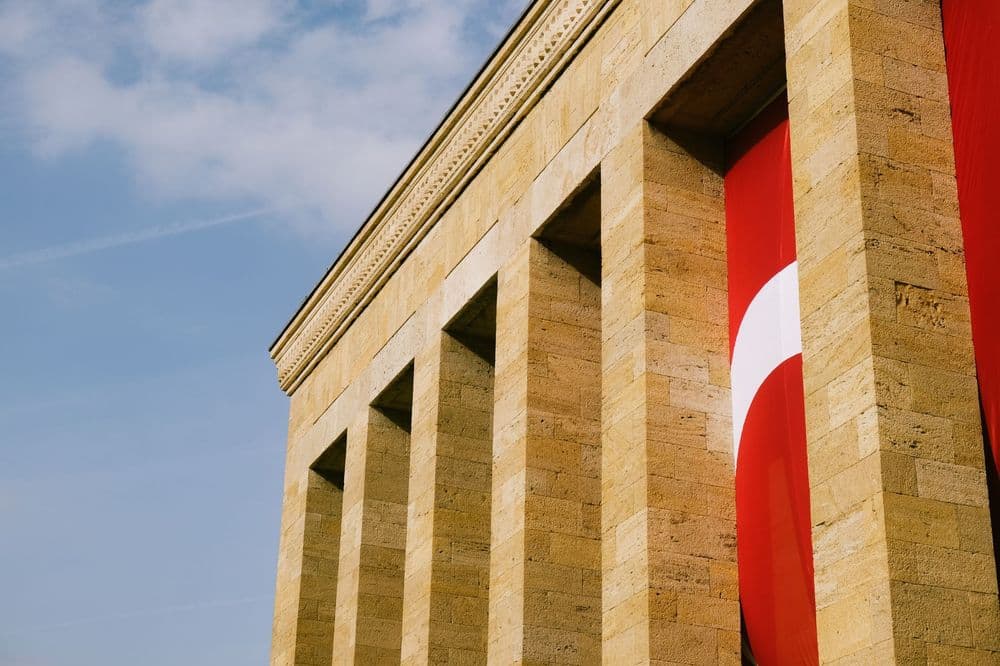
Ataturk's mausoleum, and the most visited place in the city. Emin Onat and Orhan Arda designed it, construction ran from 1944 to 1953, and the scale only registers once you are inside the gates. You enter along a stone avenue lined with two rows of lion statues, which opens onto a vast ceremonial plaza. At the far end, the Hall of Honour holds an enormous sarcophagus. The actual grave lies in a chamber beneath it.
The part most visitors miss sits under the plaza: the War of Independence and Ataturk museum. Panoramic battle paintings, personal effects, and a fuller account of the man than the ceremonial half upstairs provides. It is also usually emptier. Give the site ninety minutes minimum.
The complex is open ground with no shade. Summer midday is punishing and winter wind cuts across the plaza unopposed. Go early.
- **Getting there:** Metro from Kizilay to Tandogan; 1.5 km from the centre.
- **Know before:** Entry is free. Respectful dress and quiet are expected. The site can close for state ceremonies, so verify officially.
2. Museum of Anatolian Civilizations
If you came to Ankara for exactly one thing, this would be the thing. Housed in a restored Ottoman bedesten below the castle, it lays out twelve thousand years of Anatolia in chronological order: wall paintings from Catalhoyuk, Hittite reliefs, Phrygian woodwork, Urartian metal. It won European Museum of the Year in 1997 and has not coasted on it.
The point here is sequence, not speed. The halls follow the periods deliberately, so skipping around breaks the argument the museum is making. Some of the finest Gordion material sits in these rooms, which means seeing this museum first makes an eventual trip to the site itself land properly.
Two hours minimum, three if the subject grabs you. It is the best call during midday heat or rain, being fully indoors.
- **Getting there:** Uphill on foot from Ulus; 2.2 km from the centre.
- **Know before:** Paid entry, Museum Pass accepted. Labels are in Turkish and English. Weekend afternoons bring school groups and coaches; the first hour after opening is far calmer.
3. Ankara Castle
A hilltop fortress built over ancient Ancyra, carrying Byzantine and Seljuk work. The interesting thing about the walls is not when they went up but what they went up with. Much of the stone was stripped from Roman buildings and rebuilt here, so you will find column capitals sitting upside down in the masonry and fragments of Latin inscription mortared in at random angles. Go looking for them.
Inside are narrow lanes, restored mansions, cafes and spice sellers. The view from the ramparts takes in the whole Ankara plain.
Two honest warnings. The railings are not uniformly trustworthy and the stone underfoot is worn slick, so wear something with grip. And while parts have been tidied up for visitors, other lanes remain neglected; people still live here. This is a working neighbourhood, not an open-air museum.
- **Getting there:** Uphill on foot from the Civilizations Museum (2); 2.7 km from the centre.
- **Know before:** Free entry. Sunset is the hour. Cafes charge for the view, so read the menu before you sit.
4. Aslanhane (Ahi Serefettin) Mosque
The most important building in Ankara that nobody tells you about. Dated 1289-90, it looks from outside like a plain stone box on a sloping lane. Step inside and you are standing under a flat wooden ceiling carried by twenty-four wooden columns. The technique is called wooden hypostyle, and very few examples at this scale survive anywhere.
This mosque is one component of "Wooden Hypostyle Mosques of Medieval Anatolia," which UNESCO inscribed on the World Heritage List in 2023. That is a full inscription, not a tentative listing: dossier 1694, criteria (ii) and (iv), decision 45COM 8B.46. Aslanhane is component 1694-002. The other four are in Afyonkarahisar, Sivrihisar, Kastamonu and Beysehir.
The carved walnut minbar and the stucco mihrab are, if anything, better than the columns. Remove your shoes and keep your voice down.
- **Getting there:** Downhill from the Civilizations Museum (2) toward Samanpazari; 2.2 km from the centre.
- **Know before:** Active place of worship, free entry. Avoid prayer times. It can close for restoration, so verify before going.
5. Erimtan Archaeology and Arts Museum
A private museum occupying two restored mansions inside the castle walls, built around Yusuf Erimtan's collection and weighted heavily toward Roman glass, jewellery and coins. Next door to the Civilizations Museum it looks minor, and that is exactly why it works: no crowds, human-scale rooms, and you are done in an hour.
The building matches the collection. Courtyard, stone walls and contemporary museum design sit together without fighting. Chamber music recitals happen here from time to time.
The honest question is appetite. Visiting this straight after the Civilizations Museum means two archaeology museums in one afternoon, which is a lot. If you are saturated, skip it without guilt. If you are not, it is the second-best stop on the hill, and the glass collection in particular is hard to match elsewhere in Turkey.
- **Getting there:** Immediately beside the Civilizations Museum (2); 2.3 km from the centre.
- **Know before:** Paid entry. Days and hours shift, so verify officially.
6. Cengelhan Rahmi M. Koc Museum
An industry and transport museum inside an Ottoman han built in 1522-23 for Damat Rustem Pasha. Steam engines, early cars, maritime instruments and toys, which after a morning of Hittites jolts a different part of your brain. The stone-arched courtyard is the best surviving piece of the han.
This is the strongest stop on the castle hill if you have children with you. Adults do fine too, but be honest: if machines leave you cold, half an hour finishes it.
The han hides in the lanes below the castle and signage is thin, so expect to hunt for the door.
- **Getting there:** A few steps below Erimtan (5); 2.2 km from the centre.
- **Know before:** Paid entry. It may close one day a week, so verify first.
Ulus: Rome and the early Republic
West of the castle, Ulus holds both the Roman remains of Ancyra and the 1920s buildings where the Republic was assembled. The district is worn and busy, and it is not somewhere to wander late at night.
7. Temple of Augustus
The remains of a temple dedicated to the Emperor Augustus. The stones are not the point. The writing on them is. Carved into these walls is the most complete known copy of the Res Gestae, Augustus's own account of his achievements, Latin on one wall and Greek on another. Historians call it the Monumentum Ancyranum, and it exists in this condition nowhere else.
Adjust your expectations. The temple is not standing; what remains is essentially two large wall sections. From a few metres away the inscription reads as surface texture, and you will not register it as writing until you walk up close. This is how most visitors miss it on their way to the mosque.
A second-century BC Phrygian temple stood on this ground before the Romans, and the Haci Bayram Mosque was later built right against it. Three faiths, one plot.
- **Getting there:** In Ulus, directly behind the Haci Bayram courtyard; 2.8 km from the centre.
- **Know before:** Free entry. Barriers may keep you further from the inscription than you would like.
8. Haci Bayram Mosque
A fifteenth-century mosque and, for the people of Ankara, the most significant place in the city. The tomb of Haci Bayram Veli adjoins it, and on weekends and religious days the queue outside the tomb runs long. The building itself is modest; architecture is not why anyone comes.
What makes this worth your attention is the geography. An Islamic complex is built hard against the wall of a pagan Roman temple. Two thousand years of religious building share one courtyard, and the placement was a deliberate claim on a sacred site rather than an accident of town planning.
The square around it is full of vendors selling souvenirs and regional produce. Prices are not fixed, so ask. It is also one of the busiest public spaces in the city, thick with pigeons and simit sellers, and sitting for twenty minutes tells you something no museum will.
- **Getting there:** On foot from Ulus square; 2.8 km from the centre.
- **Know before:** Active place of worship, free entry. Very crowded on Fridays. Women need a headscarf.
9. Roman Baths
A bath complex from the reign of Caracalla, sitting open to the sky beside Cankiri Avenue. The superstructure is gone. What survives is the floor, and the floor is the reason to come: thousands of small brick pillars stand in rows across it. This is a hypocaust, the system that pushed hot air between those pillars to heat the room above. Underfloor heating, eighteen centuries early.
Be aware that the columns and sarcophagi arranged around the palaestra were brought here later. That layout is decorative rather than archaeological; these objects were not found in this arrangement.
Half an hour covers it. There is no shade at all, and picking across a bare stone field at midday in July is no fun. Set expectations too: this is a mid-sized urban ruin, not Ephesus. Worth it if you are already in Ulus. Not worth a special journey.
- **Getting there:** North from Ulus on Cankiri Avenue; 3 km from the centre.
- **Know before:** Paid entry, Museum Pass accepted. The Column of Julian is a short walk away.
10. First Grand National Assembly (War of Independence Museum)
The building where the first assembly convened on 23 April 1920. The chamber survives as it was: wooden benches, a rostrum, and a stove in the middle of the room. What gets people is how small it is. A state was founded in a space you could cross in a few strides, and knowing that is where the effect comes from.
The remaining rooms hold documents, photographs and objects from the independence years. The display is plain and much of the text is Turkish only.
Construction started in 1915, intended as a club building for the Committee of Union and Progress. The assembly took it over before it was finished and the work had to be rushed for that first session, which explains the plainness of the room.
- **Getting there:** Just south of Ulus square; 2.5 km from the centre.
- **Know before:** Paid entry, inexpensive. The Republic Museum in the second assembly building nearby is a separate site; do not confuse the two.
11. Genclik Park
A large public park west of Ulus, created by draining twenty-eight hectares of marshland, with construction beginning in 1936. Beyond being the Republic's first major piece of public greenery it makes no claim on tourists. There is a lake, there are trees, there is a funfair.
There is also a part of the story that the plaques leave out. Some of the construction work was done by non-Muslim men taken from their homes by gendarmes in 1941 and conscripted. The Republic's showcase park carries the mark of the same period's minority policies.
Come here to see the city rather than to see a sight. At weekends it fills with Ankara families, tea gardens and picnickers, and if you want to know what the place is actually like, this tells you more than Kugulu Park will.
- **Getting there:** On foot, west of Ulus; 2 km from the centre.
- **Know before:** Free. The funfair is charged separately. Upkeep varies and parts are tired. Late afternoon is best.
12. CerModern
A contemporary arts centre converted from the old railway maintenance workshops. The industrial structure was kept: high ceilings, exposed steel trusses, long halls. The building alone justifies a look.
But let us be straight about this one. Its value depends entirely on what happens to be hanging when you arrive. Catch a good show and it is the best cultural stop in Ankara. Turn up between exhibitions and you are looking at a large empty shed. Check the programme first or you will have walked out of your way for nothing.
There is a workshop and events programme alongside the galleries, which can help with children. The garden and cafe make a useful break, and it is close enough to Anitkabir to fold into the same day on foot.
- **Getting there:** Northwest on foot from Kizilay; 1.4 km from the centre.
- **Know before:** Pricing varies by exhibition. Verify the calendar officially.
Hamamonu and Kizilay
13. Ethnography Museum
A museum of Turkish folk culture and crafts in a domed marble building. The collection's real strength is Seljuk and Beylik-era woodwork: carved doors, minbars and mihrab fragments. If you have already seen Aslanhane Mosque (4), this is the same tradition brought indoors and set at eye level, and the two stops complete each other.
The building carries a second meaning. Ataturk's body rested here from 1938 until Anitkabir opened in 1953, and the symbolic tomb is still in place.
Arif Hikmet Koyunoglu, one of the Republic's first-generation architects, designed it, and it sits on Namazgah Hill, where Friday prayers were held during the War of Independence. The equestrian statue and broad stair out front are pure period vocabulary.
Small and usually quiet. An hour is plenty.
- **Getting there:** North on foot from Kizilay; 1.5 km from the centre.
- **Know before:** Paid entry, inexpensive. The State Art and Sculpture Museum is next door.
14. Hamamonu
A historic quarter of restored Ankara houses, redone by the municipality. Timber houses with projecting upper storeys, narrow lanes, craft workshops and courtyard cafes. The house where Mehmet Akif Ersoy wrote the Turkish national anthem is open as a museum.
The restoration divides opinion, and you should know that going in. The streets are clean and photogenic, but several houses read as reconstruction rather than surviving fabric, and at weekends the whole quarter tips into feeling like a set.
Even so, this is the only historic fabric in central Ankara you can actually walk through and sit down in. Go in the late afternoon when the cafes are open.
The name comes from the Karacabey Hamam beside it, meaning the front of the bathhouse. Begun in 1427 and finished in 1440, it is still operating, one of only two historic hamams in Ankara that remain in use.
- **Getting there:** East on foot from the Ethnography Museum (13); 1.9 km from the centre.
- **Know before:** The streets are free. Packed at weekends, near empty midweek.
15. Kocatepe Mosque
A very large four-minaret mosque on the hill south of Kizilay, visible from most of the city and the most recognisable thing on its skyline. Built between 1967 and 1987, classical Ottoman in form but modern in every material sense.
The story behind it is better than the building. Vedat Dalokay won the competition with a boldly modern design and foundations were laid, then the project was dropped for being too modern. Husrev Tayla and Fatin Uluengin's classical scheme replaced it, and was criticised in turn for imitating Mimar Sinan. Whether or not you like the result, it says something about how Ankara wants to be seen.
Inside, the scale genuinely works. The dome height and the volume of empty air are the real achievement. A large bazaar and car park sit underneath, still the most-discussed part.
Do not come expecting a historic building. Twenty minutes.
- **Getting there:** South on foot from Kizilay; 0.7 km from the centre.
- **Know before:** Active place of worship, free entry. Avoid prayer times; women need a headscarf.
16. Kugulu Park and Tunali Hilmi
A small park in Kavaklidere and the avenue around it. The park really is small: a pond, some swans, a few benches, ten minutes and you are done. Its fame comes from being where people in Ankara agree to meet, not from its size.
The surroundings are the actual reason to come. Tunali Hilmi Avenue, with its cafes, shops and embassies, is the centre of ordinary middle-class Ankara life, and an hour sitting here tells you something the museums cannot.
Do not look for a historic or natural attraction. This is a rest stop and a place to watch people.
Late afternoon and evening are liveliest. On weekday mornings the avenue belongs mostly to people going to work and is much quieter. If Atakule (17) is next, this sits on the way, so sequence the two together.
- **Getting there:** South from Kizilay by metro or on foot; 2 km from the centre.
- **Know before:** The park is free. Cafes here run above the Ankara average.
17. Atakule
An observation tower on the Cankaya ridge with a shopping centre underneath. From the terrace you get the whole of Ankara, and this is where you finally understand how the city sprawls across its plain, because from street level you never will.
The problem is air. Dust, haze and winter air pollution close the view down often, and going up on a murky day buys you a ticket to look at a grey wall. Check conditions and go on a clear one.
The tower spent years as the city's emblem. The refurbished mall below it is now an ordinary shopping centre and needs none of your time.
Worth knowing: the castle ramparts (3) give you a free view over the historic core, while Atakule is higher and shows you the modern city. Neither substitutes for the other.
- **Getting there:** South from Kugulu Park (16) by bus or car; 3.7 km from the centre.
- **Know before:** The observation terrace is ticketed. Sunset is the hour.
Out of town
18. Lake Eymir
The nearest real escape into nature, a lake run by Middle East Technical University. A walking and cycling track follows the shore, and since the lake runs roughly three kilometres, going round it takes the better part of a morning. Early hours are good for waterbirds.
There is a checkpoint at the entrance and access rules change from season to season, with restrictions sometimes applied to cars. Verify officially before setting out. Weekends fill with locals; midweek is calm.
Set expectations properly. This is not a mountain lake. It is a wetland at the edge of a large city, and the scenery is restful rather than dramatic. The value is that you can be here half an hour after leaving Kizilay.
Nearby Lake Mogan is bigger and more developed. Eymir for quiet, Mogan for tea gardens and crowds. The two sit close enough to combine.
- **Getting there:** South by car from the centre; 10.9 km from the centre.
- **Know before:** Public transport is sparse. Spring and autumn are the best seasons.
19. Gordion (Polatli)
The Phrygian capital near Polatli, in Ankara province, added to the World Heritage List in 2023 (dossier 1669, criterion iii, decision 45COM 8B.22). This was the city of King Midas and of the Gordian Knot that Alexander is said to have cut. The wooden chamber inside the burial mound known as the Midas Tumulus counts among the oldest standing wooden structures anywhere.
Be realistic about what you will see. This is a settlement mound and a tumulus, so do not expect standing walls. Arrive without knowing what you are looking at and you will see a heap of earth. Visit the Civilizations Museum (2) first; once you have seen the finds that came out of this ground, the site means something.
A tunnel takes you inside the tumulus to the burial chamber. It is narrow and airless.
No shade anywhere. Go in the morning.
- **Getting there:** West by car via Polatli; 80 km from the centre.
- **Know before:** Paid entry. The site, the tumulus and the museum are separate points; plan for all three.
20. Beypazari
A town northwest of Ankara known for its restored Ottoman houses: timber mansions with projecting upper floors, steep stone lanes, silversmith workshops and local produce. Beypazari kurusu, a dry baked snack, and the mineral water come from here.
At weekends it fills with tour coaches and the bazaar turns into a souvenir operation. Come midweek and the town is itself, which is better. Some lanes are steep with uneven stone, so bring proper shoes.
The fabric here is genuine in a way Hamamonu's is not. These houses were not rebuilt; most are original. For Ottoman small-town architecture standing where it was built, this is the best address near the capital.
It is 84 km out. A day trip works, but the return drive runs to three hours, so half a day will not do. Add the nearby Inozu Valley and give it a full day. Do not pair it with Gordion; opposite directions.
- **Getting there:** Northwest by car from the centre; 84 km from the centre.
- **Know before:** Buses run but are infrequent; verify times officially.
When to go
Ankara sits high on the Anatolian plateau with a continental climate, and it is worth taking seriously. July and August bring high daytime heat, dry air and very little shade, which makes open sites like Anitkabir, the castle and Gordion genuinely tiring at midday. December through February is cold with snow, and on snow days city transport slows and the road to Gordion gets harder.
The best windows are April to June and September to October. You can walk all day, evenings are cool, and museum queues stay short.
Winter has one real advantage. The museums empty out and you can have Anitkabir almost to yourself. Dress in layers.
How many days
- **1 day:** Museum of Anatolian Civilizations, Aslanhane Mosque, the castle, Anitkabir. Tight but possible.
- **2 days:** Add all of Ulus (Augustus, Haci Bayram, the Roman Baths, the first assembly), plus Hamamonu and the Ethnography Museum.
- **3 days:** A full separate day for Gordion or Beypazari. Not both on one day; they are in opposite directions.
- **4 days:** Erimtan, Cengelhan, CerModern and Lake Eymir.
Getting around
Urban transport is one of Ankara's genuine strengths. Metro lines run through Kizilay to Anitkabir (Tandogan), to Ulus and out to the southern districts, and the bus network is dense. The system runs on a travel card and single tickets are generally not an option, so buy a card at a station.
The metro will not deliver you to the castle or Hamamonu door to door. You finish both on foot, uphill, and it is a real hill.
Esenboga Airport lies about 30 km from the centre and is connected by airport buses. High-speed rail links Ankara to Istanbul, Eskisehir and Konya, and the station is central.
For Gordion, Beypazari and Lake Eymir, a car is much the most practical option. Buses exist but run infrequently and will eat your day. Verify schedules officially.
What to eat
Ankara's food is not showy, but a few things belong to it. Ankara tava, lamb baked with rice and vegetables, is the one serious dish carrying the city's name.
Beypazari kurusu, the dry baked snack from the town, is sold across the city and usually drunk alongside Beypazari mineral water.
The lanes around the castle are thick with spice merchants and nut sellers. This is melon, grape and wheat country, so the range of dried goods is wide. Simit here is made thinner and crisper than the Istanbul version and sold as Ankara simidi.
The tradesmen's canteens in Ulus and Samanpazari are the most honest option in the city. The places with views inside the castle charge for the view; sit there for tea, not for a meal.
Frequently asked questions
**Is Ankara actually worth visiting?** If Anatolian archaeology, Roman remains or the founding of the Republic interest you, yes, and two full days fill easily. If you are after scenery, nightlife or architectural beauty, no. Ankara does not promise those things and does not deliver them.
**What must you see in Ankara?** The Museum of Anatolian Civilizations first, then Anitkabir. Third is Aslanhane Mosque, one of five wooden hypostyle mosques inscribed on the UNESCO World Heritage List in 2023, and most visitors have no idea it is there.
**Why is Aslanhane Mosque on the UNESCO list?** It is the Ankara component (1694-002) of the serial property "Wooden Hypostyle Mosques of Medieval Anatolia," inscribed in 2023 at the 45th session under criteria (ii) and (iv). The other four components are in Afyonkarahisar, Ankara's neighbour Eskisehir at Sivrihisar, Kastamonu's Kasabakoy, and Beysehir in Konya.
**Where is Gordion, and is it in Ankara?** It is in Polatli district, Ankara province, about 80 km from the centre. The Phrygian capital, inscribed on the World Heritage List in 2023 under its own separate dossier (1669). It needs a full day of its own.
**Can you do Ankara without a car?** The centre, yes. The metro and buses cover Anitkabir, Ulus, the foot of the castle and the southern districts perfectly well. Gordion, Beypazari and Lake Eymir need a car or a tour, as public transport out there is thin.
Planlama Soruları
Ankara rehberi ne anlatıyor?
A complete guide planning Ankara with realistic distances: Anitkabir, Ankara Castle, the Museum of Anatolian Civilizations, Gordion and Beypazari.
Ankara için 4K yürüyüş videosu izleyebilir miyim?
Evet. Sayfa, Ankara rotasını gitmeden önce büyük ekranda önizleyebilmeniz için ilgili Travel Walk Tours videolarına bağlanır.
Bu sayfayı gezi planında nasıl kullanmalıyım?
Önce hızlı cevabı okuyun, rota notlarını inceleyin, ardından ilgili şehir sayfası ve yürüyüş videolarıyla sokak dokusu, süre, manzara ve yakın rehberleri karşılaştırın.