Best Things to Do in Burdur: Salda, Sagalassos and the Lakes
A complete guide planning Burdur with realistic distances: Lake Salda, Sagalassos, Insuyu Cave and the lakes region.
Haritada gezilecek yerler
10 noktaNumaralar yazıdaki sıralamayla eşleşir. Pin’e dokunup yol tarifi alabilirsiniz.
Best Things to Do in Burdur: Salda, Sagalassos and the Lakes
People who take Burdur for "the province you pass through on the way to Lake Salda" do not see that the world's highest ancient theatre, a lake compared to Mars, and a plain full of migratory birds are within the same provincial border. The turquoise water of white-sanded Salda is at one end, the marble fountains of Sagalassos at 1700 metres at the other; between them are lakes visited by flamingos and the Taurus highlands. Burdur is not a waypoint but the quiet treasure of the Lakes Region; the real task is to plan the distances correctly.
This guide is written for a first visit, but not for the one who wants to pass Burdur in "half a day at Salda, then on down the road." Salda is 60 km, Sagalassos 21 km, Kibyra 94 km away; cramming them all into one day burns your trip on the road. This guide groups places as the centre, the lakes and the ancient cities, and you should build your days around those clusters.
The distances below are measured straight-line from central Burdur; because the mountain roads wind, the real drive takes longer. The numbers match the pins on the map exactly.
Quick Answer
Central Burdur and its lake fit into half a day; Salda is a separate day, Sagalassos a separate half day. Tour the Lakes Region without hurry, allowing for the distances.
- **First visit:** Day 1 Lake Salda, Day 2 Sagalassos and Insuyu Cave, with the centre and museum in between.
- **Base:** Central Burdur; the lakes and ancient cities are reached by car.
- **Car-free:** Hard. A car is almost essential for Salda, Sagalassos and the lakes; public transport is sparse.
Understanding Burdur in Five Minutes
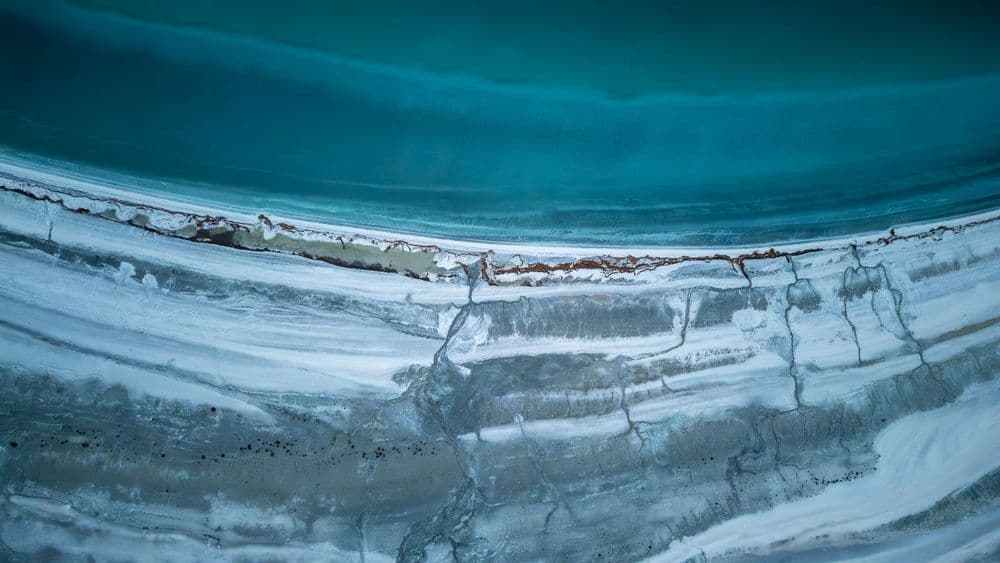
Burdur's two great treasures sit at two extremes. In the west, Lake Salda in the district of Yesilova, with its white sands and turquoise water, is Turkey's fourth-deepest lake (184 metres). The hydromagnesite mineral that forms the lake's white sediments is one of the world's most current examples of biological mineralization; this geochemical feature drew NASA's interest, because Salda's white shore resembles Mars's Jezero Crater. The lake was declared a special environmental protection zone in 2019; the name "Turkey's Maldives" is touristic, but the protection status is serious.
In the east, 7 kilometres northeast of the district of Aglasun, at 1450-1700 metres, Sagalassos was the capital of the ancient region of Pisidia. The world's highest-altitude ancient theatre, seating 9,000, is here; the Neon Library, built in 114-117 AD, recalls the Library of Celsus at Ephesus. The city was used until the early 7th century AD, then abandoned to earthquakes and migration; today it is on the UNESCO Tentative List. Between the two, Lake Burdur, Lake Yarisli and the plain host thousands of migratory birds in winter.
Knowing these two treasures changes the visit. Walking Salda's white sand, you stand on a geological wonder, a ground compared to Mars; looking out from Sagalassos's theatre, you see the whole Pisidian plain from 1700 metres. Burdur hides its riches not in display but in lake and mountain.
The Centre and Lake Burdur
The centre is small and quiet; the museum, the memory house and the lake shore are all together. The stops below are near the centre.
1. Central Burdur and the Museum
The province's quiet centre and the Burdur Museum. The museum displays finds from the region's ancient cities (especially Sagalassos and Kremna); the statues, sarcophagi and finds give context before touring the sites. The historic houses in the centre, the market and the City Memory House offer a calm half day.
- **Getting there:** The centre's ground zero; on foot in the provincial centre (0 km).
- **Best time:** The museum in the midday heat; the market and centre morning/evening.
- **While you're here:** The Natural History Museum (10) and Lake Burdur (2) are nearby.
- **Budget:** Paid museum entry, cheap; Museum Pass valid.
- **Common mistake:** Touring Sagalassos without seeing the museum; most of the finds are here, and the two complete each other.
2. Lake Burdur
The large salt lake west of the centre; a wintering ground for migratory birds. With its shallow, alkaline water it holds flamingos, ruddy shelducks and various waterfowl; in winter it is an important spot for birdwatching. Against Salda's turquoise, Lake Burdur offers a calmer, less touristy and natural shore.
- **Getting there:** By car west from the centre (1); 9 km from the centre.
- **Best time:** Winter and spring; morning for birdwatching.
- **While you're here:** The centre (1) and Lake Yarisli (8) are in the same direction.
- **Budget:** The shore is free.
- **Common mistake:** Expecting to swim as at Salda; Lake Burdur is salty, shallow and a birdwatching lake, not a beach.
3. Lake Salda (Yesilova)
Turkey's fourth-deepest lake and "Turkey's Maldives." With its white hydromagnesite sand and turquoise water, the lake NASA referenced in its Mars research; its shore resembles Mars's Jezero Crater. It was declared a special environmental protection zone in 2019, with limits on entry and vehicle access outside certain beach areas. Enjoy the white sand but follow the protection rules.
- **Getting there:** By car west from the centre (1) via Yesilova; 60 km from the centre.
- **Best time:** A summer morning; the crowd and wind increase in the afternoon.
- **While you're here:** Lake Yarisli (8) is on the way back.
- **Budget:** The viewing and beach areas are cheap; some areas are closed for protection.
- **Common mistake:** Bottling the white sand or entering the protected area. The hydromagnesite is protected; use only the permitted beach sections.
4. Sagalassos (Aglasun)
The Pisidian capital with the world's highest-altitude ancient theatre. Built at 1450-1700 metres on the slope of the Taurus, the city's 9,000-seat theatre, the 114-117 AD Neon Library, the Antonine Fountain and its bath stand to an extraordinary degree. Water still flows from the restored Antonine Fountain; from the theatre the whole Pisidian plain is in view. It is cool due to the altitude, but there is little shade.
- **Getting there:** By car east from the centre (1) via Aglasun, then a mountain road; 21 km from the centre.
- **Best time:** Morning; the altitude cools, but the midday sun is strong.
- **While you're here:** Insuyu Cave (5) is on the way back; the Burdur Museum (1) completes it.
- **Budget:** Paid entry; Museum Pass valid.
- **Common mistake:** Turning back without seeing the flowing water of the Antonine Fountain; it is the city's most striking restoration.
5. Insuyu Cave
South of the centre, one of the first caves in Turkey opened to tourism. Full of stalactites, stalagmites and underground lakes, this limestone cave offers a cool, damp underground walk. In the summer heat the cave's cool is a relief; the still water of the inner lakes and the stalactite formations are striking.
- **Getting there:** By car south from the centre (1); 15 km from the centre.
- **Best time:** In the midday heat; the cave is cool and damp.
- **While you're here:** Sagalassos (4) can be added to the eastern route the same day.
- **Budget:** Paid entry, cheap.
- **Common mistake:** Going without proper shoes on a slippery floor; the cave is damp and the ground wet.
Ancient Cities and the Southern Lakes
South and west of the centre, the ancient cities of the Pisidia-Lycia border and the lakes. A car is needed; distant but greatly rewarding.
6. Kremna (Bucak)
The ancient Pisidian city near Bucak, built on the edge of a canyon. With its clifftop position, agora, baths and walls, it is a quiet, untouristy site. A Roman-era colony, the city, with its deep valley view, is a reward for archaeology and nature enthusiasts.
- **Getting there:** By car southeast from the centre (1) via Bucak; 43 km from the centre.
- **Best time:** In the cool of the morning; the site is shadeless.
- **While you're here:** Susuz Han (7) in the Bucak direction.
- **Budget:** The area is usually free; confirm the conditions.
- **Common mistake:** Rushing on the strength of the directions; the road to Kremna is rough, and local knowledge helps.
7. Susuz Han (Bucak)
The 13th-century Seljuk caravanserai near Bucak. Carrying the stonework, crown gate and courtyard of Anatolian Seljuk architecture, the han is a quiet witness of Silk Road trade. Together with the nearby Incir Han, it shows the region's caravan-road past.
- **Getting there:** Southeast from the centre (1) via Bucak; 44 km from the centre.
- **Best time:** During the day; the stonework stands out in the light.
- **While you're here:** Kremna (6) on the same Bucak route.
- **Budget:** The visit is usually free.
- **Common mistake:** Passing the han by; the Seljuk crown gate and courtyard are a short but valuable stop.
8. Lake Yarisli
The shallow salt lake west of the centre; a haunt of flamingos and a bird paradise. This smaller lake between Salda and Burdur fills with flocks of pink flamingos in season. Not touristy; its real value is in its silence and the variety of its birds.
- **Getting there:** By car west from the centre (1); 33 km from the centre, on the Salda road.
- **Best time:** Spring and summer; morning for flamingos.
- **While you're here:** Lake Salda (3) on the same western route.
- **Budget:** The shore is free.
- **Common mistake:** Getting too close to the flamingos; observe from a distance with binoculars and do not startle them.
9. Kibyra (Golhisar)
The ancient city in the district of Golhisar; known as the "city of gladiators," famous for its extraordinary mosaics. The Medusa mosaic on the floor of the odeon, made with the coloured-marble inlay technique (opus sectile), is a rare work. With its stadium, theatre and agora, this city at the far west of the province is distant but striking.
- **Getting there:** By car southwest from the centre (1) via Golhisar; 94 km from the centre.
- **Best time:** Morning; set out early for the long distance.
- **While you're here:** The Golhisar centre and surroundings.
- **Budget:** Paid entry, cheap.
- **Common mistake:** Turning back without seeing the Medusa mosaic; it is Kibyra's most special work, and it is protected.
10. Burdur Natural History Museum
Near the centre, the museum that tells the region's geological and natural past. Fossils, minerals and exhibits about the region's nature suit families with children and nature enthusiasts in particular. A good introduction to understanding the geology of Salda and the lakes region.
- **Getting there:** On foot or a short drive from the centre (1); 1 km from the centre.
- **Best time:** In the midday heat; enclosed and cool.
- **While you're here:** The Burdur Museum (1) and centre adjoin it.
- **Budget:** Cheap entry.
- **Common mistake:** Confusing it with the archaeology museum; this is natural-history focused, and the two are separate.
How Many Days for Burdur
- **1 day:** Lake Salda a full day (60 km away, allow for the road).
- **2 days:** Add Sagalassos and Insuyu Cave, with the centre and museum in between.
- **3 days:** Add Kremna, Susuz Han and Kibyra; give each ancient city room to breathe.
Classic Mistakes
- **Cramming everything into one day.** Salda is 60 km, Kibyra 94 km away. Allow for the distances and split the days into clusters.
- **Entering the protected area at Salda.** The hydromagnesite sand is protected; use only the permitted beach sections, do not take sand.
- **Going to Sagalassos without a car.** There is a mountain road and altitude; public transport is sparse, so a car is essential.
- **Taking Lake Burdur for a beach.** It is a salty, shallow birdwatching lake; for swimming go to Salda.
- **Going to the ancient cities at midday.** Sagalassos and Kremna are shadeless; go in the first hours of the morning or late afternoon.
Bad-Weather Plan
Burdur is hot in summer and cold and snowy in winter. Salda and the lakes are open-air; on a windy or rainy day Insuyu Cave (enclosed, cool), the Burdur Museum and the Natural History Museum offer a dry route. Sagalassos, being at altitude, can be foggy and windy; confirm the weather before going up. In winter the lake region is good for birdwatching, but the roads are made harder by snow.
Where to Stay
**Central Burdur** is a practical base for reaching the lakes and ancient cities. **Yesilova** (near Salda) offers accommodation for an early start at the lake; guesthouse and camping options increase in the summer season. For the ancient cities, the central base is the most efficient.
Transport and Car-Free Burdur
The nearest airport to Burdur is Isparta (Suleyman Demirel) or Antalya. The provincial centre is also connected by train. But for Salda, Sagalassos, Kremna and the lakes, a car is almost essential; these points are scattered and public transport is sparse. The centre is walkable, but the body of the trip is the distant stops reached by car.
Frequently Asked Questions
**How many days do you need for Burdur?** A full day for Salda, and another for Sagalassos and the centre; a classic visit is 2 days. With Kremna and Kibyra it stretches to 3.
**Can you swim in Lake Salda?** Yes in the permitted beach areas, but the lake has been under special protection since 2019; entry and vehicle access are limited in some areas. Taking the white sand is banned.
**Why is Salda compared to Mars?** Its white hydromagnesite sediments and turquoise water resemble Mars's Jezero Crater geochemically; NASA took an interest in the lake because of this similarity.
**How do you get to Sagalassos?** By car via Aglasun; 21 km from the centre and a mountain road. At 1700 metres it is cool but shadeless, so go in the morning.
**Can you reach Burdur without a car?** The centre is reachable, but Salda, Sagalassos and the lakes are scattered and public transport is sparse; renting a car saves the trip.
Planlama Soruları
Burdur rehberi ne anlatıyor?
A complete guide planning Burdur with realistic distances: Lake Salda, Sagalassos, Insuyu Cave and the lakes region.
Burdur için 4K yürüyüş videosu izleyebilir miyim?
Evet. Sayfa, Burdur rotasını gitmeden önce büyük ekranda önizleyebilmeniz için ilgili Travel Walk Tours videolarına bağlanır.
Bu sayfayı gezi planında nasıl kullanmalıyım?
Önce hızlı cevabı okuyun, rota notlarını inceleyin, ardından ilgili şehir sayfası ve yürüyüş videolarıyla sokak dokusu, süre, manzara ve yakın rehberleri karşılaştırın.