Best Things to Do in Safranbolu and Karabuk: Ottoman Houses, the Bazaar and a Canyon
A complete guide planning Safranbolu: the UNESCO Ottoman houses, Cinci Han, the Incekaya Aqueduct, the Tokatli Canyon and Yoruk Village.
Haritada gezilecek yerler
12 noktaNumaralar yazıdaki sıralamayla eşleşir. Pin’e dokunup yol tarifi alabilirsiniz.
Best Things to Do in Safranbolu and Karabuk: Ottoman Houses, the Bazaar and a Canyon
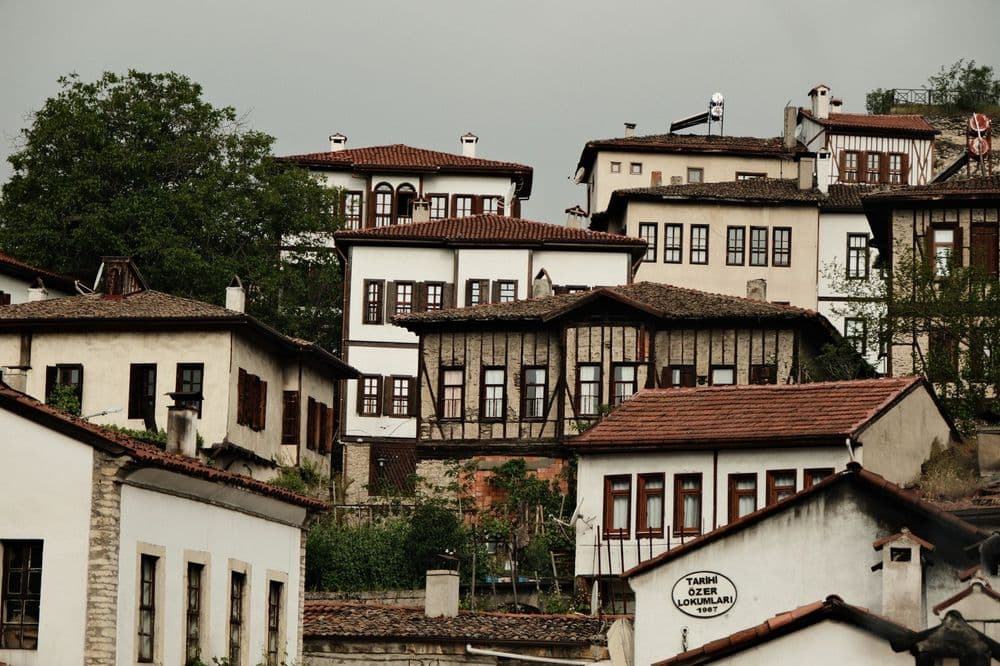
People who sum Safranbolu up as "old houses and Turkish delight" go home without seeing how a whole town became a UNESCO World Heritage Site. Here it is not individual monuments but an entire Ottoman town, with its bazaar, han, bath and hundreds of bay-windowed houses, standing intact. Walking the stone streets of the Carsi (bazaar), you step into the 18th and 19th centuries; looking from the Incekaya Aqueduct over the Tokatli Canyon, nature and architecture interweave. Safranbolu is not a Turkish-delight stop but a time capsule preserved without its fabric being spoiled; the real task is to tour this town slowly, street by street.
This guide is written for a first visit, but not for the one who wants to pass Safranbolu in "half a day at the bazaar, then on down the road." The Carsi needs a day, the surrounding villages and the canyon another; the town is small, but every street and mansion imposes its own time. This guide groups places as the Carsi core and the surroundings, and you should not hurry.
The distances below are measured straight-line from the Safranbolu Carsi; the canyon and village roads extend the real time. The numbers match the pins on the map exactly.
Quick Answer
The Safranbolu Carsi (houses, han, bath, mosque) fits into one day; Incekaya, the Tokatli Canyon and Yoruk Village into one. Tour an Ottoman town slowly, street by street.
- **First visit:** Day 1 the Carsi (houses, Cinci Han, Hidirlik), Day 2 Incekaya, the canyon and Yoruk Village.
- **Base:** The Safranbolu Carsi; staying in a historic mansion hotel is part of the experience.
- **Car-free:** The Carsi is walkable; a car or tour helps for Incekaya, the canyon and the villages.
Understanding Safranbolu and Karabuk in Five Minutes
Safranbolu's wholeness is a miracle. The town passed to the Turks in 1196 and, in the Ottoman period, became a wealthy trading town on the Istanbul-Sinop caravan road. This wealth was reflected in the hundreds of timber-and-adobe Ottoman mansions, the bazaar, the hans and the baths that rose in the 18th and 19th centuries. The town is made up of three settlements: the Carsi where trade was done, Baglar where the summer vineyard houses stood, and Kirankoy where Greeks lived until the 1923 population exchange. Its name comes from saffron, the precious plant grown in the region.
That this fabric reached today unspoiled is no accident. When the Karabuk Iron and Steel Factory was founded right beside it in 1939, industry and population shifted to Karabuk; Safranbolu stayed away from the pressure of modernisation and its old houses were preserved without demolition. This preservation was crowned on 17 December 1994: Safranbolu was declared a UNESCO World Heritage Site as the best-preserved whole example of classical Ottoman urban architecture. Cinci Han (a 48-room caravanserai) and Cinci Bath in the Carsi are the monuments of the 17th-century trade peak.
Knowing this story changes the visit. On the bay window of a mansion you see the life of a merchant family, in the courtyard of Cinci Han the hum of the caravan road, from Hidirlik Hill the sea of red-tiled roofs of the town. Safranbolu lays its history not in a museum but over a whole town.
The Carsi: Houses, Han, Bath and Mosque
The Carsi is toured entirely on foot; the houses, han, bath and mosque are very close together. The stops below fit comfortably into one day.
1. Safranbolu Old Bazaar (Carsi)
The heart of the town and the centre of the UNESCO protection. With its stone streets, bay-windowed timber mansions, coppersmith and blacksmith shops, Turkish-delight sellers and craft workshops, the Carsi is the living whole of an 18th-19th century Ottoman town. Getting lost in the streets is the best method; every turn opens a new mansion, courtyard or fountain.
- **Getting there:** The centre's ground zero; to the Carsi by minibus/car from Karabuk (0 km).
- **Best time:** Early morning; the streets quiet, the light soft on the timber.
- **While you're here:** Cinci Han (2), Cinci Bath (3) and the mosque (4) are within walking distance.
- **Budget:** Wandering the streets is free; Turkish delight and crafts are mid-range.
- **Common mistake:** Walking only the main bazaar street; the mansions and courtyards in the side streets are the real Safranbolu.
2. Cinci Han
The 17th-century caravanserai in the middle of the Carsi. This large 48-room han represents Safranbolu's trade peak on the Istanbul-Sinop caravan road; it is visited for its two-storey courtyard, stone arches and rooms now turned into a boutique hotel. The atmosphere in the courtyard keeps the town's trading past alive.
- **Getting there:** Inside the Carsi (1), on foot; 0 km from the centre.
- **Best time:** Early afternoon; for the courtyard and tea.
- **While you're here:** Cinci Bath (3) and the mosque (4) adjoin it.
- **Budget:** Wandering the courtyard is free; hotel stay separate.
- **Common mistake:** Seeing the han from outside and not entering the courtyard; the two-storey stone courtyard is the essence of the caravan road.
3. Cinci Bath
A 17th-century Ottoman bath from the same period as Cinci Han. With its domed hot room, navel stone and classical bath architecture, it is a historic bath still working today. Having a traditional bath experience in the middle of a Safranbolu visit is to touch the town's everyday history.
- **Getting there:** Beside Cinci Han (2), on foot; 0 km from the centre.
- **Best time:** For a rest after touring.
- **While you're here:** Cinci Han (2) and the Carsi (1) adjoin it.
- **Budget:** The bath fee is mid-range; separate hours for women and men.
- **Common mistake:** Only looking from outside; bathing in a working 17th-century bath is a rare experience.
4. Koprulu Mehmet Pasha Mosque
The mosque in the Carsi built by the 17th-century Ottoman grand vizier Koprulu Mehmet Pasha. With its plain and elegant structure, it is the spiritual centre of the Carsi; its fountain and courtyard open onto the town's daily life. A modest but measured example of the Ottoman town mosque.
- **Getting there:** Inside the Carsi (1), on foot; 0 km from the centre.
- **Best time:** Outside prayer times.
- **While you're here:** Cinci Han (2) and the bath (3) are nearby.
- **Budget:** Free entry; a place of worship.
- **Common mistake:** Skipping the mosque; this building at the centre of the Carsi completes the town's fabric.
5. Hidirlik Hill
The hill dominating the Carsi and Safranbolu's best viewpoint. From here the town's red-tiled roofs, minarets and mansions unroll below like a sea; especially at sunset, in the golden light, Safranbolu's wholeness is seen. A calm viewpoint with its tea garden and cemetery.
- **Getting there:** On foot up from the Carsi (1); 0 km from the centre (a steep climb).
- **Best time:** Sunset; the sea of roofs catches the golden light.
- **While you're here:** The Carsi (1) is below.
- **Budget:** Free; the tea garden is cheap.
- **Common mistake:** Climbing in the midday heat; the real view is at sunset, in the golden hour.
6. Kaymakamlar House
The traditional Safranbolu mansion arranged as a museum in the Carsi. With its bay windows, woodwork, courtyard and rooms furnished with the period's objects, it shows an Ottoman family's house from the inside. The mansion's plan, its harem-selamlik arrangement and its furniture tell how the Safranbolu house was lived in.
- **Getting there:** Inside the Carsi (1), on foot; 0 km from the centre.
- **Best time:** Daytime; the interior is bright.
- **While you're here:** The Carsi (1) and the han-bath are nearby.
- **Budget:** Paid entry, cheap.
- **Common mistake:** Only seeing the houses from outside; entering a mansion and seeing it lived-in completes Safranbolu.
7. Safranbolu Clock Tower and City History Museum
On the hill above the Carsi, the 1797 clock tower and the city museum in the old government mansion. From the tower and the museum terrace the town view opens; the museum tells Safranbolu's history, crafts and architecture. The city history museum is a good introduction before touring the town.
- **Getting there:** On foot up from the Carsi (1); 0 km from the centre.
- **Best time:** Morning; for the museum and terrace.
- **While you're here:** Hidirlik Hill (5) is nearby.
- **Budget:** Paid entry, cheap.
- **Common mistake:** Skipping the museum; the town's history and crafts gain context here.
The Surroundings: Aqueduct, Canyon, Village and Cave
Outside the Carsi, nature and villages. Reached by car; near but scattered.
8. Incekaya Aqueduct
The Ottoman aqueduct north of Safranbolu, built over the Tokatli Canyon. Built to carry water to the caravan road, the aqueduct offers a walkable bridge over the canyon's deep gorge; crossing it, the canyon and stream stretch beneath your feet. Engineering and a nature view together; the most striking spot around Safranbolu.
- **Getting there:** By car north from the Carsi (1); 4 km from the centre.
- **Best time:** Afternoon; the canyon catches the light.
- **While you're here:** The Tokatli Canyon (9) is below.
- **Budget:** Free; a glass viewing terrace may be separate.
- **Common mistake:** Avoiding the aqueduct out of fear of heights; the real view is from atop the aqueduct.
9. Tokatli Canyon
The deep canyon below the Incekaya Aqueduct. With its streambed, steep rock walls and walking trail, it is Safranbolu's nature face. Walking in the canyon and looking down from the glass viewing terrace is a natural complement to the town's architectural fabric. Together with the aqueduct it makes half a day.
- **Getting there:** Below Incekaya (8); 3 km from the centre.
- **Best time:** Morning and midday; the trail is cool and shaded.
- **While you're here:** The Incekaya Aqueduct (8) is above.
- **Budget:** The trail is usually free; the glass terrace may be paid.
- **Common mistake:** Setting out on the trail without proper shoes; the canyon floor is stony and steep.
10. Yoruk Village
The Ottoman village east of Safranbolu, preserved even more unspoiled than the Carsi. With its bay-windowed mansions, its (historic village) laundry and narrow streets, it is a pure Safranbolu experience away from the tourist crowd. The village houses are private property, but some can be toured as museum-houses; it is like the village version of the town.
- **Getting there:** By car east from the Carsi (1); 6 km from the centre.
- **Best time:** Weekday morning; the village quiet and calm.
- **While you're here:** The Carsi (1) is nearby.
- **Budget:** The village is free; museum-houses are cheap.
- **Common mistake:** Seeing only the Carsi and skipping Yoruk Village; the village is the more deserted, authentic form of the Safranbolu fabric.
11. Bulak (Mencilis) Cave
The large cave near Safranbolu, known for its underground lake and galleries. With its stalactites, stalagmites and underground stream, it shows the town's underground nature; you walk in cool, damp galleries. A natural break different from the Carsi's architectural fabric; it cools you in the summer heat.
- **Getting there:** By car from the Carsi (1); 7 km from the centre.
- **Best time:** In the midday heat; the cave is cool.
- **While you're here:** The surrounding villages and nature areas.
- **Budget:** Paid entry, cheap.
- **Common mistake:** Going without proper shoes on a slippery floor; the cave is damp and wet.
12. Hadrianopolis (Eskipazar)
The ancient city in the Eskipazar district of Karabuk; famous for the mosaics called "the Zeugma of Paphlagonia." The animal and mythology mosaics on the church floors from the Roman-Byzantine period show the region's ancient layer. A history far older than Safranbolu's Ottoman fabric; valuable for archaeology enthusiasts.
- **Getting there:** By car southwest from the Carsi (1) via Eskipazar; 40 km from the centre.
- **Best time:** Morning; the site is shadeless.
- **While you're here:** The Eskipazar centre is nearby.
- **Budget:** Entry is usually free; confirm the conditions.
- **Common mistake:** Turning back without seeing the mosaics; Hadrianopolis's most precious works are the mosaics on the church floors.
How Many Days for Safranbolu
- **1 day:** The Carsi (houses, Cinci Han, the bath, the mosque, Hidirlik).
- **2 days:** Add the Incekaya Aqueduct, the Tokatli Canyon and Yoruk Village.
- **3 days:** Bulak Cave, Hadrianopolis and the Amasra connection; widen the region.
Amasra is 90 km north; the Safranbolu-Amasra pairing is the classic Western Black Sea route. For detail, see [Bartin and Amasra travel guide](/travel-guides/things-to-do-in-bartin-amasra-harbour-castle-guide).
Classic Mistakes
- **Reducing Safranbolu to Turkish delight and photos.** The town is a UNESCO World Heritage Site as a whole; it deserves to be toured street by street.
- **Only seeing the houses from outside.** Enter a mansion like the Kaymakamlar House; the Safranbolu house is only understood from the inside.
- **Not going up the aqueduct at Incekaya.** The real canyon view is from atop the aqueduct.
- **Skipping Yoruk Village.** More deserted and authentic even than the Carsi; the pure form of the Safranbolu fabric.
- **Climbing Hidirlik in the midday heat.** The sea-of-roofs view is finest at sunset, in the golden hour.
Bad-Weather Plan
Safranbolu has an inland Black Sea climate; its winter is cold and snowy, its summer mild. Snowy Safranbolu is a beauty of its own, but the streets get slippery. On a rainy or snowy day the Carsi (the enclosed han, the bath, the museum-houses) and Bulak Cave offer a dry route; Incekaya, the canyon and the villages are open-air. Sturdy-soled shoes are useful in any season; the stone streets are slippery when wet.
Where to Stay
**A historic mansion hotel in the Safranbolu Carsi** lets you live the town's fabric from the inside; bay-windowed rooms and courtyards are part of the experience. As an alternative, the calm mansions of Baglar or central Karabuk offer a cheaper option. Combined with Amasra, the region comfortably fills two or three days.
Transport and Car-Free Safranbolu
Safranbolu is reached by bus via Karabuk; there is a minibus from Karabuk to the Carsi. The Carsi is toured entirely on foot. But for Incekaya, the Tokatli Canyon, Yoruk Village and the cave, a car or tour helps; these are outside the Carsi and public transport is sparse.
Frequently Asked Questions
**How many days do you need for Safranbolu?** One day for the Carsi, one for Incekaya-the canyon-Yoruk Village; a classic visit is 2 days. Combined with Amasra it stretches to 3.
**Why is Safranbolu a UNESCO World Heritage Site?** Because it is the best-preserved whole example of classical Ottoman urban architecture, it was declared so on 17 December 1994. Hundreds of timber mansions, the bazaar, hans and baths stand with their fabric unspoiled.
**Can you tour the Safranbolu houses?** Most are private property, but some, like the Kaymakamlar House, can be toured from the inside as museum-houses; entering a mansion is essential to understanding Safranbolu.
**Can you see Amasra and Safranbolu on the same trip?** Yes, it is the classic Western Black Sea route. Amasra is 90 km north; the two fit comfortably into 2-3 days.
**Can you reach Safranbolu without a car?** The Carsi is walkable and reached from Karabuk by minibus. But for Incekaya, the canyon and the villages, a car or tour helps.
Planlama Soruları
Karabük rehberi ne anlatıyor?
A complete guide planning Safranbolu: the UNESCO Ottoman houses, Cinci Han, the Incekaya Aqueduct, the Tokatli Canyon and Yoruk Village.
Karabük için 4K yürüyüş videosu izleyebilir miyim?
Evet. Sayfa, Karabük rotasını gitmeden önce büyük ekranda önizleyebilmeniz için ilgili Travel Walk Tours videolarına bağlanır.
Bu sayfayı gezi planında nasıl kullanmalıyım?
Önce hızlı cevabı okuyun, rota notlarını inceleyin, ardından ilgili şehir sayfası ve yürüyüş videolarıyla sokak dokusu, süre, manzara ve yakın rehberleri karşılaştırın.