Plan central Izmir, the Kordon, Kemeralti, Cesme, Urla, Foca and Bergama with realistic routes.
Walk this route
Walking Tour of Izmir's Coast | Konak & Alsancak Kordon in 4K
Watch the 4K walkPlaces on the map
18 pinsNumbers match the order in the article. Tap a pin for directions.
Best Things to Do in Izmir: From the Kordon to the Ancient Cities
People who write Izmir off as "a nice city by the sea" are missing most of it. One kilometre behind the seafront where you stroll the Kordon sits a mound with traces reaching back to 3000 BC; the tram from Konak drops you at the columns of a Roman agora in half an hour, and at the marble street of Ephesus in two. The city does not brag about this. Izmir carries its history with a certain ease, and if you take that ease as your guide, you will travel it well.
This guide is written for a first visit, but not for the traveller who wants to cram Izmir into "Ephesus one day, Cesme the next, Kordon at night." That plan spends half your trip on the motorway. Central Izmir needs its own day; the peninsula (Cesme–Urla) another; Bergama to the north another; Ephesus–Selcuk to the south another. This guide groups places by geography, and you should build your days around those clusters.
The channel walked the streets of Konak and Alsancak end to end on camera. The distances below are measured straight-line from Konak Square; the real drive takes a little longer. The numbers match the pins on the map exactly.
Quick Answer
One full day covers the central Konak–Kemeralti–Kordon triangle. Ephesus, Bergama and Cesme are separate day trips; do not squeeze them all into the centre.
- **First visit:** Day 1 Konak–Kemeralti–Kordon, Day 2 Ephesus–Sirince, Day 3 Cesme–Alacati.
- **Base:** Alsancak or Konak; both sit on the metro/tram line.
- **Car-free:** IZBAN train plus bus to Ephesus and Bergama; bus to Cesme. A car helps for getting around Alacati.
Understanding Izmir in Five Minutes
Izmir's foundations are older than you think. At the Tepekule mound in Bayrakli the city's traces reach 3000 BC, and finds at the Yesilova mound push settlement back to 6500 BC; people have lived here for eight thousand years. Its ancient name was Smyrna. The city was first built on the Bayrakli shore, then moved to the slopes of Kadifekale under Lysimachus, the successor of Alexander the Great. When you walk Konak today, you are actually standing on that second, "new" Smyrna.
The Roman period was Izmir's golden age. When a major earthquake destroyed the city in 178 AD, it was rebuilt with the support of Emperor Marcus Aurelius; the surviving section of the Agora you see today is the work of that restoration. Through the Ottoman centuries Izmir was a port-metropolis where Levantine merchants and Greek, Armenian, Jewish and Turkish quarters interlocked. The great fire that began in Basmane on the morning of 13 September 1922 and burned until 22 September reduced much of the city to ash; Kulturpark was laid out over part of the burned zone in the 1930s. The Kordon, completed in 1876, was one of the few landmarks to survive the fire.
Knowing these layers changes your trip. Look down from Kadifekale and you understand why Lysimachus chose it; touch a column in the Agora and you are holding stone that Marcus Aurelius repaired. Izmir does not lock its history in a museum; it lays it out on the street.
Central Izmir: Konak, Kemeralti, Kordon
The centre is walkable and fits comfortably into one full day. The eight stops below are close together; you can link them all on foot plus a single tram ticket.
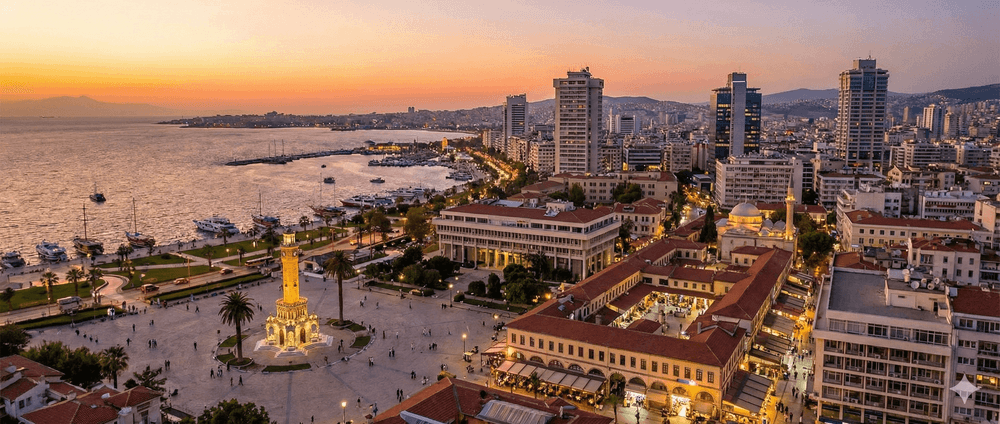
1. Konak Square and the Clock Tower
The heart of the city and its meeting point. Raised in 1901 for the 25th anniversary of Abdulhamid II's accession, the Clock Tower is Izmir's most photographed symbol, standing at the centre of the square with fountains at its four corners and an Ottoman-Moorish craftsmanship. It faces a broad stone plaza where gulls and pigeons gather.
- **Getting there:** The city's ground zero; Konak tram and metro stops open onto the square (0 km).
- **Best time:** Early morning before the crowds and heat, or at sunset when the light hits the tower.
- **While you're here:** The Kemeralti entrance (2) and Konak pier are right beside it; you can take a ferry to Karsiyaka.
- **Budget:** The square is free; nearby cafes are mid-range.
- **Common mistake:** Passing the tower with a quick photo. Take in the tiled facade of Konak Mosque and the pier building around the square too.
2. Kemeralti Bazaar
Izmir's covered historic bazaar and the city's true pulse. Trade has run through this labyrinth since the 17th century, spice sellers, jewellers, tailors, coffee houses and old hans folded into one another. Getting lost here is not a flaw but a method; turn off the main street into a narrow alley and you come out in a courtyard, then a mosque.
- **Getting there:** A 3-4 minute walk from Konak Square (1); the bazaar starts just east of the square (0 km).
- **Best time:** Between 10 and 12 in the morning when shops are fully open; it fills up in the afternoon.
- **While you're here:** Kizlaragasi Han (3) is inside the bazaar; the Agora (4) is within walking distance.
- **Budget:** Free to wander; lunch at tradesmen's eateries is cheap.
- **Common mistake:** Walking only the main street and leaving. Kemeralti's soul is in the side alleys and the courtyards of its old hans.
3. Kizlaragasi Han
The 1744 Ottoman caravanserai inside Kemeralti. The two-storey courtyard building is now full of copperwork, jewellery, carpet and souvenir stalls. Listening to the hum of the courtyard over a glass of tea in the upstairs tea garden is the most Izmir way to shake off bazaar fatigue.
- **Getting there:** In the middle of Kemeralti (2); follow the signs (0 km).
- **Best time:** Early afternoon, for the upper-floor tea garden.
- **While you're here:** Hisar Mosque and Kemeralti's jewellers' street are right alongside.
- **Budget:** Free entry; handmade goods are open to bargaining.
- **Common mistake:** Paying the first price quoted; haggling is normal here in bazaar fashion.
4. Smyrna Agora
The most striking ancient remains in the centre, and the one most tourists skip. The column rows, underground galleries (the basilica basement) and arches of the Roman agora, restored after the 178 AD earthquake with Marcus Aurelius's support, stand to a surprising degree. In the middle of the modern city, among apartment blocks, you walk a two-thousand-year-old public square.
- **Getting there:** An 8-10 minute walk uphill from Kemeralti (2), via Anafartalar Street (1 km).
- **Best time:** Morning, when there is little shade and the galleries stay cool.
- **While you're here:** The road up to Kadifekale (6) starts here; Kemeralti on the way back.
- **Budget:** Museum Pass valid; confirm the entry fee on the day.
- **Common mistake:** Leaving without seeing the underground galleries. The most impressive part is down below, in the section with the water arches.
5. Historic Elevator (Tarihi Asansor)
A brick tower commissioned in 1907 by the philanthropist Nesim Levi to ease the climb up the Karatas slope. The elevator connecting the two levels still runs, and the terrace at the top offers one of the finest views of the Gulf of Izmir. Dario Moreno Street below carries the name of the famous singer and is a favourite of photographers.
- **Getting there:** A 15 minute walk south along the shore from Konak (1), or a short taxi (1 km).
- **Best time:** Sunset; the terrace faces west over the gulf, and the evening light is best watched from here.
- **While you're here:** Karatas's Sephardic quarter and fish restaurants are all around.
- **Budget:** The elevator is free; a drink at the terrace cafe is mid-range.
- **Common mistake:** Going at midday. The view is lovely, but the real magic is at sunset when the light turns the gulf orange.
6. Kadifekale
The castle on the city's hilltop and Izmir's founding point. Smyrna was moved here under Lysimachus; the interior of the walls is plain today, but the view is without question the best in the city. The whole gulf, the harbour, the Kordon and the mountains behind unroll beneath your feet. Its name comes from its "velvet-like" hill.
- **Getting there:** A municipal bus or taxi from near the Agora (4); the walk up is steep and long (2 km).
- **Best time:** Late afternoon, both to beat the heat and to stay for sunset.
- **While you're here:** On the way down you can connect to the Agora and Kemeralti.
- **Budget:** Free entry.
- **Common mistake:** Going up alone after dark; prefer daylight hours and do not leave the descent to the night.
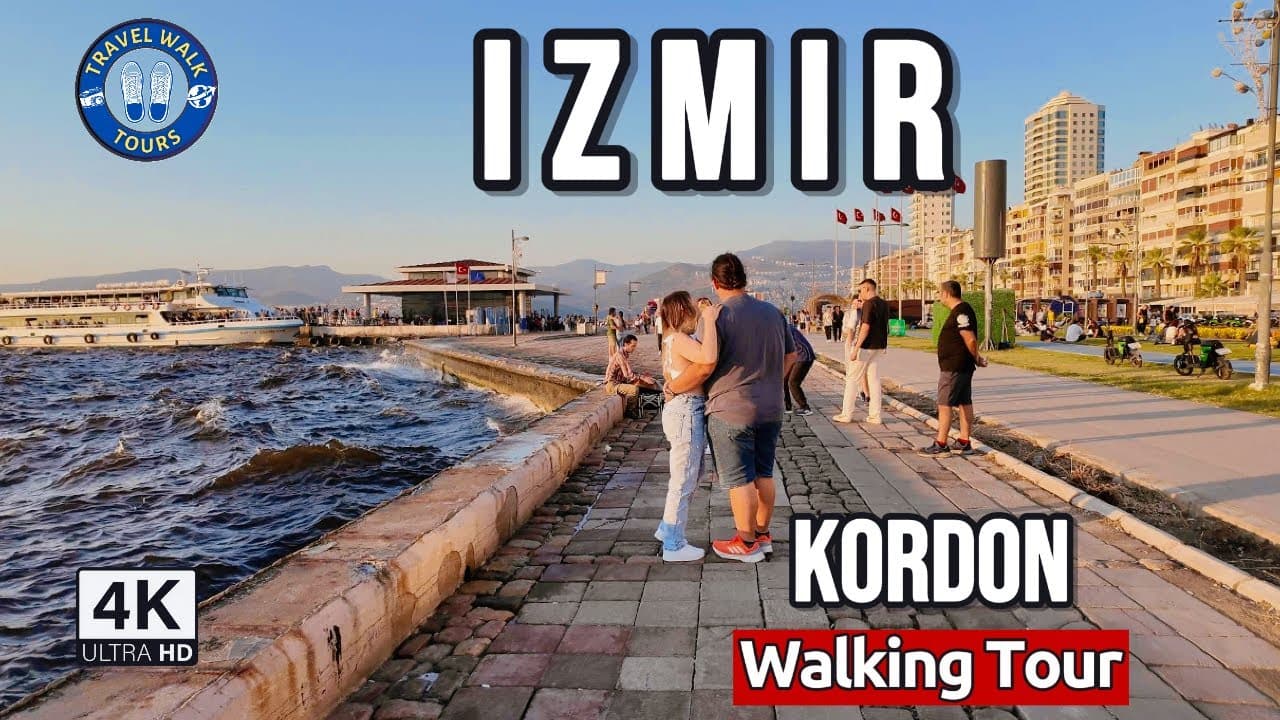
7. The Kordon (Alsancak)
The first image that comes to mind at the word Izmir: a wide strip of grass, palm trees, cyclists where carriages once ran, and rows of buildings facing the gulf. Completed in 1876, this seafront is the centre of the Izmir ritual of the evening walk, the sunset and sitting on the grass. The Alsancak side is the liveliest for cafes and bars.
- **Getting there:** A 20-25 minute walk north along the shore from Konak (1), or a few tram stops (2 km).
- **Best time:** Sunset, without doubt; sit on the grass strip and watch the gulf change colour.
- **While you're here:** Kulturpark (8) and Alsancak's nightlife are right behind.
- **Budget:** The walk is free; the Kordon cafes are mid-to-upper for their central location.
- **Common mistake:** Seeing only the Alsancak end. The Kordon runs from Konak to Bostanli; take a ferry across and see the Karsiyaka Kordon too.
8. Kulturpark
The large green space in the middle of the city and home to the Izmir International Fair. Laid out in the 1930s over ground scarred by the 1922 fire, the park, with its pond, tree-lined paths and fair buildings, is where Izmir breathes. A dense neighbourhood stood here before the fire; the park grew over that memory.
- **Getting there:** A 5-10 minute walk from the Kordon (7) or Alsancak; it has several gates (2 km).
- **Best time:** Morning or late afternoon for a walk; summer evenings are the fair and event season.
- **While you're here:** Alsancak's cafes and Kibris Sehitleri Street adjoin it.
- **Budget:** Free entry.
- **Common mistake:** Not checking the event calendar; during the fair the park turns into a different kind of crowd.
Southern Day Trip: Ephesus and Selcuk
About 55-60 km south of the centre, this needs a separate full day. Take the IZBAN to Selcuk, then a minibus to the ruins. These three stops combine into one day.
9. Ephesus Ancient City
Turkey's most magnificent ancient city and a UNESCO World Heritage Site (2015). Founded by Ionian colonists in the 10th century BC, Ephesus was Anatolia's largest port city in the Roman era. The marble-paved Curetes Street, the two-storey facade of the Library of Celsus and the 24,000-seat Great Theatre drive home the scale of the ancient world. When the harbour filled with alluvium carried by the Kucuk Menderes river, the city was slowly abandoned; today the sea is kilometres away.
- **Getting there:** IZBAN to Selcuk, then minibus/taxi; 56 km from the centre (about 1-1.5 hours).
- **Best time:** At opening or late afternoon; at midday there is no shade on the marble street and the summer heat is brutal.
- **While you're here:** The House of the Virgin Mary (10) and Sirince (11) fit the same day; Selcuk also has the Ephesus Museum and the ruins of the Temple of Artemis.
- **Budget:** Paid entry, upper tier; Museum Pass valid, the terrace houses need a separate ticket.
- **Common mistake:** Not knowing there are two gates. Entering from the upper gate and walking down turns the slope in your favour; arrange transport to the lower gate.
10. House of the Virgin Mary
On Mount Bulbul above Ephesus, the house where, by Christian tradition, Mary spent her final years. Recognised by the Catholic Church as a place of pilgrimage and visited by popes, it sits in a quiet pine forest. Whatever your belief, the stillness of this stone house on the pine-scented hill is moving.
- **Getting there:** By car up the mountain road from Ephesus (9); 59 km from the centre.
- **Best time:** The same day as Ephesus, in the afternoon; tour buses crowd it in the morning.
- **While you're here:** It is on the road out of Ephesus; combining the two is efficient.
- **Budget:** Paid entry; parking separate.
- **Common mistake:** Planning without a car. Public transport does not climb the mountain; a taxi or tour from Selcuk is essential.
11. Sirince Village
The old Greek village on the hill above Selcuk; a stone-house open-air museum with wine houses and narrow lanes. Home to Greeks until the 1923 population exchange, the village is known for its fruit wine and handmade goods. It is heavily touristic, but climb to the upper neighbourhoods and the village's real texture emerges.
- **Getting there:** A minibus 8 km up from Selcuk; 59 km from the centre.
- **Best time:** Weekday morning; the weekend and midday crowds spoil it.
- **While you're here:** Ephesus (9) and Selcuk are on the same route; Ephesus in the morning and Sirince in the afternoon is a good order.
- **Budget:** The village is free; wine tasting and shopping are mid-range.
- **Common mistake:** Lingering only at the stalls in the entrance square. Climb up to the quiet streets; the real village is there.
Northern Day Trip: Bergama
About 80 km north of the centre, a day on its own. There are two separate archaeological sites, and both are top-tier.
12. Bergama Acropolis
The hilltop royal city of ancient Pergamon and a UNESCO World Heritage Site (22 June 2014). Capital of the Attalid dynasty from 280 to 133 BC, Pergamon was one of the most powerful kingdoms of the Hellenistic world. The steepest ancient theatre in the world, the temples of Athena and Trajan, and the famous library are all here. By tradition parchment (the English word comes from Pergamon) was developed here against a papyrus embargo. The kingdom was bequeathed to Rome in 133 BC by the will of Attalus III.
- **Getting there:** 80 km from the centre; a cable car takes you to the summit (about 1.5-2 hours).
- **Best time:** Early morning; the summit is windy and shadeless, and midday heat is hard going.
- **While you're here:** The Asklepion (13) fits the same day; Bergama town also has the Red Basilica.
- **Budget:** Entry plus cable car are paid; Museum Pass valid, cable car separate.
- **Common mistake:** Seeing only the Acropolis and skipping the Asklepion. The two are entirely different experiences; give both their time.
13. Asklepion (Bergama)
The most famous health centre of the ancient world. From the 4th century BC, patients at this sanctuary dedicated to Asklepios, god of healing, were treated with dream therapy, water cures and theatre. The physician Galen trained here. The columns lining the sacred way, the underground tunnel and the treatment theatre show what "hospital" meant two thousand years ago.
- **Getting there:** On the opposite side of the Acropolis (12) from Bergama town; a short distance, 78 km from the centre.
- **Best time:** In the afternoon after the Acropolis; the drive between the two sites is short.
- **While you're here:** The Acropolis (12) and Bergama market on the same day.
- **Budget:** Paid entry; Museum Pass valid.
- **Common mistake:** Passing over the long colonnaded avenue at the start of the sacred way; the entrance impact is really there.
Peninsula Day Trip: The Cesme and Urla Line
The peninsula reaching west from the centre; beaches, windsurfing, stone streets and vineyard estates. The motorway brings Cesme within an hour.
14. Cesme Castle
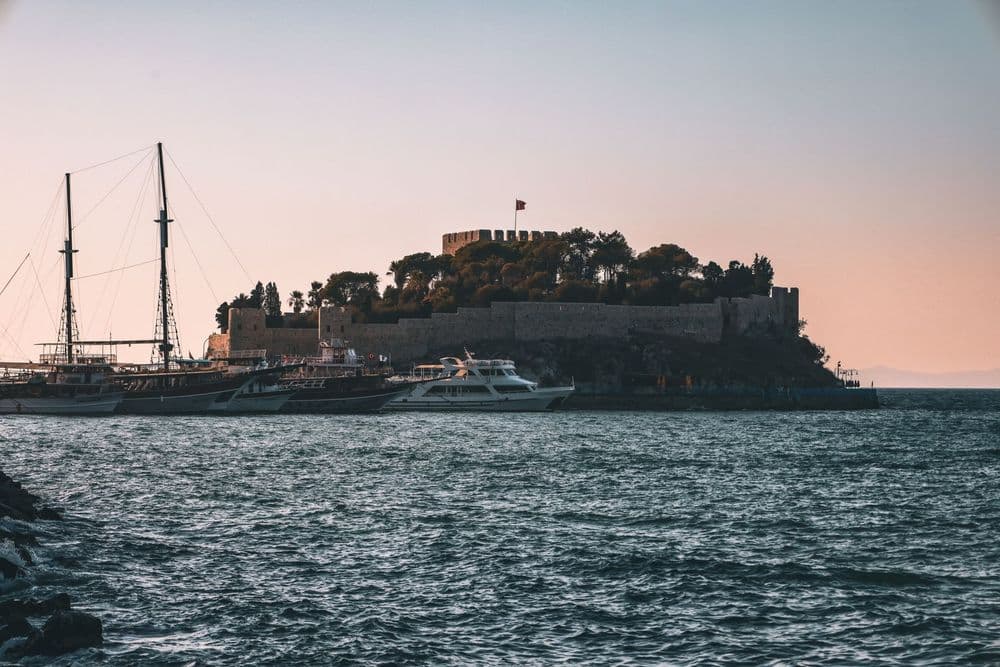
The symbol of the port town at the tip of the peninsula. Built in 1508 under Bayezid II against the Genoese, the castle is now visited for its small archaeology museum and a terrace overlooking the harbour. The square in front, with its marina and fish restaurants, is the heart of central Cesme.
- **Getting there:** 73 km from the centre by motorway; walking distance from the Cesme bus station (about 1-1.25 hours).
- **Best time:** Climb the castle in the afternoon, then dine at the harbour in the evening, a good order.
- **While you're here:** Alacati (15) is 15 minutes away; the Ilica and Altinkum beaches are nearby.
- **Budget:** Paid entry, cheap; harbour restaurants are upper tier.
- **Common mistake:** Treating Cesme as a mere waypoint. The castle, the old Greek houses and the harbour need at least half a day.
15. Alacati
Turkey's most photographed town streets are here. With stone houses, purple bougainvillea, boutique hotels and a windsurfing bay, Alacati is the showcase of the Izmir peninsula. It is known for local flavours distilled from mastic trees, herb mezes and its breakfast. It gets very crowded on weekends and summer evenings.
- **Getting there:** 15 minutes from Cesme (14); 67 km from the centre.
- **Best time:** Weekday morning, when the streets are quiet and the light falls soft on the stone houses.
- **While you're here:** Cesme Castle (14) and the Alacati surf bay on the same day.
- **Budget:** Boutique hotels and restaurants are upper tier; among the priciest corners of Izmir.
- **Common mistake:** Getting stuck on the main street at midday. Go early and turn into the side streets; the real Alacati is there, away from the crowd.
16. Foca
The old Phocaea north of the centre; a quiet town remembered for its fishing harbour, stone houses and Mediterranean monk seals. The ancient Phocaeans founded colonies across the Mediterranean, Marseille among them. Today Foca is the Izmir weekend escape; unassuming but peaceful.
- **Getting there:** 43 km north of the centre; reachable by bus (about 1 hour).
- **Best time:** Afternoon and evening; ideal for a fish dinner at the harbour.
- **While you're here:** Yeni Foca and the Siren Rocks are seen on a boat tour.
- **Budget:** The town is cheap-to-mid; harbour restaurants are mid-to-upper.
- **Common mistake:** Confusing Old Foca with New Foca; aim for Old Foca, with its historic fabric and harbour.
17. Klazomenai (Urla)
The ancient Ionian city near Urla Iskele; an archaeological site carrying some of the oldest traces of olive oil production. Home of the philosopher Anaxagoras in the 6th century BC, Klazomenai is visited for its seaside ruins and a reconstructed ancient olive oil workshop. Urla's vineyard estates and wine route are in the same area.
- **Getting there:** 32 km from the centre; reached via Urla (about 40-50 min).
- **Best time:** The site in the morning, Urla's estates and Iskele in the afternoon.
- **While you're here:** The Urla Wine Route and the fish restaurants of Urla Iskele adjoin it.
- **Budget:** The site is cheap; Urla restaurants are mid-to-upper.
- **Common mistake:** Confusing Klazomenai with central Urla; the site is on the Iskele side, a separate point.
18. Teos (Seferihisar)
The ancient Ionian city near Seferihisar; a quiet, untouristy archaeological site with the Temple of Dionysos and scattered ruins by the sea. Wandering among olive groves, you come upon temple columns. Seferihisar also holds Turkey's first "Slow City" (Cittaslow) title.
- **Getting there:** 40 km southwest of the centre; via Seferihisar (about 50-60 min).
- **Best time:** In the cool of the morning; there is little shade and the midday heat is hard.
- **While you're here:** Sigacik castle and marina and Akkum beach are nearby.
- **Budget:** The site is cheap; the Sigacik fishermen's spots are mid-range.
- **Common mistake:** Rushing on the strength of the signs; Teos is spread out, and its best corners (the temple, the theatre) take a little walking.
How Many Days for Izmir
- **1 day:** The centre only. Konak–Kemeralti–Agora in the morning, Kordon–Kulturpark in the evening.
- **2 days:** Day 1 the centre, Day 2 Ephesus plus Sirince. The classic first visit.
- **3 days:** Add Cesme–Alacati. A balance of city, history and sea.
- **5 days:** Add Bergama, the Urla–Seferihisar line and Foca; give each peninsula room to breathe.
For detailed planning, see [How many days for Izmir: a 3-5-7 day itinerary](/travel-guides/izmir-3-5-7-day-itinerary).
A Sample 3-Day Flow
**Day 1 (centre):** Morning at Konak Square and the Clock Tower, then Kemeralti and Kizlaragasi Han. Afternoon at the Agora and optionally Kadifekale. Evening sunset at the Historic Elevator, then a walk along the Kordon.
**Day 2 (Ephesus–Selcuk):** Early IZBAN to Selcuk, into Ephesus from the upper gate. Afternoon at the House of the Virgin Mary, then late afternoon in Sirince. Return to Izmir in the evening.
**Day 3 (peninsula):** By motorway to Cesme; see the castle and harbour. Afternoon in Alacati's stone streets; go early and turn into the side lanes. Dinner in Alacati or Cesme.
Classic Mistakes
- **Cramming everything into the centre.** Ephesus is 56 km, Bergama 80 km, Cesme 73 km away. Treating these as a "city visit" and putting them on the same day burns your trip on the motorway.
- **Being at an ancient city at midday.** There is no shade at Ephesus and Bergama. A summer noon turns the marble street into an oven; go in the first hours of the morning or late afternoon.
- **Seeing Kadifekale and the Elevator by day and missing the sunset.** Both are viewpoints; the real magic is in the evening light.
- **Walking Kemeralti's main street and leaving.** The bazaar's soul is in the side alleys and han courtyards.
- **Going to Alacati at midday and on weekends.** The crowd spoils it; go on a weekday morning.
Bad-Weather Plan
Izmir can be rainy in winter. The centre still works in the rain: the covered Kemeralti bazaar, the enclosed courtyard of Kizlaragasi Han, the underground galleries of the Agora and the city museums offer a dry route. Ephesus and Bergama are open-air; if a rainy day falls, switch to the centre or to the peninsula's indoor spots (Urla wine houses, the Cesme castle museum). The Historic Elevator terrace shows the gulf even in cloud, but the sunset gets caught in the clouds.
Where to Stay
For a first visit, **Alsancak** is the most practical choice: the Kordon, cafes, nightlife and the metro/tram all together. The **Konak** area is closest to Kemeralti and the historic centre, suited to a daytime explorer. Those wanting sea and quiet can stay in **Cesme–Alacati** and come to the centre as a day trip, but the distance is long. For detail, see [Where to stay in Izmir: the best areas](/travel-guides/where-to-stay-in-izmir).
Transport and Car-Free Izmir
Izmir's public transport is strong. The IZBAN suburban train runs the north-south line as far as Selcuk (Ephesus); metro and tram connect the centre; the ferry between Konak, Karsiyaka and Bostanli is a pleasant alternative. Ephesus and Bergama can be reached car-free, but the House of the Virgin Mary and the mountain points need a taxi or tour. A car adds comfort for getting around the peninsula (Cesme–Alacati). For detailed lines, see [Car-free Izmir: metro, tram and ferry guide](/travel-guides/izmir-without-car).
Get to Know the Route Through Real Footage
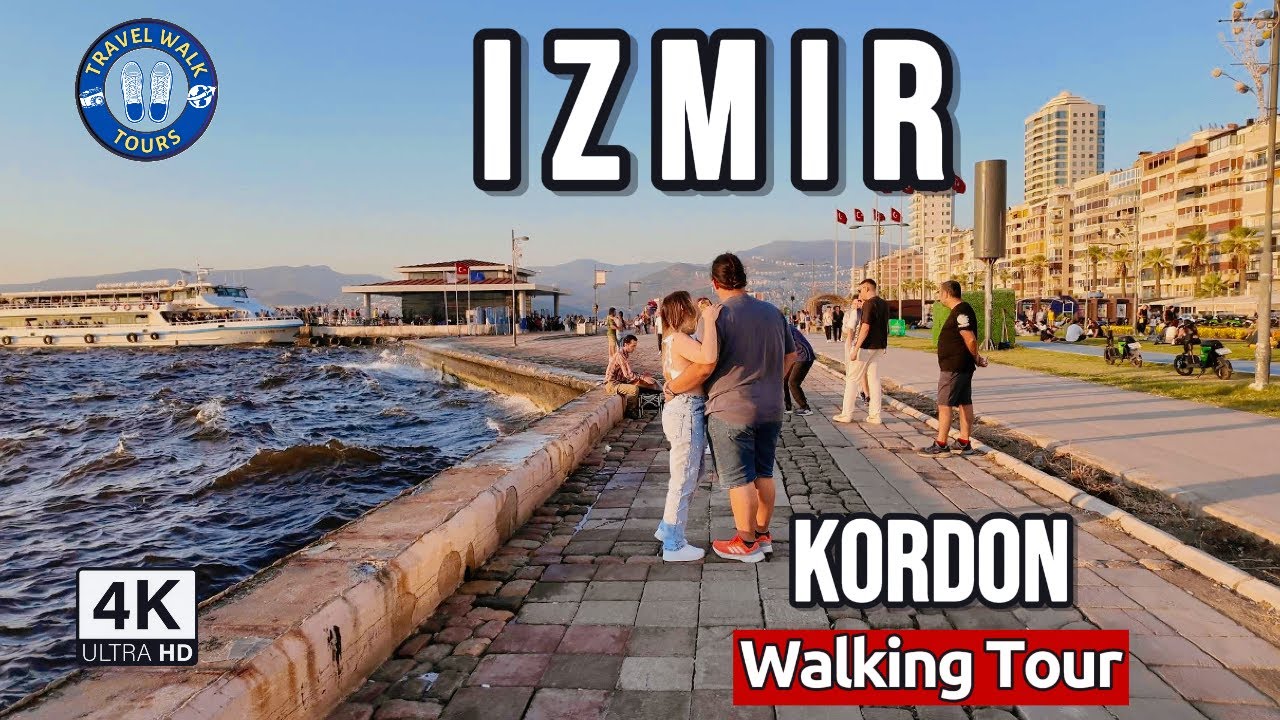
The channel recorded the central streets of Izmir in continuous 4K walking footage. Seeing the ground, the crowds and the distances before you go makes your plan realistic.
Frequently Asked Questions
**How many days do you need for Izmir?** One day is enough for the centre alone. Adding Ephesus and Cesme, a classic first visit is 3 days; with Bergama, Urla and Foca it stretches to 5.
**Can you reach Ephesus from Izmir without a car?** Yes. Take the IZBAN suburban train to Selcuk, then a minibus or taxi to Ephesus. The House of the Virgin Mary needs a taxi or tour from Selcuk.
**Where should you stay in Izmir?** Alsancak for a first visit; the Kordon, cafes and public transport together. Konak if you are focused on the historic centre, Cesme–Alacati if you want the sea.
**Can you see Cesme and Alacati in one day?** Yes, they are 15 minutes apart. Cesme castle and harbour in the morning, the streets of Alacati in the afternoon is a good order.
**When is the best time to visit Izmir?** Spring (April-May) and autumn (September-October) are ideal; the heat breaks and the crowds thin. Summer is good for the beach, but midday heat is hard going at the ancient cities.
Planning questions
What does this İzmir guide cover?
Plan central Izmir, the Kordon, Kemeralti, Cesme, Urla, Foca and Bergama with realistic routes.
Can I watch a 4K walking tour of İzmir?
Yes. The page links to Travel Walk Tours films so you can preview the İzmir route on a big screen before you go.
How should I use this page to plan?
Read the quick answer first, skim the route notes, then compare street texture, timing, and nearby guides through the linked city page and walking films.