A Cappadocia guide for travelers who want more than balloon photos: Goreme, Uchisar, valleys, sunrise planning and 4K walking route previews.
Cappadocia Is Not Just the Balloon Photo
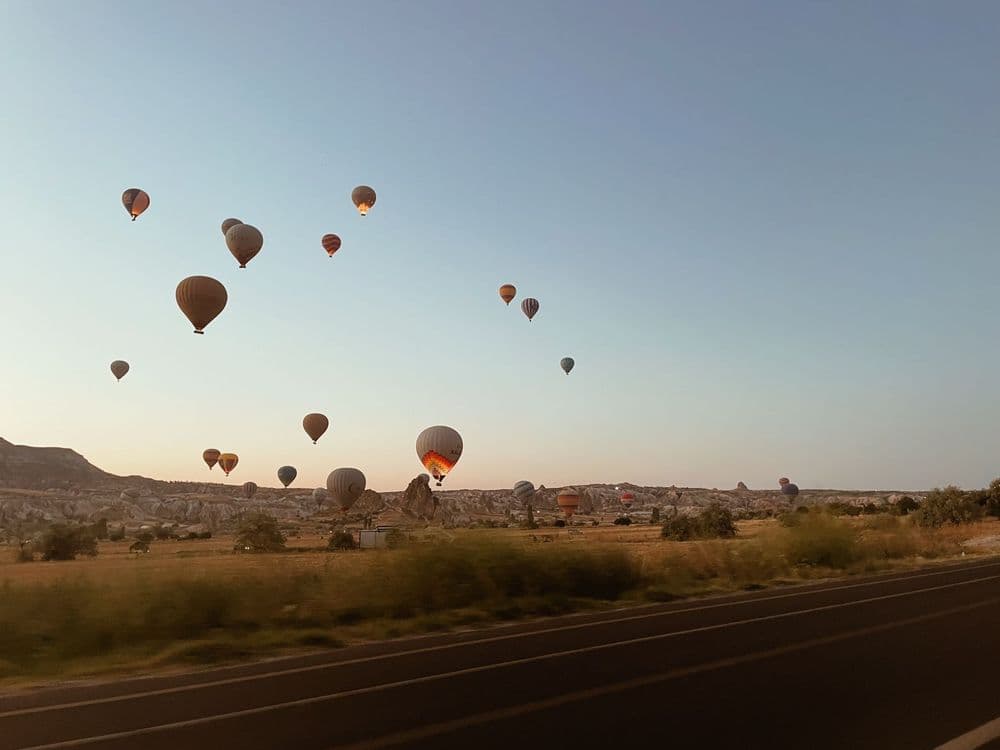
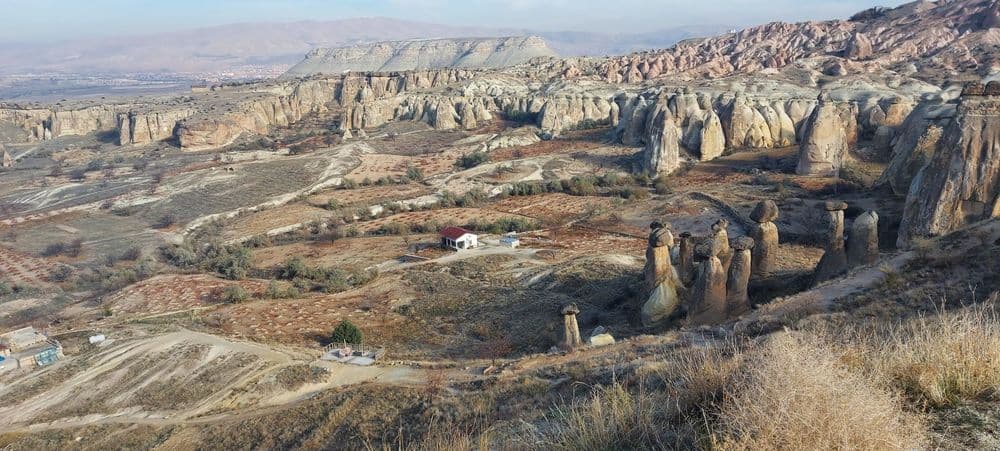
Cappadocia is always sold with the same frame: hundreds of balloons at sunrise. The frame is real, but it is only the opening sentence. This is an open-air sculpture workshop where wind and water spent millions of years carving volcanic tuff, and hidden inside it are thousand-year-old rock churches, underground cities eight levels deep, valleys honeycombed with dovecotes, and towns that still throw pottery on the wheel. Even if you never board a balloon, Cappadocia remains one of the two or three strongest experiences in Turkey.
The region is not one place but a cluster of towns 10–20 minutes apart: Göreme (the practical hub), Uçhisar (the castle view), Ürgüp (wine and stone mansions), Ortahisar (quiet and local), Avanos (pottery on the Kızılırmak river), Çavuşin (old village texture). Wherever you base yourself, the real sightseeing happens on foot in the valleys, and we have walked those valleys with a camera. Our 4K films show the trails as they are: where it is slippery, where there is no shade, where it takes your breath away.
This guide covers the region in 14 stops: which valley to walk at which hour, the real price-and-cancellation math of the balloon, how the two underground cities compare, month-by-month season advice, day-by-day routes, and the practical layer from cave hotels to testi kebab.
Planning Before You Go
How many days? Two full days is the minimum: one sunrise for the balloons (flying or watching), the open-air museum, one underground city, and two valley walks barely fit. Three days is ideal; a fourth opens the far routes like Ihlara and Soğanlı. A day trip to Cappadocia is not Cappadocia.
Getting there: two airports serve the region: Nevşehir (Cappadocia) Airport about 40 km from the center, and Kayseri Airport about 75 km with generally more flights and a fast, flat road. Hotel transfers from both are standard. Renting a car buys freedom; without one, transfers, minibuses, and organized tours cover the core, but you lose flexibility at valley trailheads. Distances inside the Göreme–Uçhisar–Avanos triangle are short; the real time is spent inside the valleys.
The balloon truth: flights launch before sunrise and depend entirely on wind; cancellations are routine. So schedule the balloon for your FIRST morning. If it cancels, you can slide to the next day. Prices vary widely by season and basket size: standard baskets are crowded, small baskets are expensive. Get written quotes from licensed operators and treat "guaranteed flight" marketing with suspicion. Nobody can guarantee wind. Even if you skip flying, get up early once anyway: watching hundreds of balloons lift off from a valley ridge is nearly as powerful as being in one. Our full "Is the balloon worth it?" guide on this site runs the price, cancellation, and alternative math in detail.
When to Come, Month by Month
- April–June: The most balanced window. Green valleys, ideal hiking weather, relatively few cancellations. May mornings are still cold, so bring layers.
- July–August: Hot at midday (30°C+) but dry; mornings and evenings are lovely. Put valley walks before 10 and after 5. Peak crowds.
- September–October: The second golden window and harvest season; the vineyards turn copper and the light is the year's best.
- November: Quieter and colder; clear days still walk beautifully, and hotel prices drop.
- December–March: Snow season. Fairy chimneys under snow and balloons over white valleys are a photographer's pilgrimage, but cancellations rise noticeably and some trails ice over. Waterproof shoes are non-negotiable.
Where to Stay
- Göreme: The most practical base. Valleys start at the edge of town, launch fields are close, and cave hotels exist at every budget. Touristy in the evening, but charming.
- Uçhisar: The best view in the region. Stone hotels below the castle face the valley at sunrise; the choice for quiet.
- Ürgüp: Stone mansion hotels, wine houses, and a more lived-in town feel. Works beautifully with a car.
- Ortahisar: Away from the tourism hum, inside local life, with budget-friendly cave rooms and a surprise castle silhouette.
- Avanos: On the riverbank with the pottery workshops; slightly removed, full of character.
A cave room is part of the Cappadocia experience. Sleep in stone at least one night. Ask two questions when booking: does the terrace face the sunrise, and is the room genuinely carved or just stone-clad? True carved rooms stay cool even in August; pack a light layer for evenings in every season.
Things to Do in Cappadocia
1. Göreme Open-Air Museum
The region's textbook and a UNESCO World Heritage site: rock-cut churches, Byzantine frescoes, and a thousand years of monastic life. Pay the supplement for the Dark Church: starved of light for centuries, its frescoes survive with almost original intensity; this is the region's finest Byzantine art. Most visitors miss the Tokalı Church just outside the gate (included in the ticket). Don't. The museum is 1.5 km from Göreme center; walk it, the views en route are part of the ticket. Enter in the first hour; tour buses stack up after ten.
2. Pigeon Valley
Between Uçhisar and Göreme, named for the thousands of dovecotes carved into the cliffs: pigeon droppings fertilized the vineyards for centuries, so the valley's name and its economy are the same story. The walk is about 4 km, easy to moderate, and the region's best first valley: fairy chimneys, vineyards, rock shelters. Start from Uçhisar and the route runs gently downhill to Göreme. Our valley walking film shows the full trail before you commit.
3. Rose and Red Valleys (Kızılçukur)
Sunset headquarters. The red tuff walls ignite in evening light, and the Cross Church and the Grape Church hide among the vineyards inside. Enter two hours before sunset and claim a ridge as the color turns. Carry a flashlight. A good sunset always ends with a twilight walk out, and the trail network can confuse; our film clarifies the main route.
4. Love Valley
Cappadocia's most famous chimney silhouettes stand here. The valley-floor walk is calm and mostly flat, and on flying mornings the balloons drift directly overhead. This ridge is the number-one spot for a balloon-watching sunrise. There are viewpoints above for non-walkers, but the real feeling comes from passing beneath the giants.
5. Paşabağ and Devrent
Paşabağ (Monks Valley) is known for its multi-capped mushroom chimneys. The hermitage of St. Simeon, carved into one of them, can still be visited. Devrent is the "imagination valley" of animal-shaped rocks: everyone finds the camel, the rest is up to you. Both are short strolls rather than hikes and chain neatly onto the Avanos road: Paşabağ in the morning, Devrent after, pottery and lunch in Avanos at noon.
6. Uçhisar Castle
The highest point in the region is a giant citadel carved through a tuff outcrop. From the top, a 360-degree panorama runs all the way to Mount Erciyes; it is the fastest way to understand the whole geography in one look. Climb near sunset; the steps are short but steep. The Pigeon Valley viewpoints at the castle's foot give nearly the same frame for free if you skip the climb.
7. Ortahisar
One step off the tourist track and therefore the most lived-in town: a giant rock castle (climbable depending on restoration status), old stone houses around it, and a genuine village coffeehouse on the square. Lemons and potatoes are still stored in cold caves carved into the rock here, proof that Cappadocia still uses its stone today. A midday break on the square beats any tourist menu.
8. Kaymaklı or Derinkuyu Underground City
Full cities sinking eight levels underground, with ventilation shafts, wine cellars, churches, and millstone doors: thousands of people could shelter for months. Which one? Derinkuyu is deeper (85 meters) and its narrow stairways feel more like an expedition; Kaymaklı spreads wider and breathes easier for anyone unsure about tight spaces. Choosing one is enough. It is 13–15°C inside even in August, so bring a layer. Go early morning or late afternoon; in the corridors, the crowd sets the pace.
9. Ihlara Valley
About 85 km from the center: a hundred-meter-deep canyon where you walk the floor along the Melendiz stream. Rock churches line the path, and the tree shade and running water build a completely different atmosphere from the fairy-chimney valleys. The classic stretch runs 4 km from Ihlara village to Belisırma, where trout lunch on platforms over the stream is the walk's reward. Pair it with Derinkuyu: underground in the morning, canyon at noon. With time left, the colossal rock monastery of Selime Cathedral stands right on the return road.
10. Avanos
On the Kızılırmak, Turkey's longest river, this is a town that has thrown pottery since the Hittites; the red river clay is why the craft never left. The workshops will sit you at the wheel; bargain if you buy, and if you do not, the demonstration is free theatre. The riverside tea gardens make an ideal midday break; cross the suspension bridge for a short loop through old Avanos.
11. Ürgüp, the Three Beauties and the Wine Houses
Cappadocia is one of Turkey's oldest wine regions; the volcanic soil gives local grapes like Emir and Kalecik Karası a mineral edge. A tasting evening among Ürgüp's stone mansions is the trip's grown-up pause. Ask for local producers' bottles. The Three Beauties fairy chimneys at the edge of town are the region's most classic postcard; come at sunset when the daytime crowd has gone, and climb Temenni Hill for the town panorama.
12. Çavuşin and Zelve
Çavuşin's abandoned cliff village shows Cappadocia as it was before restoration tourism; the Church of St. John the Baptist above it is among the region's oldest and largest rock churches, and its terrace is a superb balloon-watching spot. Just up the road, the Zelve Open-Air Museum fills three joined valleys with a former cave town, inhabited until the 1950s. Less crowded than the Göreme museum, and more of a discovery.
13. Mustafapaşa and Soğanlı (The Far South Route)
With a fourth day, head south: Mustafapaşa (old Sinasos) is an open-air museum of carved Greek mansion facades; the Keşlik Monastery's chapels sit quietly in an orchard along the way; and Soğanlı Valley pairs carved churches with the two villages' famous cloth dolls. Tour buses rarely come here. This is where quiet Cappadocia lives.
14. The Balloon-Watching Spots
For non-flyers (and for the morning after you fly): the Love Valley rim, the Çavuşin church terrace, and Göreme's sunrise terraces are the three best stands. Take your place 45 minutes before sunrise with something hot, since even summer dawns are cold, and watch hundreds of balloons rise at once. Our valley films show the paths to these ridges, so you are not hunting a trail by phone light in the dark.
Suggested Routes
2-day intensive:
- Day 1: Balloon at sunrise (or balloon-watching from the Love Valley ridge), Göreme Open-Air Museum after breakfast, Pigeon Valley walk in the afternoon, sunset from Uçhisar Castle.
- Day 2: Paşabağ and Devrent in the morning, pottery and lunch in Avanos, Kaymaklı underground city in the afternoon, sunset in Rose Valley.
3-day ideal (add to the above):
- Day 3: Love Valley walk in the morning, Çavuşin and Zelve at midday, a coffee on Ortahisar's square, wine tasting in Ürgüp in the evening.
4+ days: a full day for Ihlara Valley plus Derinkuyu and Selime, and the southern Mustafapaşa–Soğanlı loop. Spend remaining evenings returning to your favorite valley at sunset. In Cappadocia, repetition beats novelty.
Food and Drink
The region's signature is testi kebab: meat and vegetables sealed in a clay pot, slow-cooked for hours, and cracked open at your table. The show is as good as the taste, and most places want it ordered hours ahead, so plan dinner at lunchtime. The rest of the local table: hand-rolled mantı dumplings, Nevşehir tava, apricot and grape molasses, roasted pumpkin seeds, and casseroles baked in Avanos clay. Breakfast culture is strong: village honey, clotted cream, and stone-oven bread are standard. The panoramic terrace restaurants in central Göreme are lovely for atmosphere but cook for tourists; give at least one meal to a local lokanta in Ortahisar or Ürgüp. Do your wine tasting on the Ürgüp side, where the volcanic mineral edge comes through most clearly in the Emir grape. Filming the pot-cracking is allowed everywhere; the point is still the taste.
Honest Warnings
- Balloon cancellations are normal and exist for your safety. Do not buy "guaranteed flight" promises; schedule the flight for your first morning and keep a backup dawn.
- ATV and horse tours are scarring the valleys: tuff is fragile and does not heal. Walk the valleys instead; the walking IS the experience, and the rock stays whole.
- At sunset viewpoints (especially the Rose Valley ridges), memorize the way down in daylight; a phone light is weak on tuff trails.
- Do not climb chimney tops or cliff edges for photos. The rock is brittle, and accidents happen every year.
- The underground cities' narrow passages are serious; if you are claustrophobic, pick Kaymaklı over Derinkuyu, and stay in the upper levels.
- "Photoshoot packages" (flying dresses, classic cars, carpet spreads) occupy the sunrise spots in season; for a calm frame, walk one ridge further.
- Winter visitors: cancellations rise, but snowy Cappadocia more than repays it. Waterproof shoes; trails can ice over.
- Cave rooms are naturally cool and slightly humid; even in summer you will want a layer at night.
By Name: The Rock Churches and Extra Stops
For whoever finishes the main stops, a verified second layer of named fresco churches and untrodden corners:
- Tokalı Church (Göreme): outside the Open-Air Museum gate but included in the ticket; the region's largest rock church and one of its richest fresco cycles. Most people miss it; nobody regrets it.
- The Sandal, Snake, Apple and St. Barbara churches (inside the Göreme museum): the named churches of the museum; the St. George fresco of the Snake Church and the footprints of the Sandal Church come alive with a guide's telling.
- El Nazar Church (Göreme): a 10th-century church hidden in its own small valley outside the museum; ticketed, and almost always quiet.
- Kılıçlar Church (Göreme): a fresco surprise inside the Swords Valley, with a genuine sense of discovery.
- Aynalı Church (on the Ürgüp road): a rock-cut monastery complex whose dark corridors are toured by flashlight.
- Pancarlık Church (Ürgüp): a fresco treasure in the valley between Ortahisar and Ürgüp that the crowds forgot.
- Taşkınpaşa Medrese (Ürgüp/Damsa): Karamanid-era stonework, an elegant pause on the Soğanlı road.
- Sarıhan Caravanserai (Avanos): a 13th-century Seljuk han that hosts whirling dervish ceremonies in the evening.
- Nevşehir Castle (the provincial center): the hilltop over the city, pairing with the Kayaşehir underground complex for a "Nevşehir without tourists" afternoon.
- The Göreme balloon-watching hill (Göreme): the official meeting point of the sunrise crowd; most of the dawn frames in our films come from these ridges.
Frequently Asked Questions
- How many days does Cappadocia need? Two full days minimum, three ideally, four if Ihlara and the southern route are on the list.
- Is the balloon a must? No. Watching the mass launch from a ridge is nearly as strong. The Love Valley rim and the Çavuşin terrace are prime spots. If you fly, book the first morning and leave a spare dawn; our balloon guide on this site runs the full math.
- Which town should I stay in? First visit: Göreme for practicality or Uçhisar for the view. Ortahisar for quiet, Ürgüp for wine and mansion texture.
- Kaymaklı or Derinkuyu? Depth and adventure: Derinkuyu. Width and easier breathing: Kaymaklı. Doing both is redundant for most visitors.
- Do I need a car? Not strictly, but it is a big comfort for trailheads and the far routes (Ihlara, Soğanlı). Without one, tours and minibuses cover the core.
- Best season? April–June and September–October; October for harvest light, January–February for the snow photographs.
- Does it work with kids? Yes: short valley sections, the Avanos pottery wheel, and a balloon-watching dawn all land well with children; skip the lower levels of the underground cities.
- Where do I watch the walking films? The Cappadocia city page and the walking-tours archive hold the 4K valley walks. Watching the trail before you hike it settles the route.
Where to Stay in Cappadocia
Your base changes the whole trip. Goreme is the easiest choice for first-time visitors because restaurants, tour offices, valley access and sunrise viewpoints are close. Uchisar is calmer and stronger for views. Urgup has a broader hotel range and works better if you have a car. Without a car, Goreme is usually the most practical base.
Main Places to Visit
- Goreme Open-Air Museum area: A strong historical starting point.
- Uchisar: Best for views, sunset and a quieter base.
- Love Valley, Pigeon Valley and Red Valley: Good for walking and landscape photography.
- Cavusin: Village texture, stone houses and a calmer atmosphere.
- Pasabag and Zelve: Useful for understanding fairy chimney formations.
Balloon Planning
Even if you do not book a balloon flight, watching balloons at sunrise is a major Cappadocia experience. Flights depend on weather, so do not rely on a single morning. If possible, stay at least two nights so you have more than one sunrise chance.
Valley Walking Notes
Cappadocia valleys can look simple in photos, but the ground is dusty, uneven and sometimes exposed to the sun. Bring water, a hat and proper shoes. For short walks, choose easier sections around Goreme or Pigeon Valley. For longer walks, plan Red Valley and nearby routes with more time.
Why Video Helps Here
Cappadocia is one of the places where video is more useful than photos. A walking video shows trail width, slopes, dust, shade, distance and the real feel of the landscape. Watch the related videos before choosing a valley route, especially if you are deciding between a short scenic walk and a longer hike.
A Balanced 3-Day Plan
- Day 1: Goreme, open-air museum area, a short valley walk and sunset.
- Day 2: Uchisar, Pigeon Valley, Cavusin and Red Valley.
- Day 3: Pasabag, Zelve, Avanos or a quieter selected valley.
Keep the plan flexible because balloon flights and outdoor routes depend on weather. If balloons are cancelled, use the morning for viewpoints, valley walks or village routes. A car makes the wider area much easier, while travelers without a car should keep Goreme as the main base.
Planning questions
What does this Nevşehir guide cover?
A Cappadocia guide for travelers who want more than balloon photos: Goreme, Uchisar, valleys, sunrise planning and 4K walking route previews.
Can I watch a 4K walking tour of Nevşehir?
Yes. The page links to Travel Walk Tours films so you can preview the Nevşehir route on a big screen before you go.
How should I use this page to plan?
Read the quick answer first, skim the route notes, then compare street texture, timing, and nearby guides through the linked city page and walking films.