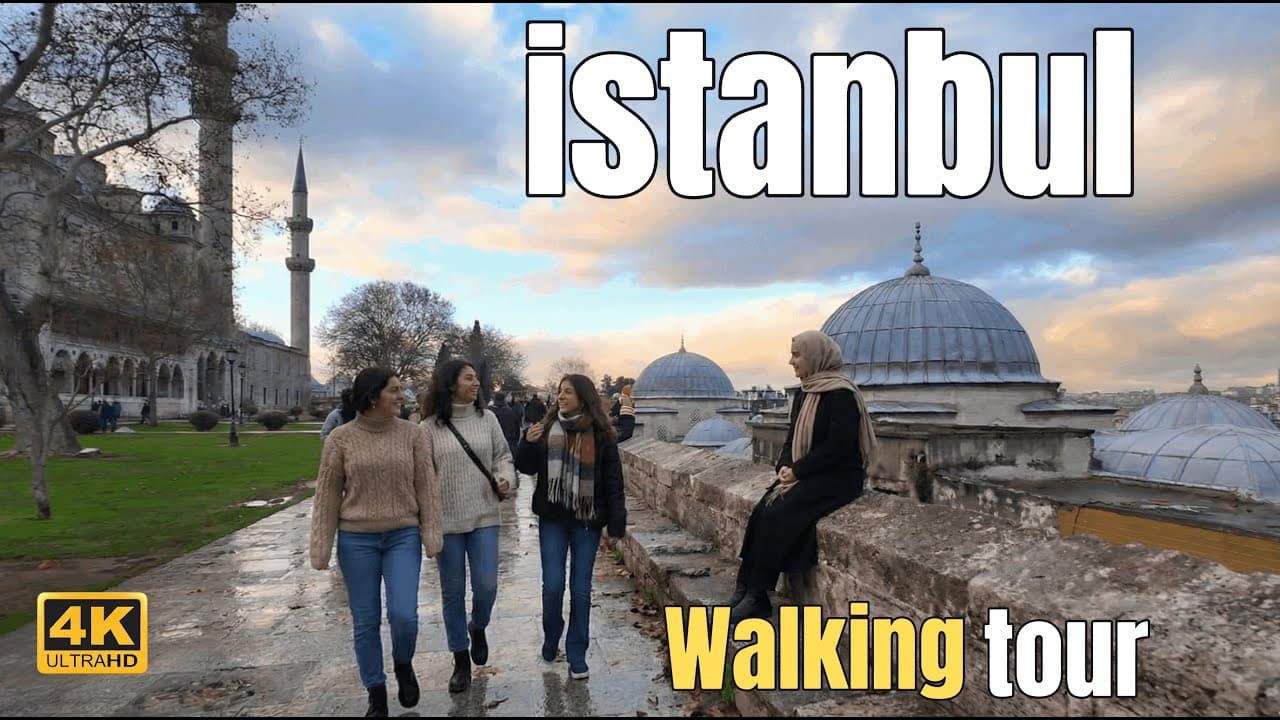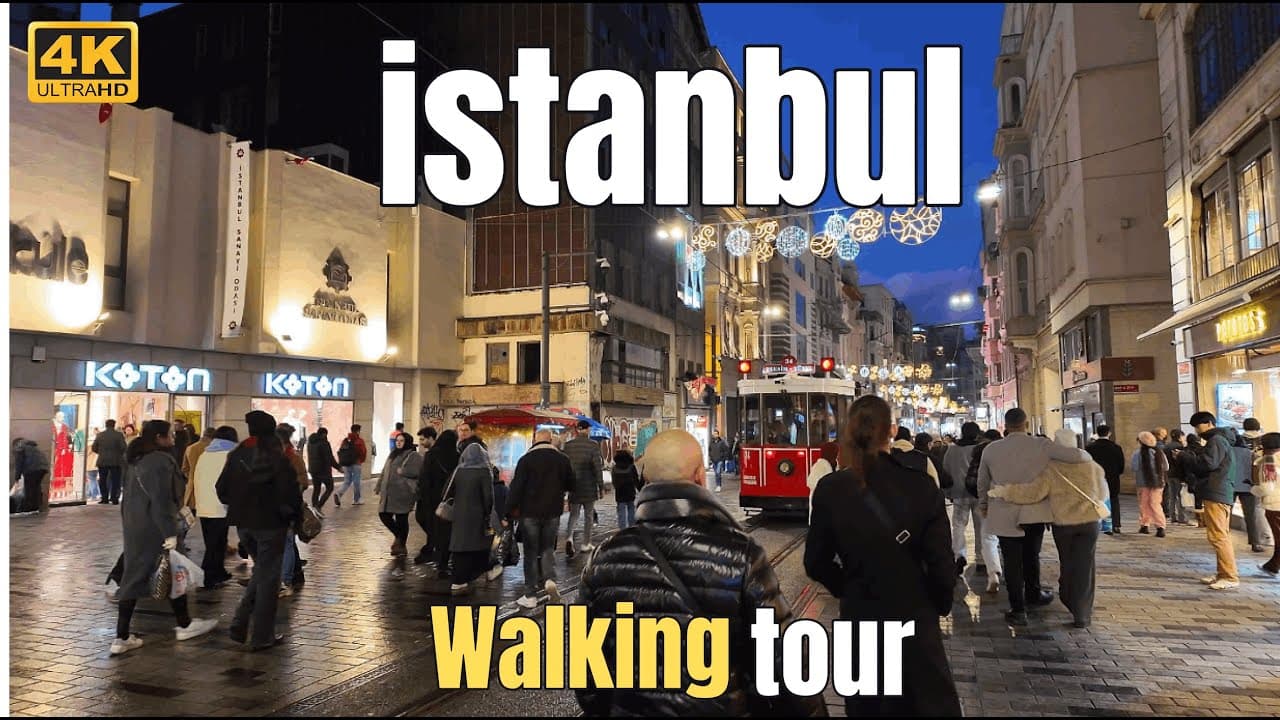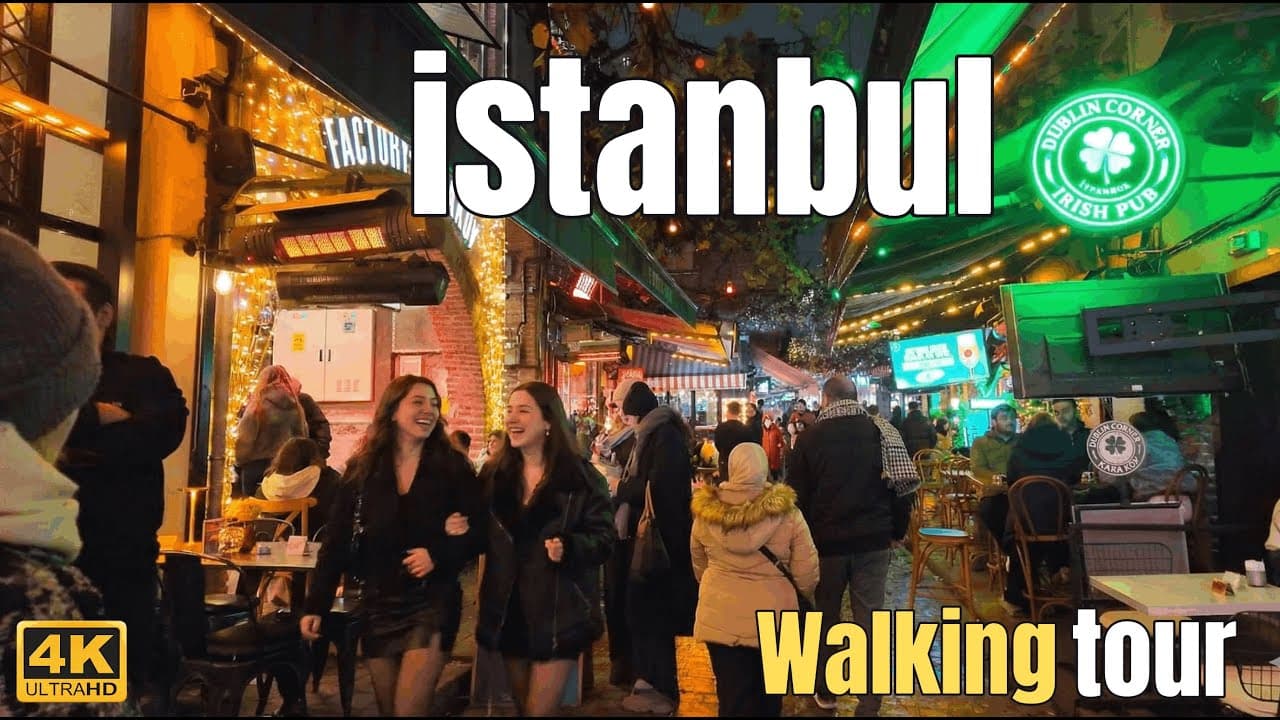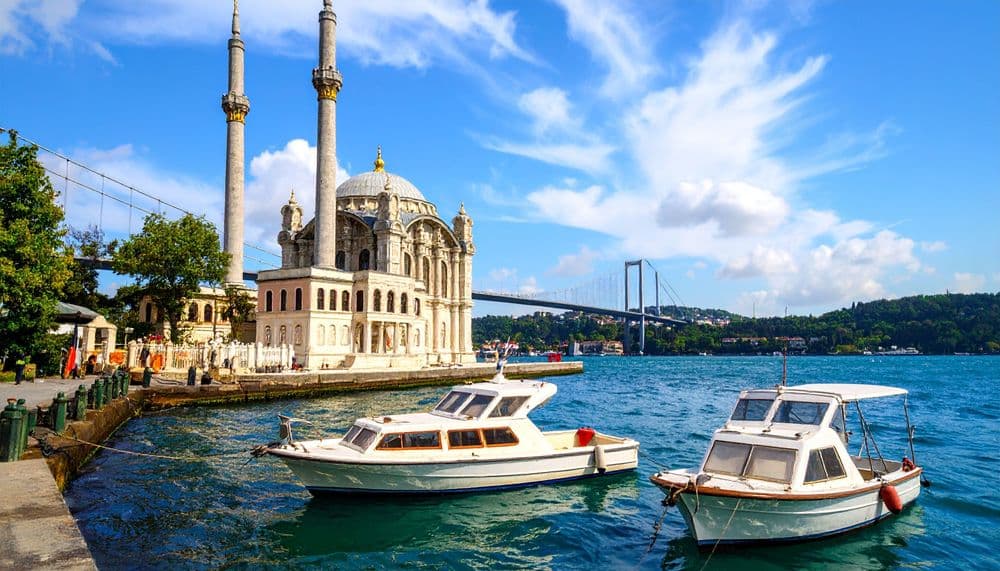
Plan Cihangir and Tophane around the hillside cafes, the Cihangir Mosque view and the Tophane shore, at a calm pace.
Walk this route
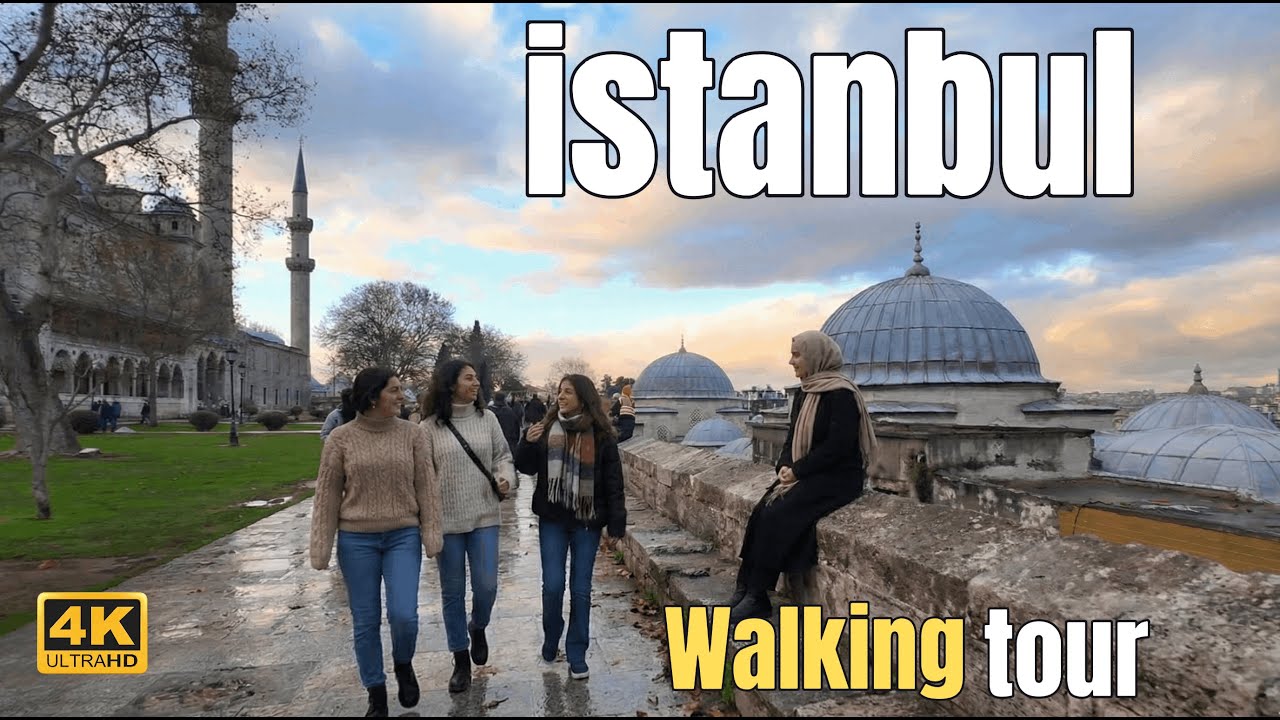
ISTANBUL WALKING TOUR 4K 🇹🇷 – Golden Horn & Old City Views (No Commentary)
Watch the 4K walkPlaces on the map
8 pinsNumbers match the order in the article. Tap a pin for directions.
Cihangir, Cukurcuma and Tophane: the Beyoglu slope where people actually live
Between Istiklal Street at the top and the Tophane shore at the bottom runs one of Istanbul's most talked-about and least understood hillsides. Cihangir sits at the top with its cafes and cats, Cukurcuma in the hollow with its antique dealers, Tophane at the water with its tea gardens and tram stop. All three fit into a single walk, and the streets between them show you something the tourist trail rarely does: a working neighbourhood. People live here. Neighbours buy bread in the morning, cats sleep in doorways, repair shops sit next to third-wave coffee counters.
The common mistake is treating this area as a sight to tick off. Cihangir has no single monument; the district itself is the experience, and it deserves a slow morning rather than a quick pass. A coffee, a few antique shop windows, the Bosphorus from a mosque terrace, then a downhill drift to a tea garden. Rush it and you miss the whole point.
The streets are steep and the pavements uneven. Wear comfortable shoes and plan the route downhill: starting at Taksim and finishing at Tophane is far kinder to your legs than the reverse.
Quick answer
Walk Cihangir, Cukurcuma and Tophane as one downhill route, top to bottom, without hurrying.
- Enter on foot from Taksim and finish at the T1 Tophane tram stop; the other direction is a constant climb.
- The Cihangir Mosque terrace has a wide Bosphorus view and costs nothing.
- Weekday afternoons suit the antique shops; weekday mornings suit the cafes.
- Check the Museum of Innocence's hours before you go; it is usually closed on Mondays.
1. Cihangir Mosque and its terrace
Cihangir Mosque gave the district its name. The current building dates from the late 19th century, but the first mosque on this spot was commissioned in the 16th century from the architect Sinan, in memory of Suleiman the Magnificent's son Cihangir. The building itself is modest; what draws people is the terrace beside it. From the edge of the courtyard the Bosphorus opens in a wide sweep: the Maiden's Tower, the Uskudar shore, the line running toward Seraglio Point, and ships passing below. It is the best free view in the neighbourhood.
This is an active mosque. Dress modestly if you go inside, and keep quiet on the terrace during prayer times. The terrace is generally open through the day; sunset is the finest hour, though do not expect to have it to yourself. The lanes up to the mosque are steep and the climb leaves you briefly out of breath. Bring water, sit down, count ships. That counts as sightseeing here.
2. The Cihangir cafe streets
Cihangir's reputation rests largely on its cafes. The lanes running off Siraselviler, especially the stretch dropping toward Firuzaga, are lined with small coffee shops, breakfast places and bakeries. This is one of Istanbul's capitals of sitting around: tables spill onto the pavement, cats claim the chairs, and nobody tries to turn your table over.
An honest note: weekend brunch hours get crowded, and the popular places run queues. Prices track the neighbourhood's fame, so glance at a menu before settling in. If you want the calm version of Cihangir, come on a weekday morning, when the streets belong to residents and the baristas have time to talk.
Do not chase a list of specific venues. The pleasure is in picking whichever corner appeals, drinking a coffee, watching the street, then moving on. In Cihangir a cafe is not a destination; it is the resting point of the walk.
3. Firuzaga Mosque and its square
Firuzaga Mosque is a small single-domed Ottoman mosque from 1491. Architecturally it is plain, but the little square in front of it is the true centre of Cihangir. Tea drinkers along the mosque wall, locals sprawled on the low stools of the coffee shops opposite, a simit seller, the cats: the daily life of the district is condensed into these few square metres.
This is less a sight than a stopping point. The right thing to do is sit somewhere facing the square and do nothing for fifteen minutes. If one single frame explains why people love Cihangir, it is this one.
The mosque is active, and on Friday around midday the square fills with the congregation, when finding a seat gets difficult. The lanes dropping toward Cukurcuma begin a few steps away; Firuzaga is the natural hinge between the cafe zone and the antique quarter. Keep heading downhill and the route carries you along by itself.
4. The Cukurcuma antique quarter
Cukurcuma, gathered in the hollow below Firuzaga, is Istanbul's best-known antique district. Along Cukur Cuma Street and the surrounding lanes are dozens of shops, from serious antique dealers to jumbled places selling old records, door knockers, chandeliers and oil lamps. The window displays are a show in themselves, and the armchairs and mirrors spilling onto the pavement give the street the feel of an open-air museum.
Two notes if you plan to buy. Prices are rarely on labels and bargaining is expected; asking politely is entirely normal. And not everything sold here is as old as it looks, so if you are considering an expensive piece, take your time and compare a few shops.
Most shops open toward midday, and many close on Sundays. Weekday afternoons are the most rewarding time. Browsing without buying anything is completely fine; the dealers are used to it.
5. The Museum of Innocence
In a back lane of Cukurcuma, in a dark-red corner house, stands the Museum of Innocence, which grew out of Orhan Pamuk's novel of the same name. Book and museum were conceived together: in the story, Kemal collects objects belonging to Fusun, the woman he loves, and that fictional collection became a real one here. The display cases follow the novel's chapters, filled with the everyday objects of 1970s and 80s Istanbul, soda bottles, combs, clocks, and the famous wall of cigarette stubs.
To be honest about it: if you have not read the novel, the museum can feel puzzling. If you have, it is hard to name another place where literature and physical space are so tightly interwoven. Pamuk won the Nobel Prize in Literature in 2006, and the museum was named European Museum of the Year in 2014.
It is a small museum with limited hours, usually closed on Mondays, so verify current times and tickets before going. Some editions of the novel contain a printed ticket that grants free entry; confirm at the desk that this still applies.
6. The Tophane tea gardens
Where the slope ends, in Tophane, between the Kilic Ali Pasha Mosque and the Nusretiye Mosque, sit some of Istanbul's well-known tea and nargile gardens. Low stools under the trees, the clack of backgammon, trays carried out from the tea stove: this is the natural finale of the walk. After Cihangir's cafe prices, a glass of tea down here feels almost like a gift.
The character is distinctly different from Cihangir: more male, more traditional, and thick with waterpipe smoke in the evenings. Go knowing that; for some visitors the atmosphere is the attraction, for others it is simply a rest stop.
Right beside the gardens stands Kilic Ali Pasha Mosque, built by Sinan in the 1580s in his old age, an elegant small-scale experiment with the plan of Hagia Sophia. The complex's bathhouse still operates. Leaving your tea for five minutes to see the mosque is worth it, having come this far down.
7. Sanatkarlar Park
At Cihangir's southern edge, where the hillside faces the Bosphorus, lies Sanatkarlar Park, a neighbourhood park descending in stepped terraces that most visitors never notice on the map. Its view rivals the Cihangir Mosque terrace: Seraglio Point, the Topkapi skyline, the Maiden's Tower and the ship traffic opening toward the Marmara, all in one frame.
Do not expect a manicured garden. The benches are worn, the grass is patchy, and in the evenings it becomes a gathering spot for young people with guitars. But in exactly that state it fits the district's character. Joining the locals who sit here at sunset with a thermos of tea is one of the most authentically Cihangir things you can do.
The entrance is on the Susam Street side; the slope is steep and the climb back can be tiring. There is a children's playground, but the view is the real business. Saturday evenings get crowded; for a quiet stop, choose a weekday late afternoon.
8. The Akarsu slope
Akarsu Yokusu, named after a stream that once ran here, is one of the main lines connecting Cihangir to Tophane, and it makes the most sensible finish to the walk. It begins at the top with cafes and bakeries and shifts, as you descend, into corner groceries, tailors and everyday tradesmen. Along one street you see both faces of Cihangir, the renovated shopfronts and the old neighbourhood, side by side.
Several of the addresses that built Cihangir's breakfast reputation sit on this stretch, and tables fill up late on weekend mornings. The cats are everywhere here too: in windows, on car bonnets, on cafe chairs. They count as the district's unofficial mascots, and the shopkeepers know most of them by name.
At the bottom of the slope the Bosphorus comes into view, and within a few minutes you reach the Tophane tram stop. The route closes neatly: you entered from the noise of Istiklal, passed through a living neighbourhood, and finished at the water.
Getting there
The two easiest entry points are Taksim and Tophane. From Taksim Square, take Siraselviler Street and after about ten minutes on foot you reach the Cihangir cafe streets; this direction is downhill all the way and is the natural start of the route. Alternatively, take the T1 tram to the Tophane stop and climb up, but that direction means a steady steep ascent and is hard work on hot days.
For metro users, the M2 Taksim station suits the start and the T1 Tophane stop suits the finish. You can also walk to Tophane along the shore from Karakoy. Do not attempt to come by car: the streets are narrow, mostly one-way, and parking is close to nonexistent.
When to go
Weekday mornings show the area at its calmest and most genuine; cafe seats are easy to find and the streets belong to the residents. Since the antique shops open toward midday, leave Cukurcuma for the afternoon. Weekend brunch crowds are real; if you arrive late on a Saturday or Sunday, be ready to wait. Many antique dealers are also closed on Sundays.
Season-wise, spring and autumn are the most comfortable for the slopes. Summer climbs are sweaty; in winter the view depends on clear weather. Time your sunset for the Cihangir Mosque terrace or Sanatkarlar Park.
Eating and drinking
The food logic of the route is simple: breakfast and coffee at the top, tea at the bottom. Cihangir is dense with third-wave coffee shops, spread-style Turkish breakfast places and good bakeries; prices run above the Istanbul average, so check a menu before sitting down. In Cukurcuma, small coffee counters and home-style tradesmen's restaurants appear in the side lanes while you browse the antique shops, and these tend to be more reasonably priced.
Down in Tophane the equation changes: tea and nargile in the gardens are economical, but food options are limited. For a proper dinner, walking a few more minutes toward Karakoy is your best move.
Frequently asked questions
How long does this route take?
The walking alone is under an hour, but that is not how to do it. With breakfast, the antique shops, the museum and a tea stop, allow a relaxed half day, ideally from about 10 in the morning to 3 in the afternoon.
Is the Museum of Innocence worth it without reading the novel?
Partly. The period objects in the cases are interesting on their own, but the layer of fiction only opens up with the book. For someone short on time who has not read it, this is the route's most skippable stop.
Do you bargain in Cukurcuma?
Yes, it is expected. Most items carry no price tag; ask politely and make a reasonable counter-offer. With expensive pieces, take your time and compare several shops.
Is the area safe in the evening?
Cihangir and Cukurcuma are residential, so the streets stay lively into the evening and generally feel relaxed. That said, the lanes are steep and lighting varies; sticking to the main streets late at night is precaution enough.
Planning questions
What does this İstanbul guide cover?
Plan Cihangir and Tophane around the hillside cafes, the Cihangir Mosque view and the Tophane shore, at a calm pace.
Can I watch a 4K walking tour of İstanbul?
Yes. The page links to Travel Walk Tours films so you can preview the İstanbul route on a big screen before you go.
How should I use this page to plan?
Read the quick answer first, skim the route notes, then compare street texture, timing, and nearby guides through the linked city page and walking films.