A complete Didim guide connecting Altinkum, the Temple of Apollo, Miletus, Akbuk, Mavisehir and verified shores with realistic itineraries.
Places on the map
14 pinsNumbers match the order in the article. Tap a pin for directions.
Don't file Didim under one kind of holiday
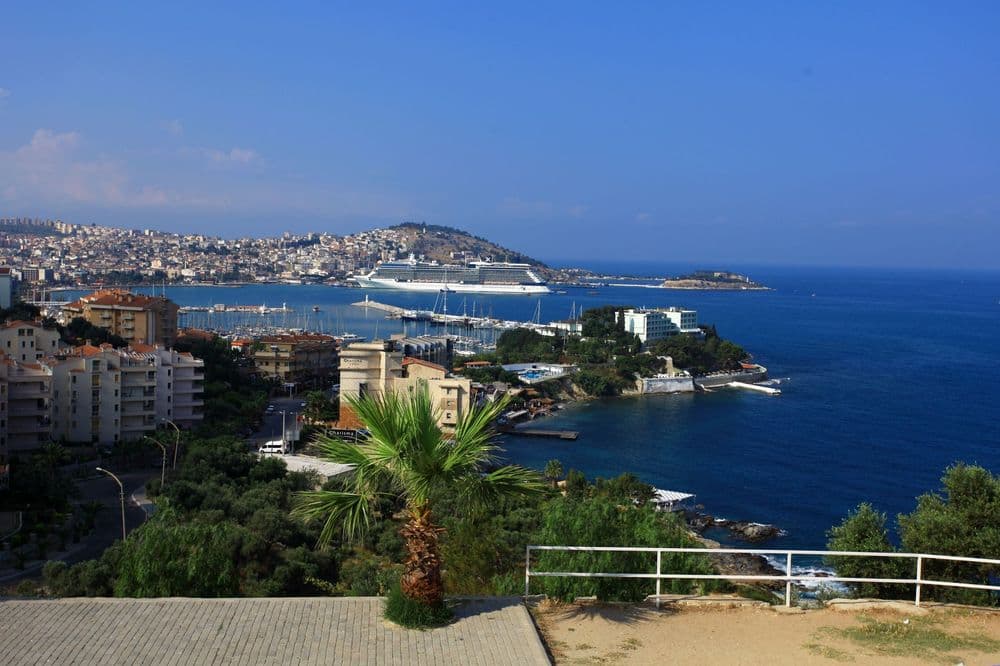
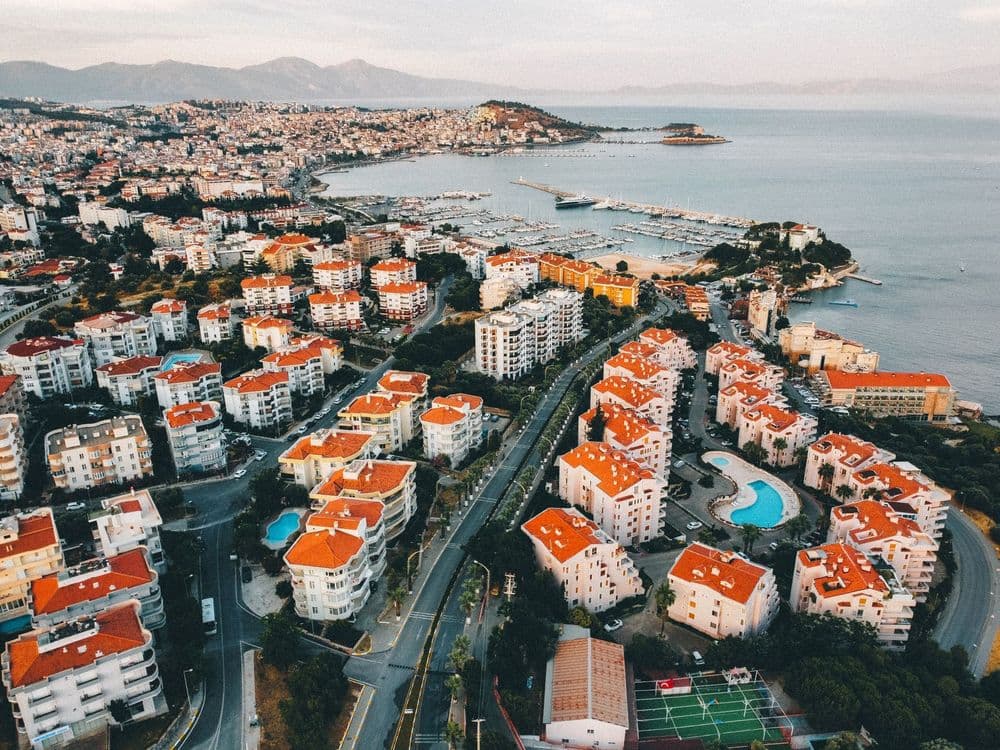
Didim gathers Altınkum's lively shore, one of the ancient world's great oracles at Didyma, the vast archaeological field of Miletus and the calm gulf of Akbük into a single district. Locking yourself into a beach hotel misses it, and so does cramming every landmark into one day. A good plan splits history, swimming and evening walks into separate blocks.
This guide has 14 numbered stops. The numbers match the pins on the map below, and tapping a pin opens that place's own guide where one exists. Distances run as the crow flies from the Temple of Apollo. Hours, tickets and market days change; confirm officially. Price marks are relative: ₺ budget, ₺₺ mid, ₺₺₺ expensive.
See Didim in 4K first
The channel walked this shore and Miletus's stone streets on camera; you see the beach's real density and the ruins' scale before you book anything.
Things to do in Didim
1. The Temple of Apollo at Didyma
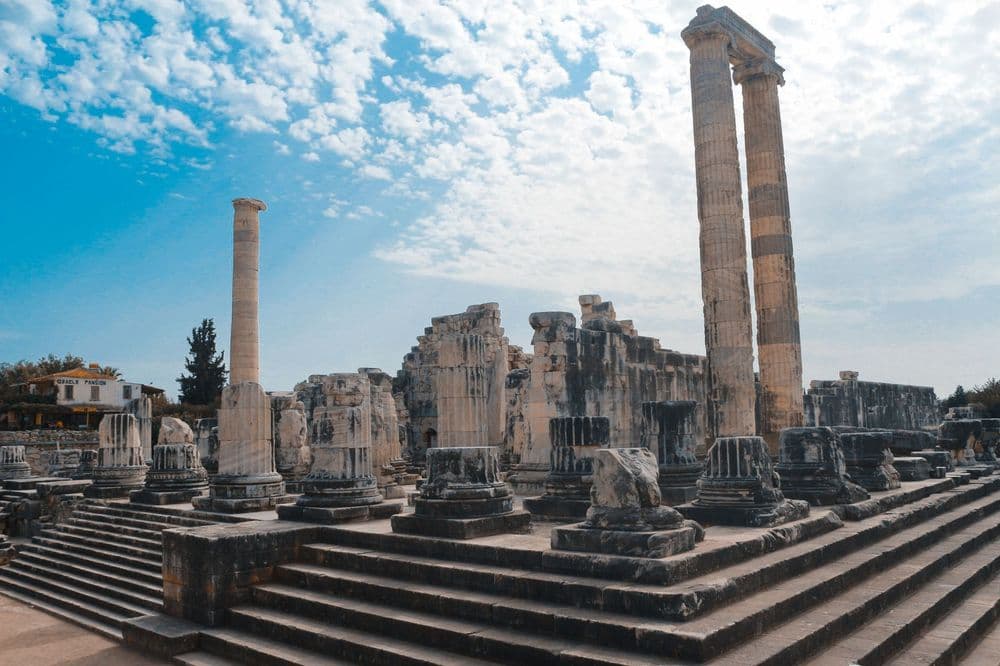
The district's, and perhaps the Aegean's, most striking ancient building. As an oracle its fame rivalled Delphi, and the sanctuary was run by the **Branchidae** priestly family. The Persians burned the site in **494 BC**; after Alexander freed Miletus, work began after **334 BC** on the giant you see today. The architects were **Paeonius of Ephesus** and **Daphnis of Miletus**. The plan was outrageous: a 51 × 109 metre platform carrying a double ring of Ionic columns, each **19.70 metres** tall. Construction ran for more than 600 years and was never finished; two columns stand at full height today, and the monumental **Medusa head** from the frieze is the site's icon. "Unfinished" is not a flaw here; it is the story itself, a monument to dreaming at that scale.
- Getting there: 10 minutes by dolmuş from Didim centre; ~4.5 km from Altınkum.
- Time: 1-1.5 hours; early morning or late-afternoon light is ideal.
- While you're here: The Sacred Way's start (no. 2) adjoins; Roman bath and Byzantine chapel traces sit nearby.
- Budget: ₺₺ (check Museum Pass validity on the official page).
- Common mistake: Going at noon; the open site has next to no shade.
2. The Sacred Way
The roughly 20-kilometre processional road that tied Didyma to Miletus; festival parades walked this line. The verified starting stretch lies beside the temple. Do not expect a continuous marked trail today; respect protection boundaries and private land. Even a short walk on it makes the bond between the two sanctuaries physical.
- Getting there: Right beside the temple (no. 1).
- Time: A symbolic 20-30 minute walk.
- While you're here: One plan with the temple.
- Budget: ₺.
- Common mistake: Treating all 20 km as walkable; this is a historic trace, not a trekking route.
3. Altınkum Beach
The name means "golden sand" and it delivers: fine sand, shallow child-friendly water, a restaurant-bar line behind. Summer crowds are serious; early-morning swims and evening promenade walks are the best hours. Our night film shows this shore after dark. Public access is free; sunbed clubs price separately.
- Getting there: The district's heart; every dolmuş passes it.
- Time: A beach day or an evening promenade.
- While you're here: Second Bay (no. 4) is a walk away; the funfair adds a family evening.
- Budget: ₺-₺₺.
- Common mistake: Being surprised by July's midday crowds; for quiet, look to Second Bay or Akbük (no. 9).
4. Second Bay (İkinci Koy)
Just west of Altınkum, the calmer answer to the main beach's overflow: the same sand quality at a lower volume. Clubs and public stretches interleave.
- Getting there: A 10-15 minute walk from Altınkum.
- Time: A beach day.
- While you're here: Altınkum (no. 3) and the third-bay line adjoin.
- Budget: ₺-₺₺.
- Common mistake: Expecting somewhere entirely different; this is Altınkum's quiet continuation.
5. Didim's markets
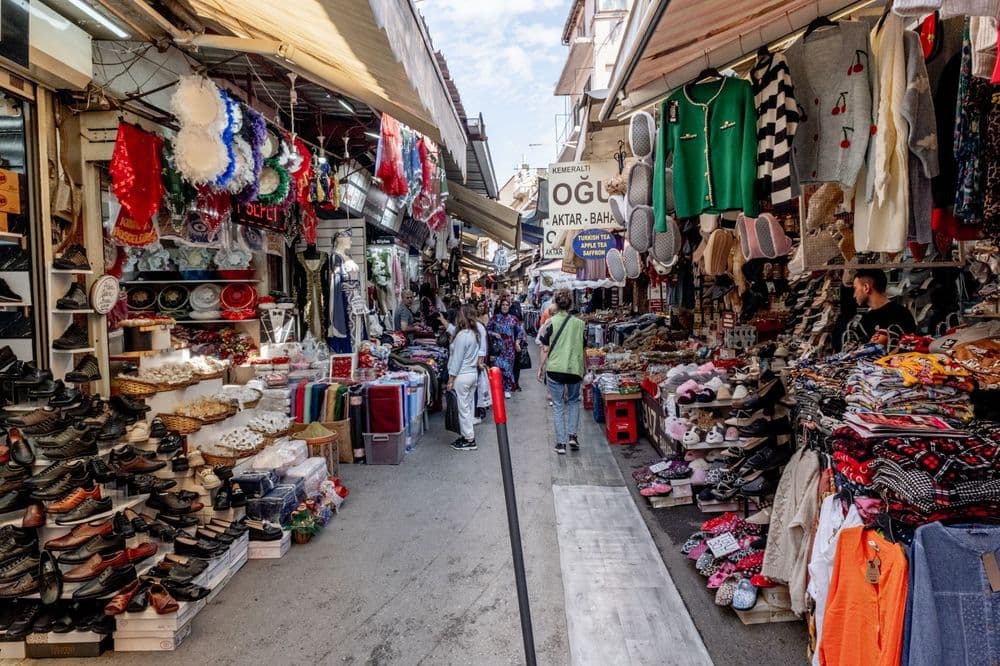
The big Saturday market runs from textiles to olives; Wednesday's is produce-led. Akbük's Friday and Tuesday markets (around no. 9) are more local still. Pick by where you stay; bargaining is expected and early hours mean full stalls.
- Getting there: The central marketplace; dolmuş lines pass it.
- Time: 1-2 hours.
- While you're here: The central bazaar and food street adjoin.
- Budget: ₺.
- Common mistake: Going in the afternoon; the good stalls sell out by then.
6. Miletus Ancient City
Once among the world's great harbour cities and the hometown of the philosopher Thales. The sea has since retreated, leaving the city on a plain, but the scale still presses on you: a 15,000-seat theatre, the Faustina baths, the Delphinion sanctuary, agora and harbour works. Crowds are nearly absent; this site sees a tenth of Ephesus's attention and rewards the history-minded with silence.
- Getting there: 25-30 minutes by car from Didim; ~16 km as the crow flies. Dolmuş links are thin; ask times.
- Time: 2 hours; half a day with the museum (no. 7).
- While you're here: Miletus Museum (no. 7) and İlyas Bey Mosque (no. 8) ring the same site.
- Budget: ₺-₺₺ (check current tickets officially).
- Common mistake: Stopping at the theatre; the baths and harbour line are the visit's real texture.
7. Miletus Museum
The tidy museum that puts the site's finds into context; the stones you saw in the city and temple finish their story here, and on a hot day it doubles as a cool break.
- Getting there: Just south of the site (no. 6).
- Time: 45 minutes.
- While you're here: Make it the first or last stop of the Miletus tour.
- Budget: ₺.
- Common mistake: Skipping it; Miletus without the museum is a film without subtitles.
8. İlyas Bey Mosque
On Miletus's edge, an early 15th-century masterpiece of the Menteşe emirate: a single-domed building whose marble work and portal make a Turkish-Islamic jewel in the ancient city's shadow. Its restoration won awards, and its silence pairs perfectly with the uncrowded ruins next door.
- Getting there: At the southern end of the Miletus site (no. 6).
- Time: 20-30 minutes.
- While you're here: One half-day with Miletus and the museum.
- Budget: ₺.
- Common mistake: Driving past unaware; the sign is small, the mosque is not.
9. Akbük
The gulf town on the district's east: wind-sheltered calm water and a summer-house rhythm, Altınkum's opposite pole. The public beach is wide and free; the Friday and Tuesday markets carry the local pulse. Expect no nightlife; the luxury here is quiet.
- Getting there: 25-30 minutes by minibus from Didim centre; ~16 km as the crow flies.
- Time: A beach day; a full one with the market morning.
- While you're here: The gulf-view shore walk is the town itself.
- Budget: ₺.
- Common mistake: Ruling Akbük out as "far"; for quiet-seekers the distance is the reward.
10. Mavişehir shore
On the north-west coast, a local seafront facing the sunset. No tourist shopfront; a market and calm evenings instead. The "local Didim" break for anyone worn down by Altınkum.
- Getting there: 10-15 minutes by car from the centre; ~3 km as the crow flies.
- Time: Sunset plus dinner.
- While you're here: The temple (no. 1) is on the way back.
- Budget: ₺.
- Common mistake: Looking for a beach club; this is a neighbourhood shore, which is the point.
11. Tavşanburnu
The north coast's verified cove, known for pine shade and a camping tradition. Clear water, light facilities; the favourite escape of those with a car.
- Getting there: 15-20 minutes by car; ~4 km as the crow flies.
- Time: A half or full day.
- While you're here: Akyeniköy (no. 12) lies on the same line.
- Budget: ₺.
- Common mistake: Arriving late on a weekend; the shaded spots go early.
12. Akyeniköy beach
A little-known shore surprisingly close to the temple; low crowd threshold, and the practical choice for stacking sea and history into the same hours.
- Getting there: 5 minutes by car from the temple (no. 1); ~1 km as the crow flies.
- Time: 2-3 hours.
- While you're here: The Temple of Apollo adjoins; columns first, cool-off second.
- Budget: ₺.
- Common mistake: Expecting facilities; this is a plain local beach.
13. The D-Marin and Blue Point line
The marina at the district's southern tip is the address of yacht life and beach clubs, with Blue Point carrying marina comfort onto the sand. Didim's polished face; set budget and expectations accordingly.
- Getting there: 5-10 minutes by car from Altınkum; ~5 km as the crow flies.
- Time: A half or full day.
- While you're here: Altınkum (no. 3) can be the evening continuation.
- Budget: ₺₺₺.
- Common mistake: Expecting public-beach prices; the marina line plays its own league.
14. The Asklepion and Miletus's fringe
A little-known layer of the Miletus fabric: the healing sanctuary linked to Asklepios and the Byzantine buildings around it (the great church, the St. Michael basilica). A keen extra for stone-readers, added onto the main visit.
- Getting there: Around the Miletus site (no. 6).
- Time: An extra 30-40 minutes.
- While you're here: Folds into the Miletus half-day.
- Budget: part of the site visit.
- Common mistake: Planning it as a separate trip; it is an extra layer, not a destination.
Which stop for whom
- First visit: Apollo (1) plus Altınkum (3); the district's two faces
- With children: Altınkum (3), Second Bay (4), Akbük (9)
- Quiet: Akbük (9), Mavişehir (10), Tavşanburnu (11)
- History: Apollo (1-2), the Miletus trio (6-8), Asklepion (14)
- Comfort: the D-Marin line (13)
- Sunset: Mavişehir (10), the Altınkum promenade (3)
Five minutes of Didim history
The real name is **Didyma**, "the twins", a nod to Apollo and Artemis. Its oracle's fame reached across the Mediterranean; kings sent their pre-war questions here, and the **Branchidae** family kept the sanctuary. After the naval defeat at Lade the Persians burned it in **494 BC** and the spring fell silent. When Alexander took Miletus the oracle "spoke again", and after **334 BC** one of history's most ambitious temple builds began: six hundred years of work, never finished. Byzantium put a church in the temple court; the Menteşe emirate left the **İlyas Bey Mosque** at Miletus's edge in the early 15th century. Modern Didim grew in two waves, summer houses from the 1960s and tourism from the 1980s. That you can move from Altınkum's crowds to the temple in five minutes is proof that all these layers still stand side by side.
A first-timer's three days
**Day 1, history plus evening:** The Temple of Apollo (no. 1) and the Sacred Way's start (no. 2) in the morning cool; a swim at Akyeniköy (no. 12) at noon; sunset at Mavişehir (no. 10); an evening walk on the Altınkum promenade (no. 3).
**Day 2, the Miletus half-day:** Leave early; Miletus (no. 6), the museum (no. 7), İlyas Bey (no. 8) and, if keen, the Asklepion (no. 14). The Didim market (no. 5) on the way back if the day matches. Fish in Altınkum's back streets at night.
**Day 3, the cove day:** Akbük (no. 9) or Tavşanburnu (no. 11) in the morning; Second Bay (no. 4) after lunch; close on the D-Marin line (no. 13) if it is a budget-up day.
Classic mistakes
1. **Treating the temple as a half-hour photo.** Leave without the Medusa, the unfinished column drums and the adyton pit and you leave half the story. 2. **Touring Miletus in the heat.** The site is shadeless; enter first thing and save the museum for noon. 3. **Seeking quiet at Altınkum.** That is the district's liveliest point; silence lives east (Akbük) and north (Tavşanburnu). 4. **Mixing up market days.** Saturday Didim, Wednesday produce, Friday-Tuesday Akbük; plan by the calendar. 5. **Mistaking the Sacred Way for a trail.** The trace is symbolic; follow the 20 km in the story, not on foot. 6. **Skipping Akbük.** Describing Didim as "just Altınkum" without its second face is unfair to both. 7. **Not asking the last dolmuş.** The Miletus and Akbük lines thin out in the evening.
When the sea is off the table
A grey or windy day is Didim's history day: the temple (no. 1) plus the Miletus trio (nos. 6-8) are twice the pleasure in cool air. Second option, the market tour (no. 5) and a long Aegean breakfast. Third, storm-watching at Mavişehir (no. 10); the north-west shore is generous with waves.
Day trips
**Kuşadası and Dilek Peninsula:** ~1 hour north. The park's coves and a Pigeon Island evening; details in our Kuşadası guide.
**Bodrum:** ~1.5-2 hours south. The castle and the Museum of Underwater Archaeology fit one day; details in our Bodrum guide.
**Priene:** The third corner of the same ancient triangle as Miletus; the Ionian city on its steep slope adds half a day to a Miletus outing.
Planning questions
**How many days are enough?** Two for the temple and Altınkum; four or five sit well with Miletus, Akbük and the coves.
**Where to stay?** Altınkum for buzz, the centre for balance, Akbük or Mavişehir for quiet; details in our where-to-stay guide.
**Doable without a car?** Altınkum-centre-temple easily by dolmuş; Akbük by minibus; a car or taxi makes Miletus and Tavşanburnu practical.
**When can I swim?** June to September comfortably; early October usually still works. Altınkum's shallows warm early.
**Temple tickets and hours?** They change; the official museum page is the only reliable source.
**One day only?** Apollo in the morning, a swim at Akyeniköy at noon, Miletus in the afternoon, Altınkum in the evening. Tiring, but that is the district in one line.
Planning questions
What does this Aydın guide cover?
A complete Didim guide connecting Altinkum, the Temple of Apollo, Miletus, Akbuk, Mavisehir and verified shores with realistic itineraries.
Can I watch a 4K walking tour of Aydın?
Yes. The page links to Travel Walk Tours films so you can preview the Aydın route on a big screen before you go.
How should I use this page to plan?
Read the quick answer first, skim the route notes, then compare street texture, timing, and nearby guides through the linked city page and walking films.