A walking-focused Mardin and Midyat guide with old bazaars, stone houses, viewpoints, realistic timing notes and related 4K route videos.

Walk this route
Mardin & Midyat Walking Tour 4K - Stunning Views in a 4 Hour Journey Through Mesopotamia
Watch the 4K walkPlaces on the map
12 pinsNumbers match the order in the article. Tap a pin for directions.
You Go to Mardin for Stone, Not Sea
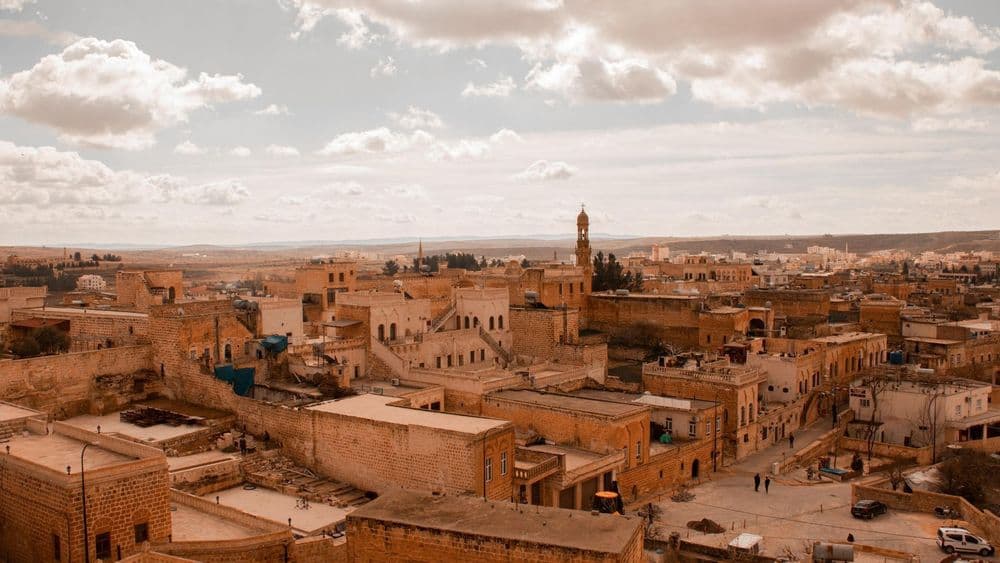
Mardin is one of the most singular stops on any Turkey itinerary because nothing you see here exists anywhere else: a city carved from honey-colored stone, stacked in terraces down a hillside that faces the Mesopotamian plain. When the evening sun hits, the whole town burns gold; below, the plain runs hazy toward the Syrian border. Every civilization wanted this balcony: Sumerians, Romans, Artuqids, Ottomans. Each signed the stone on its way through.
It is also a living mosaic. Mosques, churches, and monasteries share the same lanes; Arabic, Kurdish, Turkish, and Syriac share the same bazaar. Mardin is not a checklist trip. It is a texture trip, and texture is understood on foot. We walked Old Mardin's stepped lanes and its abbaras, the vaulted tunnels that pass beneath the houses, with a camera. The 4K films show the color of the stone and the true gradient of the streets before you commit your knees to them.
This guide covers the region in 12 stops: the logic of Old Mardin's lanes, how the two great medreses differ, monastery etiquette, the underground cisterns of Dara, Midyat and its silver filigree, day-by-day routes, and a food culture that runs from stuffed lamb ribs to the mırra coffee ritual.
Planning Before You Go
Season: the best windows are April–May and October–November, with walkable air and light that was invented for stone. In July and August the plain heat clears 40°C; summer visits mean splitting the day, 7–11 in the morning and after 5 p.m. Winter is cold but calm. Having the lanes to yourself is its own luxury, and an occasional snowfall turns the town silver. In spring the plain below runs green for weeks; seeing that Mesopotamia is not a desert is one of the trip's quiet surprises.
Getting there: Mardin Airport is about 20 kilometers from town, with direct flights from Istanbul and Ankara. Old Mardin is essentially car-free beyond the main street, and the city is walked anyway. For Midyat, Dara, and the monasteries you will want a rental car or a day arrangement with a taxi. Distances are short, but public transport is thin. Minibuses shuttle constantly between the new town (Artuklu) and Old Mardin.
How many days? Two days for Old Mardin, one more full day for Midyat, Dara, and the monasteries: three days is the ideal plan; add a fourth for Savur. If Mardin is part of a wider southeast route with Gaziantep or Diyarbakır, still give it two nights. A day-trip Mardin is only a photo stop.
Where to stay: this is not a hotel city, it is a stone-mansion city. The restored mansion hotels of Old Mardin open their terrace rooms onto the plain; breakfast against that horizon stays with you as long as the monuments do. Know two truths before booking: cars cannot reach most mansions, so luggage travels by stairs and you should pack light; and the view room earns its price difference here completely.
Things to Do in Mardin
1. The Lanes and Abbaras of Old Mardin
The city itself is the masterpiece. The main street is the spine, but the real Mardin hides in the stepped alleys branching above and below it, and in the abbaras, shaded tunnels running under the houses, cool in summer and sheltered in winter; this architecture solved its climate a thousand years ago. Get lost on purpose: every turn opens a carved doorway, a stone oriel, or a sudden view of the plain. Early morning gives you light, coolness, and empty lanes at once. Our stone-lane 4K walking film is honest about the gradient: comfortable shoes are non-negotiable.
2. Zinciriye (Sultan Isa) Medrese
A theological school from 1385 whose ribbed domes and carved portal are a lesson in themselves, but everyone climbs for the terrace: minarets, domes, and the endless Mesopotamian plain in a single frame. Go near sunset, when the stone turns to honey and the plain to copper; the city's classic photograph is taken from here. Rest a moment in the courtyard iwan. The medrese still lives as a Quran school.
3. The Great Mosque and the Bazaar
The fluted minaret of the 12th-century Artuqid Great Mosque is the signature visible from every corner of town. The bazaar wrapped around it still runs on real craft: coppersmiths hammering, saddle-makers stitching (some of Turkey's last harness masters work here), soap sellers and spice stalls. The honest souvenirs are bıttım (terebinth) soap, almond candy, and telkari silver filigree. Bargaining is done gently, and the offered tea is part of the ritual, so accept it. Pause mosque visits at prayer times.
4. Kasımiye Medrese
At the western edge of town, from the late 15th century. The courtyard pool and the carved iwan are among the most elegant stonework in the region, and the pool's symbolism, water running from birth through life to death and beyond, reads genuinely moving alongside the carvings. Quieter than Zinciriye, its shaded iwan is a refuge at midday, and its terrace faces the plain from a different angle. See both terraces and decide which photograph is yours.
5. The Mardin Museum and the Sabancı City Museum
The Mardin Museum, in the former Syriac Catholic patriarchate, layers the region's several thousand years, and the building competes with its own collection. The Sakıp Sabancı City Museum tells the recent everyday life of this multilingual, multi-faith town: the best crash course in what you are walking through. On a summer noon both are cool in every sense; museum, lunch, then late-afternoon lanes is the right summer order.
6. Deyrulzafaran Monastery
Five kilometers from town, the saffron-stoned Syriac Orthodox monastery that served as the seat of the Patriarchate until 1932, still a living house of worship and a school. The guided visit runs through the layers: a sun-cult temple chamber at the base, a 1,500-year-old church and chapels above. Respect the visiting hours and the quiet; no photos during services. Arrive in the first hour of the morning and you will have the courtyard's silence before the tour buses, with the whole day still ahead on the way back.
7. The Ancient City of Dara
Thirty kilometers southeast: a garrison city built in the 6th century to hold the Roman–Persian frontier. The colossal rock-cut water cisterns (locals call them the dungeon) feel like entering an underground cathedral: light falls through the well shafts, and columns sink into the dark. The cliff-cut necropolis and the gallery tomb are startling. Shade is scarce; in summer go in the morning and carry water, and take a break at the village coffeehouses among the ruins.
8. Midyat and Old Midyat
Sixty kilometers east, the capital of telkari silver filigree. Old Midyat's carved mansions outdo even Mardin's for ornament, and the lanes are less restored, less crowded, more of a discovery. In the workshops, watch the masters bend hair-thin silver wire into lace, the town's signature for centuries; real workshop prices are fairer than the tourist windows. The terrace of the Midyat Guesthouse, familiar from Turkish TV dramas, looks over the old town's rooftops to the plain; beat the weekend queue by going early.
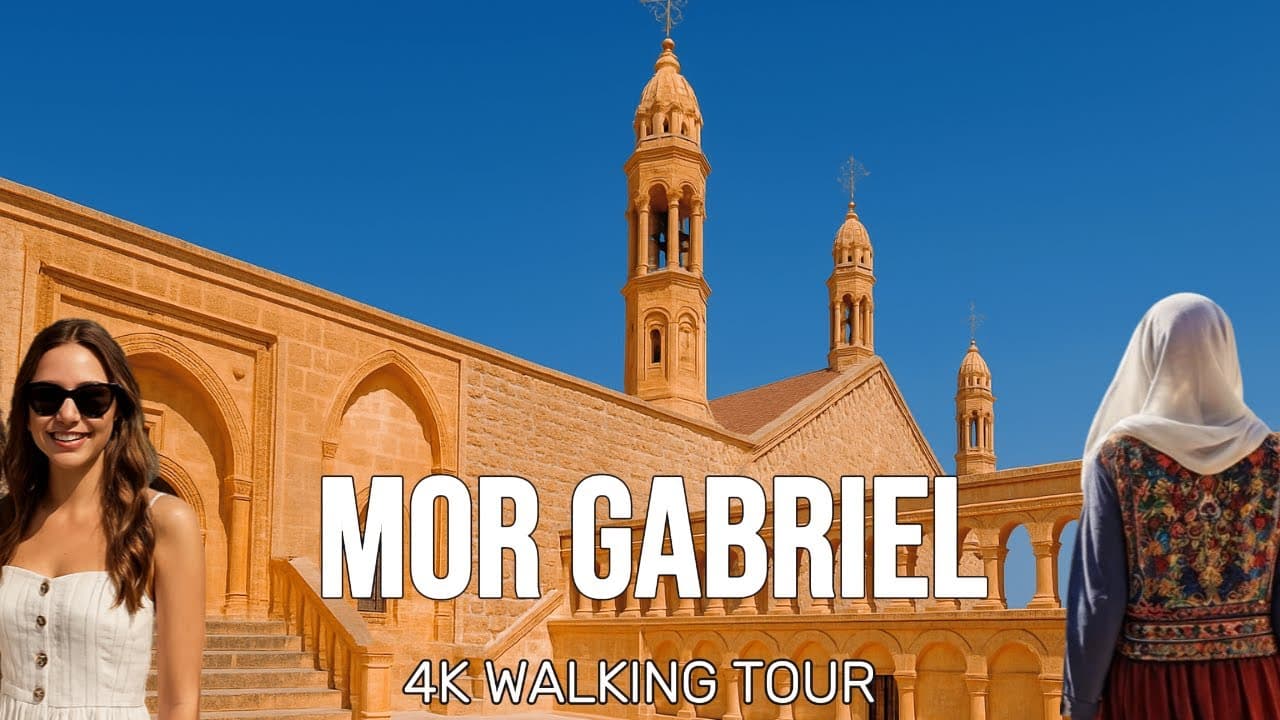
9. Mor Gabriel Monastery
Twenty kilometers southeast of Midyat, founded in 397, one of the oldest functioning Syriac Orthodox monasteries in the world and the spiritual heart of the Turabdin plateau, "the mountain of the servants of God." Its mosaic dome and gold-tessera apse crown a community where monks, nuns, and students still live. Visits run at set hours with a guide; dress modestly and keep your voice low. The silence here is the destination.
10. Beyazsu and the Road Stops
Halfway along the Mardin–Midyat road, the Beyazsu valley is a green ribbon fed by spring water: streamside terraces under willows, trout lunches, tea in the shade. On a summer itinerary this break is not optional. It is also where local families escape on weekends, which tells you it is the real thing.
11. Savur
Forty-five kilometers north: the terraced stone town they call "little Mardin." Tourists are nearly absent; the mansions above the valley and the poplar-lined stream below show what Mardin looked like before the crowds. Give it half a day and eat lunch by the water.
12. Kıllıt (Dereiçi) and the Wine Tradition
Near Savur, the old Syriac village of Kıllıt is a half-abandoned time capsule of stone houses and churches, and one of the historic centers of the region's thousand-year Syriac wine tradition. The local Syriac wine on Mardin's terrace tables descends from these roots; ask for a local bottle at dinner. The village pairs with Savur in the same half day.
Suggested Routes
2-day Old Mardin plan:
- Day 1: Lanes and abbaras at first light, the Great Mosque and bazaar, museum at noon, Kasımiye in the afternoon, sunset from the Zinciriye terrace, dinner on a mansion terrace facing the plain.
- Day 2: Deyrulzafaran in the morning; the lanes you missed, silver and soap shopping at noon; Kasımiye's terrace or a coffee break in the late afternoon; Zinciriye again at dusk; in Mardin you watch the sunset twice, and regret neither.
3-day ideal (add to the above):
- Day 3: Dara in the morning; the Beyazsu streamside at noon; Midyat in the afternoon (mansions, filigree workshops, the Guesthouse terrace); Mor Gabriel before closing; back to Mardin for the evening.
With a 4th day: a Savur and Kıllıt morning with a village breakfast on the return, then a slow afternoon and a last pass through the bazaar.
Food and Drink
Mardin's kitchen is layered like the city itself. The king of the table is kaburga dolması: lamb ribs stuffed with spiced rice and almonds, oven-roasted. Most restaurants want it ordered hours ahead, so plan dinner at lunchtime. Around it: sembusek (thin half-moon pastries with spiced meat), ikbebet (Mardin's take on stuffed kofte), Syriac dobo, and walnut-heavy kebabs. Breakfast brings egg-and-kavurma, local cheeses, and molasses; dessert means walnut pastries and harire. And then mırra: the bitter, ceremonial Arab coffee served in a shared cup. The rule is simple: do NOT set the cup down; sip and hand it back to the server. Putting it on the table traditionally claims you will fill the cup with gold, a mistake corrected with a smile, but a mistake. Syriac wine is a thousand-year local tradition; almond candy and bıttım soap travel best in the suitcase. Book terrace dinners for the sunset hour. The view is the best item on the menu.
Honest Warnings
- Take the summer noon seriously: between 12:00 and 17:00 in July–August the stone lanes are an oven. Split the day, carry water, wear a hat.
- The monasteries are houses of worship, not museums: visiting hours are limited, shoulders and knees covered, voices low. No photos during services.
- Do not try to drive into Old Mardin; the main street is narrow and parking is hopeless. Park in the new town and ride a minibus in, or use your mansion's porter arrangement. Luggage means stairs. A light bag is genuine luxury.
- The TV-famous terraces and mansion doorways queue up on weekends; the same view is free and empty two lanes away.
- Routes near the border (like the Dara road) pass routine checkpoints; carry your passport and expect nothing more dramatic than a polite glance.
- Bazaar invitations to "just see the workshop" are usually sincere, but if it turns into sales pressure, thanking and leaving is perfectly polite. For filigree, ask the master "did you make this?" Real handwork versus imported machine work is a fair question here.
- Kaburga dolması and terrace tables both need advance booking; sort both at lunchtime.
- Sunset terraces run out of seats on season weekends; go early or use your own mansion's terrace.
The District-by-District Discovery List
Verified extra stops beyond the main route:
- Tellallar Bazaar (Artuklu): the stretch of the old bazaar named for its town-crier tradition, the densest line of coppersmith and saddle-maker stalls.
- Güçlü Hill (Artuklu): the viewpoint over the whole town; with the citadel closed to visits, this is the address of the "Mardin from above" frame.
- Mor Yakup Church (Nusaybin): a 4th-century church, among Anatolia's oldest, beside the remains of the ancient School of Nisibis, a textbook page of early Christian history.
- The Zeynel Abidin Mosque complex (Nusaybin): wall-to-wall with Mor Yakup: a thousand years of two faiths as next-door neighbors, one of the plain's strongest stories.
- Mor Evgin Monastery (Nusaybin): hung on the slope of Mount Bagok, one of the starting points of Mesopotamian monasticism; the road and stairs are serious, the view is the reward.
- Girnewas Mound (Nusaybin): a höyük carrying thousands of years of settlement layers, the archaeology lover's short detour.
- The Midyat caves (Midyat): the carved cave network under the old town; some still serve as workshops and cellars today.
- The Village Produce Market (Midyat): almonds, mulberries, molasses, and village cheese at honest prices, the truthful address for edible souvenirs.
- Aslan Cave and the Zindan (around Artuklu): natural caves in the limestone slope, good for short exploration pauses.
- Dibek Mountain (Nusaybin): the ridge overlooking the plain toward the border; in spring green it delivers the proof that Mesopotamia is no desert.
Frequently Asked Questions
- How many days does Mardin need? Two for the old town, three including Midyat, Dara, and the monasteries; four with Savur.
- When to go? April–May and October–November. Summer works only with a split morning/evening schedule; a winter snowfall turns the town silver.
- Do I need a car in town? No. Old Mardin is walked, and cars cannot enter anyway. You need one (or a day taxi) for Dara, Midyat, and the monasteries.
- Is it safe to visit? Old Mardin and every route above are standard, well-trodden tourist ground for Turkish and foreign visitors alike; routine ID checks on rural roads are the only difference you may notice.
- How is mırra drunk? In small sips, unsweetened; the cup goes back to the server's hand, never onto the table.
- Is Midyat worth the drive? Absolutely: the filigree workshops, the mansions, and Mor Gabriel fill a rewarding day, and its calm lands well after Mardin's weekend crowds.
- What should I book for accommodation? A stone mansion with a plain-view terrace. The view room earns its price difference completely; come with a light bag, the stairs are real.
- Where do I watch the walking films? The Mardin city page and the walking-tours archive hold the 4K stone-lane walks. Seeing the gradient and texture in advance makes the plan realistic.
How to Experience Mardin
Mardin is best experienced slowly. The old city is built around stone streets, bazaars, terraces, abbarras and wide views over the Mesopotamian plain. A rushed checklist misses the atmosphere. Plan the main walks for early morning and late afternoon, especially outside winter.
Old Mardin Walking Route
Start around Cumhuriyet Street, then continue toward Ulu Mosque, bazaar lanes, stone houses, Sehidiye Madrasa and viewpoint terraces. The streets can be steep and the stone ground may be uneven, so comfortable shoes matter. In summer, avoid the middle of the day and break the route into two shorter walks.
Midyat and Nearby Places
Midyat has a different stone texture and deserves at least half a day. Guest houses, narrow lanes and silver workshops make it a strong add-on to Mardin. If you have more time, Deyrulzafaran Monastery, Dara Ancient City and Savur can deepen the trip. Avoid putting all of them into one day unless you are traveling by car and comfortable with a long schedule.
Food and Local Texture
Look for local dishes such as stuffed ribs, sembusek, ikbebet, harire dessert, almond sweets and regional coffee. Instead of choosing only the most visible tourist street, check places where local dishes are prepared with a clear menu and steady turnover.
Use Video for Realistic Planning
Mardin looks effortless in photos, but video shows the slopes, steps, stone ground, heat and walking pace. Related 4K walking videos are especially useful for families, older travelers and anyone sensitive to heat or long walks. They help you decide how much of the old city you can comfortably cover in one day.
A Balanced 2-Day Plan
- Day 1: Old Mardin streets, bazaars, Ulu Mosque area, madrasas and sunset viewpoints.
- Day 2: Deyrulzafaran Monastery, Dara Ancient City or Midyat.
If you only have one day, focus on Old Mardin and do not force Midyat into the same schedule. With two or three days, the surrounding places become much easier to enjoy. Staying inside the old city is atmospheric, but check parking carefully if you arrive by car.
Planning questions
What does this Mardin guide cover?
A walking-focused Mardin and Midyat guide with old bazaars, stone houses, viewpoints, realistic timing notes and related 4K route videos.
Can I watch a 4K walking tour of Mardin?
Yes. The page links to Travel Walk Tours films so you can preview the Mardin route on a big screen before you go.
How should I use this page to plan?
Read the quick answer first, skim the route notes, then compare street texture, timing, and nearby guides through the linked city page and walking films.