A walkable Bosphorus guide from Ortakoy mosque and square to Ciragan, Yildiz Park, Dolmabahce and the Kurucesme shore.
Walk this route
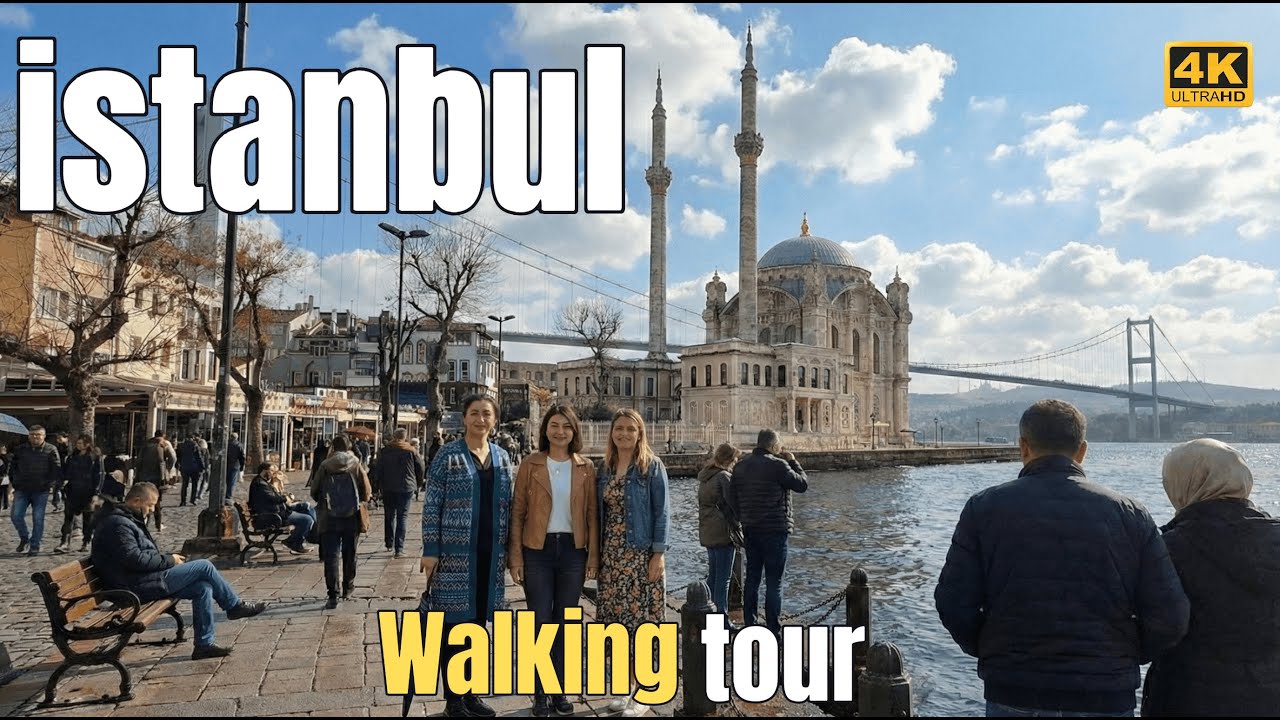
Istanbul Walking Tour 4K – From Beşiktaş to Ortaköy Along the Bosphorus Waterfront
Watch the 4K walkPlaces on the map
8 pinsNumbers match the order in the article. Tap a pin for directions.
A village square wedged between palaces and the bridge
Ortakoy is an old Bosphorus village on the European shore, squeezed between Besiktas and Kurucesme, directly beneath the first bridge across the strait. On one side you have the Ciragan and Feriye palaces, on the other the huge deck of the bridge itself; in between sit a small square, a mosque at the water's edge, and the smell of baked potatoes. Even the name tells the story: it means the middle village. For centuries Greeks, Jews, and Muslims lived here side by side, and the mosque, the synagogue, and the church still stand within a few minutes of each other.
The most common mistake is arriving on a Sunday afternoon, fighting the crowd for one photo in front of the mosque, and leaving without ever seeing the three-faith backstreets. The square itself takes half an hour; the real character of Ortakoy comes out through its bath, its burned mansion, its market, and the shore under the bridge. The eight stops below follow the numbers on the map, and you can walk all of them in an unhurried half day.
Quick answer
Ortakoy is an old three-faith Bosphorus village known for its square, its waterside mosque, and its kumpir stands beneath the bridge. Weekday mornings are calm; on weekends a craft market appears, but afternoons get very crowded.
- Best time: a weekday morning for quiet and photos, Saturday or Sunday for the market.
- Getting there: shore buses via Kabatas and Besiktas, or a 25-30 minute walk along the water from Besiktas.
- Eating: kumpir and waffles on the square, fish around the ferry landing.
1. Ortakoy (Buyuk Mecidiye) Mosque
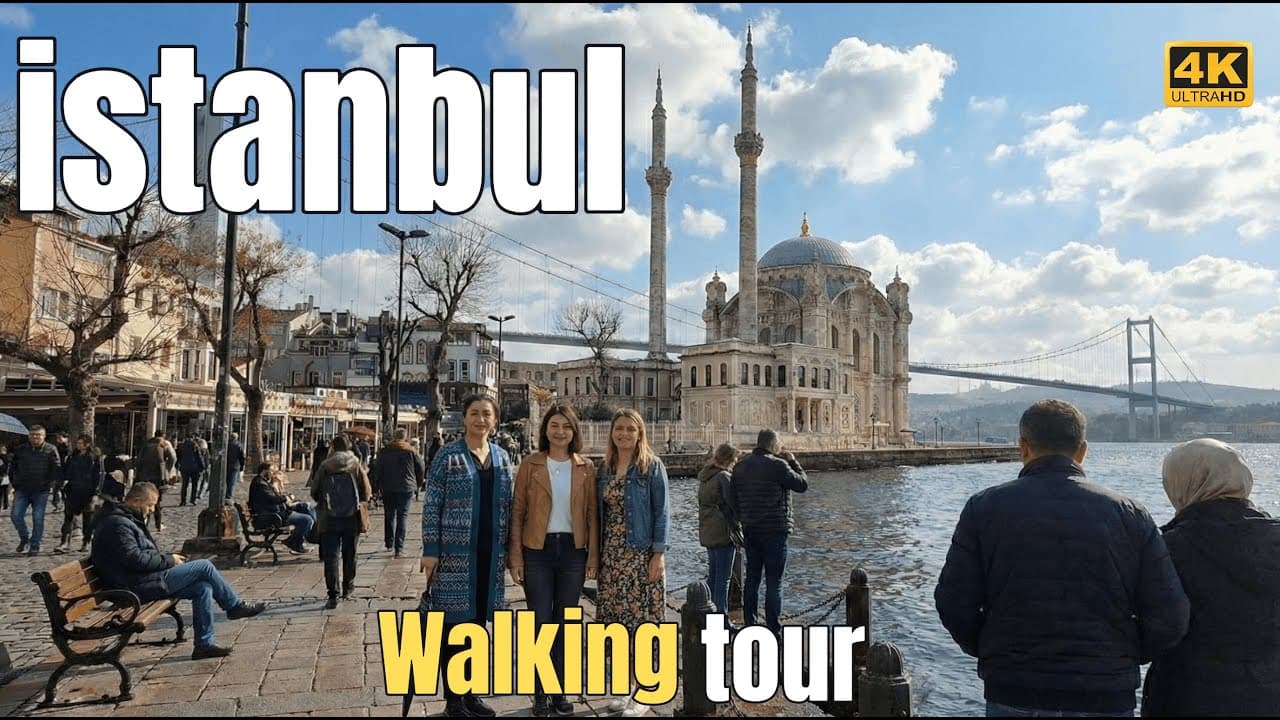
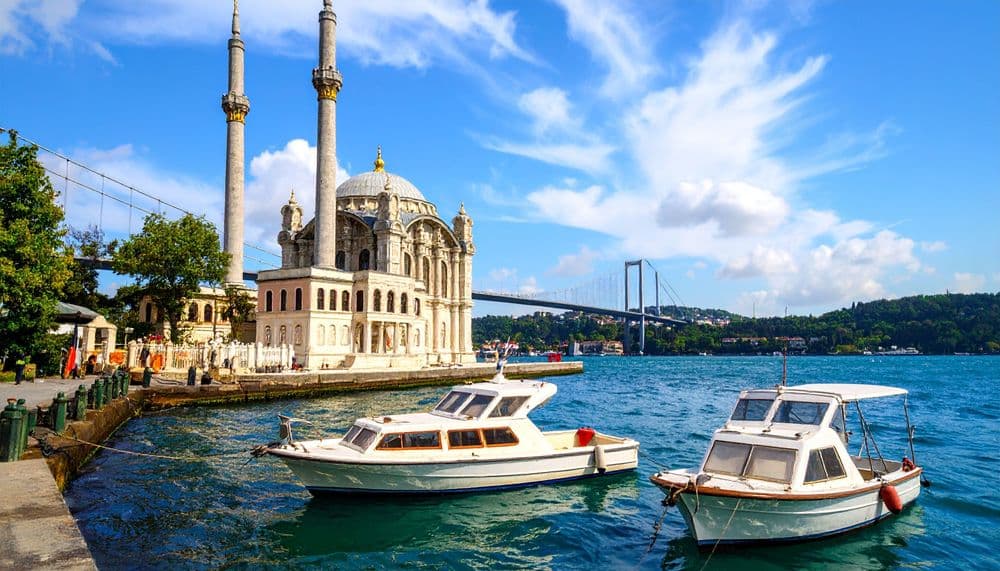
The mosque at the tip of the square, standing right on the water, was built between 1853 and 1856 for Sultan Abdulmecid by the Balyan family of architects. Its neo-baroque facade, two slender minarets, and oversized windows set it apart from classical Ottoman mosques, and those windows make the interior surprisingly bright in daylight. With the bridge rising behind it, this is the most photographed waterside frame in the city; morning light favors the facade, late afternoon favors the bridge. Since a thorough restoration finished in 2014, the interior has been in good condition too. Entry is free; visiting pauses during prayer times, clothing should cover shoulders and knees, and scarves are available at the door for women. The quay in front fills with photographers all day, so if you want an empty frame, try a weekday before 9 am. The narrow quay that wraps around the seaward side gives an angle most visitors miss.
2. Ortakoy square and the kumpir stands
The square is actually small: a ferry landing, a few trees, a paved space ringed by cafes. The famous kumpir stands line a narrow lane opening onto it, and to be honest the stalls are nearly identical, so pick by the length of the queue and your instinct. Kumpir is a large baked potato loaded with cheese, butter, and whatever toppings you choose; one portion feeds two people comfortably. On weekend afternoons this lane gets shoulder-to-shoulder packed, you will queue, and finding a seat comes down to luck. Prices are posted at the stalls, so check before ordering; the bill grows with the number of toppings. Taking your kumpir to the benches on the quay by the mosque beats eating it standing in the lane. Early in the morning, be aware that some of the stands may not have opened yet.
3. The weekend craft market
On Saturdays and Sundays, craft stalls fill the edges of the square and the backstreets: silver jewelry, ceramics, leather goods, wooden toys, secondhand objects. The market dates back to the 1980s, and for a while it was the best-known art market in Istanbul; Ortakoy's bohemian reputation was largely built on these stalls. Today it is smaller than it once was, and some stalls sell mass-produced souvenirs, so come knowing that; still, scattered among them are makers selling their own work, and asking prices, even bargaining gently, is entirely normal. The stalls are fully set up by midday and start packing up in the late afternoon, so the liveliest window is roughly noon to 5 pm. Coming on a Sunday means accepting the crowd; for a calmer browse, choose Saturday morning. Whether the market appears at all depends on the weather, and it thins out noticeably in winter.
4. The Esma Sultan mansion
Walking from the square toward Kurucesme along Muallim Naci Street, you will see a brick giant on the water side: the Esma Sultan mansion. It was built in 1875 as a wedding gift for Esma Sultan, daughter of Sultan Abdulaziz, gutted by fire in 1975, and left standing as an empty shell for decades. The restoration kept the outer brick walls intact and placed a new glass-and-steel structure inside them; today a hotel group runs it as a wedding and event venue. In other words, this is not a museum you can buy a ticket for: you only see the inside if you attend an event. Even so, the contrast between the burned brick shell and the glass interior is worth seeing from outside, especially from the water side. It photographs well from the shore walk and the quay; look again in the evening when the lighting comes on.
5. The Etz Ahayim synagogue
At the foot of the bridge, on Muallim Naci Street, stands the Etz Ahayim ("Tree of Life") synagogue, the house of worship of a Jewish community that has lived in Ortakoy for centuries. The original building was much older; a fire in 1941 destroyed most of it, the marble ark was saved, and the synagogue was rebuilt. It still serves an active congregation today. As with most synagogues in Turkey, you cannot simply walk in: visits require applying in advance through the community foundation and providing ID, and security checks are strict. Without an appointment you see the facade from the street, nothing more. Its real significance is this: together with the mosque a few steps away and the Ayios Fokas Greek Orthodox church one street inland, it is the most tangible evidence of the old three-faith village. You can see all three in a ten-minute walk, on a route the square crowds never touch.
6. The Husrev Kethuda bath
On the inland side of the square, toward Dereboyu, stands the Husrev Kethuda bath, a double hamam built in the 16th century by Mimar Sinan. Commissioned in the name of Husrev Celebi, steward to the grand vizier, it is the oldest building in Ortakoy, overshadowed by the neighborhood's kumpir-and-square image. After working as a bathhouse for a long time, it changed function; today it is used as a cultural and event venue, hosting exhibitions, concerts, and private functions. So you come here not for a scrub and foam but to see the building itself. Getting inside depends on what is on that day; if it is closed, you settle for the domed mass from outside, so verify the current programme before you go. A hamam by Sinan standing quietly two streets behind the potato stalls sums up how layered this neighborhood really is.
7. The Feriye palaces
Walking from Ortakoy toward Besiktas, the long row of pale palace buildings stretching along the shore is the Feriye palaces. They were built in 1871 under Sultan Abdulaziz as an extension and annex housing for Ciragan Palace; the word "feriye" itself means secondary or auxiliary. The deposed Abdulaziz died here in 1876, and whether his death was suicide or murder is still argued about today. In the republican era the buildings were handed over to education: part of the row now holds Galatasaray University, another part Kabatas Erkek High School, while the shore wing works as restaurants and event spaces. You cannot enter the school sections, but the shore walk passes right in front of the facades, and from the water side the layout of the row reads clearly. The only practical way into a building is a meal in the restaurant section; check whether booking is needed and confirm current opening before you go.
8. The shore walk under the bridge
From the square toward Kurucesme, the shore walk that passes directly under the bridge is the best free thing to do in Ortakoy. As the huge deck crosses over your head, your sense of scale shifts; nowhere else can you see the pier of the 1973 bridge meet the water this closely. Along the quay you will find anglers, benches, and tea sellers; across the strait, Beylerbeyi Palace and the slopes of Kuzguncuk are easy to pick out. If you extend the walk to the Kurucesme waterfront park, it takes about twenty minutes, and the crowd thins with every step. Honest note: some stretches of the quay are narrow and unrailed, so take care with small children, and on windy days waves can wet the pavement. At sunset, turning back toward the mosque from here as the bridge lights come on gets you the best view of the day without ever entering the square crowd.
Getting there
There is no metro or tram in Ortakoy; transport runs along the shore road. Plenty of buses following Ciragan Street via Kabatas and Besiktas stop at the Ortakoy stop, and the ride from Kabatas takes 10-20 minutes depending on traffic. The most enjoyable option is walking from the Besiktas ferry landing: the flat shore road past the Ciragan and Feriye facades takes 25-30 minutes, with the water beside you the whole way. Do not even consider driving on a weekend; the shore road jams and parking is close to nonexistent. Taxis sit in the same traffic. Check bus routes and timetables from a current source.
When to go
For quiet and photos, come on a weekday morning, ideally before 10 am; the square, the quay, and the front of the mosque are all easy to enjoy at that hour. If you want the market, it has to be Saturday or Sunday, but accept the afternoon density in advance; the best balance is Saturday morning. In summer there is little shade on the square and the midday heat wears you down; in winter the crowds drop but the north wind hits the quay hard. Sunset is the finest hour for the bridge and mosque lights, and it arrives together with the crowd.
Eating and drinking
The square's classic is kumpir, with waffle stands right beside it; both are quick, filling, and priced for tourists. Around the ferry landing and along Muallim Naci there are fish restaurants; waterside tables add the view to the bill, so look at the price list before ordering. The breakfast places and small cafes in the backstreets are calmer on weekdays and usually cheaper. The benches between the mosque and the landing are the best spot to eat whatever you bought by the water, though the seagulls may move on your snack before you do, so keep a grip on it.
FAQ
**Does the Ortakoy Mosque charge admission?** No, the mosque is free. It can be visited outside prayer times; clothing should cover shoulders and knees, and scarves are available at the entrance for women.
**Which days does the craft market run?** Saturdays and Sundays, at its liveliest roughly between noon and 5 pm. In winter and bad weather the number of stalls drops sharply.
**Can you walk from Besiktas to Ortakoy?** Yes, the flat shore road takes 25-30 minutes and passes the Ciragan and Feriye facades. The pavement is wide and the view stays open the whole way.
**Can the Etz Ahayim synagogue be visited?** The interior can only be visited by applying to the community foundation in advance and providing ID; you cannot simply walk in. The facade is visible from the street at any time.
Planning questions
What does this İstanbul guide cover?
A walkable Bosphorus guide from Ortakoy mosque and square to Ciragan, Yildiz Park, Dolmabahce and the Kurucesme shore.
Can I watch a 4K walking tour of İstanbul?
Yes. The page links to Travel Walk Tours films so you can preview the İstanbul route on a big screen before you go.
How should I use this page to plan?
Read the quick answer first, skim the route notes, then compare street texture, timing, and nearby guides through the linked city page and walking films.