Sisli and Nisantasi honestly: boutique streets, the Military Museum, the Ataturk house, Bomonti and Kurtulus, and why to skip it on a short trip.
Walk this route
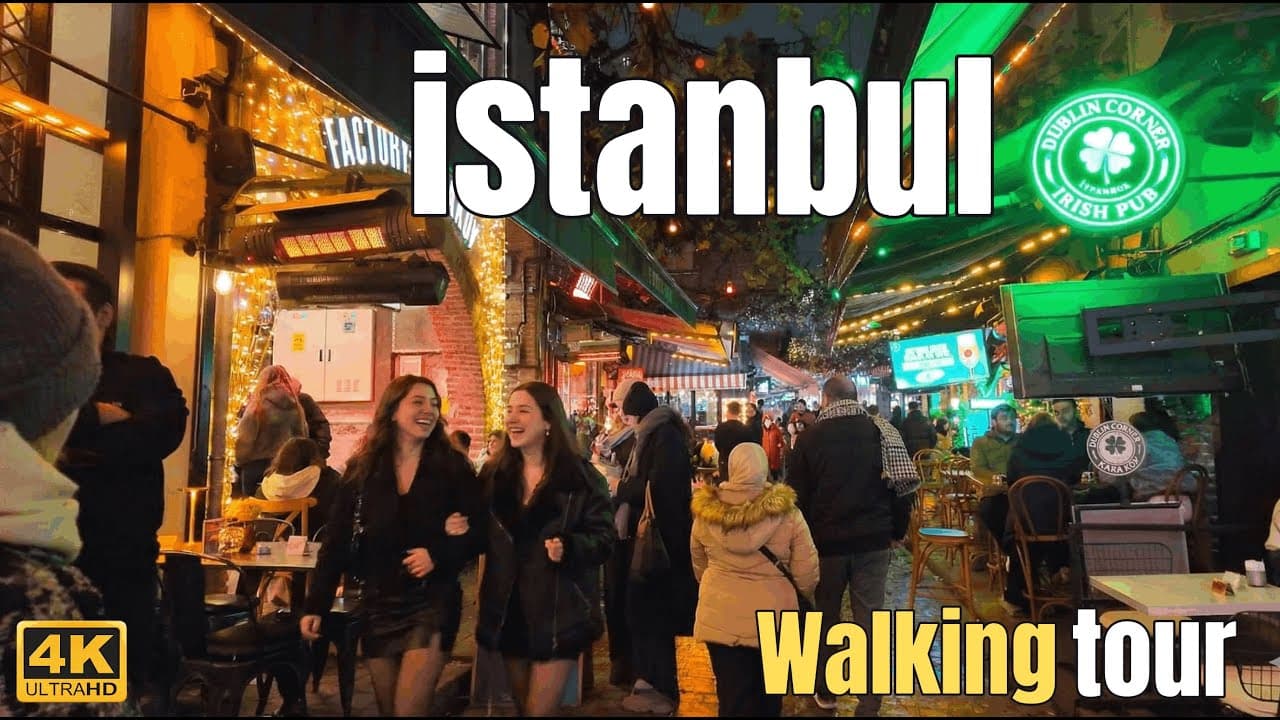
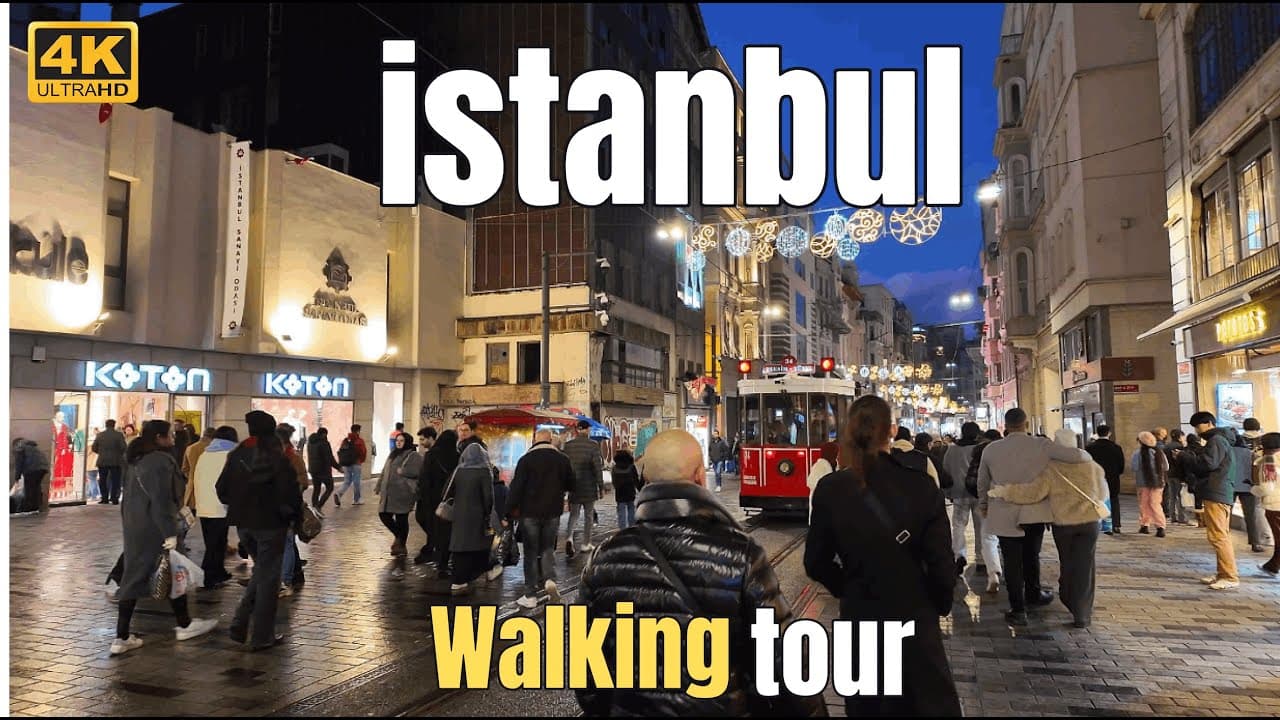
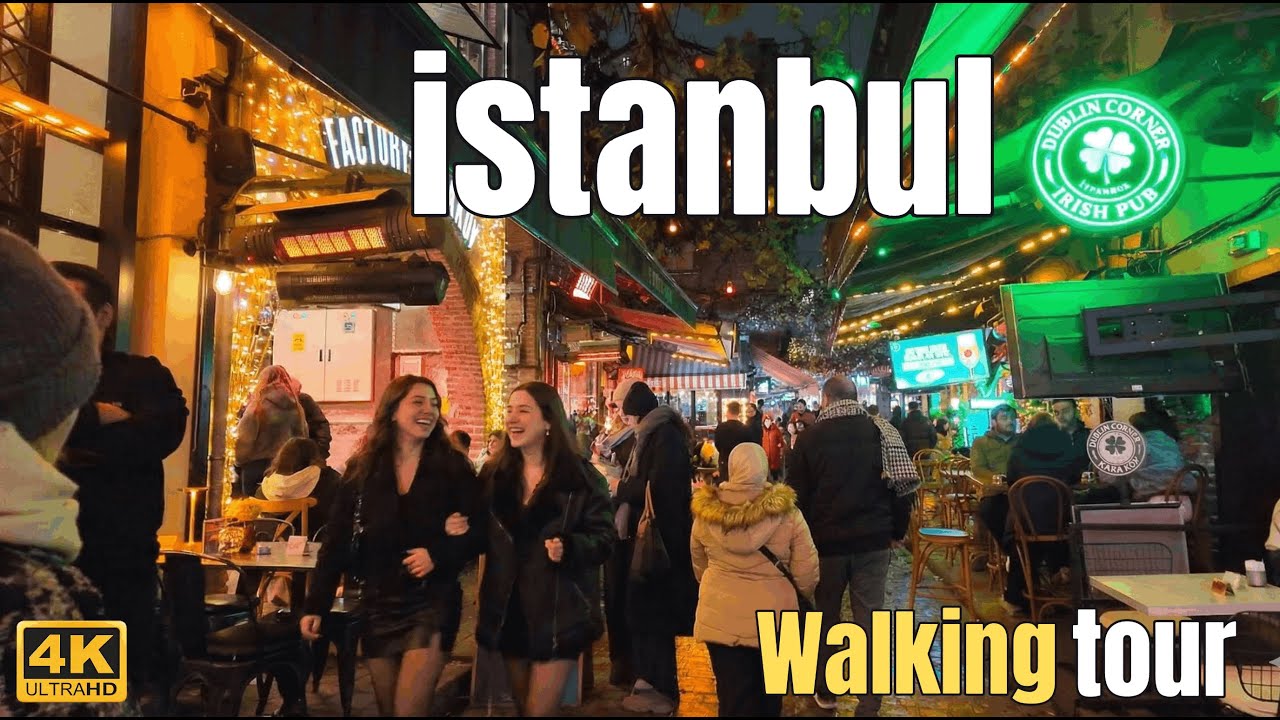
Istanbul Walking Tour 4K - Beautifully Lit Streets and Shops of Karaköy & Galataport at Night
Watch the 4K walkPlaces on the map
13 pinsNumbers match the order in the article. Tap a pin for directions.
Sisli and Nisantasi: modern Istanbul's living room, not its museum
Sisli is not one of Istanbul's monument districts, and any guide that pretends otherwise is selling you something. In Fatih you can cover fifteen centuries before lunch. In Beyoglu, three empires line up along one street. Nothing like that happens here. Sisli is the district the city built for itself when it spilled north of Pera in the late 19th century: wide avenues, a grid of streets, apartment blocks, shop windows. It is where modern Istanbul lives, shops and eats.
It is worth stating this plainly, because our own dataset makes the point better than any argument could. Almost every verified record we hold for this district is a shopping mall. That is not a gap in the data. That is the district. What Sisli actually offers sits elsewhere: the boutiques and cafe streets of Nisantasi, a 19th century brewery in Bomonti reborn as a culture and nightlife complex, the Greek and Armenian past still legible in Kurtulus, two decent museums, and the densest wholesale textile streets in the country.
Which leads to the mistake people make. If you have two days in Istanbul, do not give one of them to Sisli. Come expecting sights and you will leave disappointed. But if you have a week in the city, if shopping is a genuine reason for your trip, or if you are curious about how this city actually functions today rather than how it looked in 1550, then Sisli is exactly right. Sultanahmet shows you Istanbul's past. Nisantasi and Bomonti show you its present.
Quick answer
Sisli is where modern Istanbul lives, shops and spends its evenings: Nisantasi's shop windows, Bomonti's converted brewery, Kurtulus and its multilingual past, and two museums. Beyond that, there is very little in the classic sightseeing sense.
- If you have two days in Istanbul, skip it. The historic peninsula and Beyoglu come first, without question.
- With a week in the city, half a day here is a good change of pace: Nisantasi and the museums in the morning, Bomonti at night.
- If shopping, cafe culture or modern city life is why you came, give it a full day. The district repays that.
Thirteen stops in Sisli and Nisantasi
1. Nisantasi and Abdi Ipekci Avenue
Nisantasi is a district to be watched, not a site to be toured. Its name comes from Ottoman archery marker stones, the columns raised where a sultan's arrow landed. That shooting ground is now occupied by the most expensive shop windows in Istanbul, which is a fairly complete summary of what happened to this city. Abdi Ipekci Avenue is the spine of it: international labels, jewellers, a luxury corridor compressed into a few hundred metres.
The real character, though, is in the side streets feeding into it. Cafe tables spread across pavements, small boutiques, bookshops and hair salons; people sit down and do not get up for hours. Orhan Pamuk grew up in these streets and wrote about them, which has given Nisantasi a permanent place in Turkish literature. No visiting plan is required here. Buy a coffee, walk for an hour, watch. The coordinate given is an approximate midpoint of the avenue.
2. Tesvikiye Mosque
Standing in the middle of Nisantasi, surrounded by shop windows, Tesvikiye Mosque is among the oldest structures in the district. It was built in the 19th century, when this area was still an archery and drill ground outside the city proper. Then the city arrived and closed in around it. That it now sits in a courtyard ringed by boutiques tells you how Sisli was assembled, in a single frame.
The architecture will not meet a classical Ottoman expectation. It is a plain, bright building with baroque and empire influences, a modest dome, and a facade closer to a palace apartment than to a Sinan mosque. Some of the archery marker stones that gave the district its name stood nearby. This is not a tourist stop but a working neighbourhood mosque: busy at Friday prayers, quiet otherwise. Visit outside prayer times, cover shoulders and knees, remove shoes at the door. Ten minutes, and a natural start to the Abdi Ipekci walk.
3. Macka Democracy Park
Spread across the valley between Nisantasi and Macka, this park is where the district finally breathes. The rest of Sisli is concrete and glass; here there are trees, grass and a real slope. The park is long and steeply graded, with its upper end facing Nisantasi and its lower end running down towards Macka and Dolmabahce. The view opens as you descend, and the Bosphorus appears in gaps between the trees.
The use of it is entirely local. Runners in the morning, families with prams during the day, students sitting around in the afternoon, dog walkers at dusk. There are no tourist crowds, because nobody comes here specifically. Tea gardens and seating areas are dotted through it, and the paths are well kept, but the slope is genuine and comfortable shoes help. After a few hours in Nisantasi, this is where you go to get out of the crowd. It is also the pleasantest way to walk from Macka towards Taksim.
4. Macka to Taskisla cable car
This short gondola line crossing above the park is one of the least known pieces of public transport in Istanbul. It runs between Macka and Taskisla, lifting you from one side of the valley to the other. The trip takes a few minutes, so it is a shortcut rather than an excursion. Still, crossing above the valley you get the park below you, the apartment blocks around, and a slice of the Bosphorus in the distance.
Selling this as a scenic ride would be dishonest. It is a practical solution for anyone who would rather not walk the hill, and it throws in a free vantage point along the way. Your Istanbulkart works; no separate ticket is needed. The cabins are small and frequency depends on demand. It closes at times for maintenance or in bad weather, so do not build a plan around it and verify officially that it is running. If you are heading from the bottom of the park towards Taksim, it solves the climb in two minutes and children enjoy it.
5. Military Museum and Cultural Centre
The Military Museum in Harbiye is the strongest conventional attraction in Sisli, and one of the few addresses here that genuinely fits the definition of a sight. The collection covers Ottoman and Republican military history: weapons, armour, campaign tents, standards, uniforms, and a section on Gallipoli. The building is part of the old Harbiye military academy, which is to say the institution where Ataturk trained as a cadet.
The museum's fame, though, rests on the Mehter. The Ottoman military band performs here, playing with zurna, kettledrums and cymbals in a tradition often called the oldest military band in the world. Performed in period uniform, it is why most visitors come and it is what separates this museum from any other in the city. Performance times, opening days and entry arrangements change from period to period, so verify officially before you go. It is roughly a fifteen minute walk north from Taksim Square.
6. Ataturk Museum
This three storey house on Halaskargazi Avenue is the one Ataturk rented while he was in Istanbul in 1918 and 1919. He spent the months before departing for Samsun here, which means the rooms where the War of Independence was planned are the rooms of this house. The building went up in 1908 and became a museum in 1942.
Set your expectations correctly: this is a small house museum, not a major history centre. Inside are period furnishings, Ataturk's personal effects, photographs and documents, with the rooms kept close to their arrangement during his stay. Half an hour will do it, an hour at most. If you have an interest in the history of Turkey, the house matters because it is the physical form of a chapter you have only read about. If you do not, you can skip it, and there is no harm in saying so. Opening days and entry conditions vary, so verify officially. It is walkable from Osmanbey metro.
7. Osmanbey and the textile streets
The streets radiating out from Osmanbey metro exit are Istanbul's wholesale textile centre, and the most honest corner of the district. There are no shop windows here, only showrooms; the customer is not a tourist but a buyer. Behind Halaskargazi, hundreds of small textile firms, fabric warehouses and workshops operate side by side. From morning to evening the lanes are full of hand carts, bales, vans and the noise of negotiation.
Recommending this as a stop would be a stretch, since nobody comes here to look at it. But if you want to understand Sisli, it explains more than Nisantasi does: one end of the same district has luxury windows, the other end has the trade chain behind those products. The pavements are narrow and the traffic is heavy. This is a working zone, so it is alive on weekday daytimes and dead in the evenings and on Sundays. Even ten minutes on foot shows you this face of the city.
8. Sisli Mosque
On Halaskargazi Avenue, Sisli Mosque is one of the large mosque projects of the Republican era. It is a 20th century reading of classical Ottoman form: the dome, minarets and courtyard follow the old scheme, while the materials, proportions and detailing belong to the modern building culture of its day. For anyone interested in architecture, that makes it a useful comparison point rather than a destination.
It is not a tourist building and does not behave like one. No visitor crowds, no ticket desk, no guides; people come here from the neighbourhood to pray. The courtyard is a calm space cut off from the noise of the avenue outside. You can go in for a few minutes outside prayer times, with the same dress conventions as any mosque. It sits right beside Sisli metro station, so you need not set aside time for it, you simply pass it. Coming here after the mosques of Sultanahmet shows you what four hundred years did to the same tradition.
9. Istanbul Cevahir Shopping Centre
Exactly one shopping mall makes this guide, and the reason is simple: this is genuinely what Sisli is known for. Cevahir is an enormous structure on Buyukdere Avenue, walking distance from Sisli metro. When it opened it was talked about as one of the largest shopping centres in Europe, and it holds hundreds of shops, a cinema, a food floor and parking.
We are not claiming this is a sight. It offers nothing architectural or historic. What it offers is scale, and a demonstration of the sheer volume modern Istanbul consumption has reached. It is useful on a rainy day, on an itinerary with children, or when you actually want to shop. Compared with Nisantasi's boutique pricing it covers a far wider range. Do not come to Sisli for this alone. But if the question is what this district's identity amounts to today, the honest answer is largely this.
10. Bomonti Brewery
This is the best story in Sisli. The Bomonti brewery was founded in the late 19th century by the Swiss Bomonti brothers, and it gave the surrounding area its name. Through the last Ottoman decades and the early Republic this was a serious industrial plant, and the neighbourhood grew up around it. Production eventually stopped and the buildings sat idle for years.
Today the complex has been converted into a culture and nightlife site. The old brick buildings, chimneys and factory yard have been kept, and music venues, cafes, restaurants and exhibition spaces have moved in. The result is one of the more successful pieces of industrial reuse in Istanbul. Come during the day and you get the yard and the architecture with few people around. The real character emerges after dark. The events calendar and the opening pattern of individual venues both shift, so check the current programme before going. It is walkable from Osmanbey metro.
11. Babylon Bomonti
This music venue in the old brewery yard is the centre of the district's evening. Babylon has been a known name in Istanbul's music life for a long time; it operated in Beyoglu first, then moved to the factory site in Bomonti. The programme is broad: Turkish and international acts, jazz, electronic, world music, with theatre and stage work in between.
Because the room sits inside the factory structure, you get high ceilings and brick walls rather than a standard concert hall. Even on nights without a show the yard is busy, the surrounding cafes and bars fill, and people sit outside. This is where Sisli's night identity is made, and it has nothing in common with Nisantasi's daytime face. Ticket prices and the programme vary by event, so verify officially what is on and how tickets are sold. If you have several days in the city, giving one evening to this is the single best reason to visit Sisli.
12. Surp Vartanants Armenian Church
This Armenian church on Kurtulus Avenue is one of the surviving physical witnesses to the district's multilingual past. When Sisli grew in the late 19th century, the population that settled here was not of one kind: Greeks, Armenians, Jews and Levantines lived along the same streets. Most of that population is gone now, but the places of worship remain and small congregations still use them.
The church is a working place of worship, not a museum, serving a modest community. Visiting conditions are therefore not standardised the way they are at a mosque or a museum. The door may not be open, access outside service times depends on the congregation's own arrangements, and quiet is expected inside. If you want to go in, confirm beforehand, and if it is closed, leave it at that. Even closed, walking past is worth the detour: this building and the street fabric around it are enough of a clue to why Kurtulus does not resemble other neighbourhoods.
13. Kurtulus
The route ends in Kurtulus, and that is deliberate. Formerly called Tatavla, this is the most layered corner of Sisli. It was established under Suleiman the Magnificent as housing for the Greek population working in the naval yards; over the following centuries the Greek community passed twenty thousand, and Armenian and Jewish families followed. The neighbourhood took the name Kurtulus in 1929 after a fire destroyed hundreds of buildings. The events of September 1955 then dispersed most of the non-Muslim population.
What remains is the street fabric and the food. The grid plan, narrow pavements, old apartment buildings and the churches left between them all carry that history. The area is still known for its old meyhane and for a handful of addresses keeping Armenian and Greek cooking traditions alive. Expect no monuments; there is no list of buildings to tick off here. The thing to do is walk. An hour through the back streets explains why Sisli is laid out on a grid and who built this city.
Getting there
The M2 metro is the practical way in. The line runs north from Yenikapi and the district has three stops on it: Osmanbey, Sisli-Mecidiyekoy and Gayrettepe. For Nisantasi, get off at Osmanbey and walk about ten minutes to Abdi Ipekci Avenue. The Ataturk Museum and Bomonti are also walkable from the Osmanbey exit. For Sisli Mosque and Cevahir, Sisli-Mecidiyekoy is the right stop. The M2 comes directly from Taksim and Sishane, so if you are staying in Beyoglu you arrive without changing.
For Harbiye and the Military Museum, skip the metro. Walking north from Taksim Square along Cumhuriyet Avenue takes about fifteen minutes on a straight, level route. That walk also shows you how the district began: Pera ends, the wide avenues start. Continuing from Harbiye to Nisantasi adds another ten minutes.
Buses run heavily along Buyukdere and Halaskargazi avenues, but these are among the most congested arteries in Istanbul, so take the metro rather than sit in it. Taxis and ride apps share the same traffic. An Istanbulkart covers all public transport. Within the district, walking wins: Nisantasi, Tesvikiye, Macka and Harbiye are all within walking distance of each other, while Bomonti and Kurtulus are slightly further but still walkable.
When to go
Spring and autumn are the easiest. Between April and May, and again from September into October, the weather suits walking, the Macka Park slope is no trouble, and the cafe tables are outside. In summer, Sisli feels heavier than the rest of the city because of the density of concrete and the shortage of shade, so give the middle of the day to indoor spaces. Winter does not really diminish the district, since most of what happens here happens indoors anyway.
The order of your day matters. Mornings suit Nisantasi and the museums, when the streets are still quiet and the cafes have not filled. Afternoons work for Macka Park and the walk down to Harbiye. Give the evening to Bomonti, where the district's night identity lives. Weekdays and weekends differ sharply: the textile streets around Osmanbey are alive on weekday daytimes and dead at weekends, while Nisantasi does the opposite and fills up on Saturday. Museums have closing days, so verify officially before you build the plan.
Eating and drinking
Nisantasi cafe prices are the highest in the city, and you should sit down knowing that. The same coffee costs noticeably less a few metro stops away. What you are paying for is the location and the setting: a pavement table, the flow of the district passing by, permission to linger. If that is what you want, the price is fair. If it is not, other neighbourhoods deliver the same experience for less. The side streets are a little more moderate than the main avenue.
Kurtulus offers something else entirely, and it is the real reason to eat in this district. The area's old meyhane carry traces of Greek and Armenian cooking traditions: a meze culture, home-style dishes, long evening tables. Prices sit well below Nisantasi and the clientele is largely local. Go in the evening and do not rush; that is the rhythm here. Bomonti is the right zone for the night, with the old factory yard and the surrounding streets full of bars, cafes and music venues, a young crowd, and a programme that changes with the calendar. Around Osmanbey you will find tradesmen's lokanta, which is the district's most reasonable and most honest lunch.
Frequently asked questions
**I have two days in Istanbul. Should I visit Sisli?** No. That is the honest answer. With two days, the historic peninsula and Beyoglu give you the substance of the city, and Sisli is not on that list. This district is for a week-long itinerary, a shopping trip, or genuine curiosity about modern Istanbul. Half a day spent here on a short trip is half a day stolen from the streets between Hagia Sophia and the Grand Bazaar.
**Is there anything in Sisli you absolutely must see?** Not in the conventional sense. The two strongest addresses are the Military Museum in Harbiye and the old brewery in Bomonti; both are good, and neither is a reason to come to the city. Nisantasi and Kurtulus are not individual buildings but districts to walk. The right way to approach Sisli is as an atmosphere, not a checklist.
**Is Nisantasi really that expensive?** Yes. Cafe and restaurant prices sit at the top of the city's range, and the boutiques are international luxury. Going in aware of that is enough: a coffee and a walk along the avenue fits any budget, but if you are planning a long lunch, work out the bill in advance. If you want an inexpensive day, Kurtulus or the streets around Osmanbey are more realistic.
**What is left of the Greek and Armenian past in Kurtulus?** The population largely left, but the fabric stayed. The grid plan, the old apartment buildings, a few churches and the cooking traditions are the concrete traces. Some of the churches still serve small congregations, but they are not museums open to tourist visits; confirm beforehand if you want to enter. The best way to understand the neighbourhood is an hour on foot.
**Is there any point going to Bomonti during the day?** Some, but limited. In daylight you can take in the old factory yard and the brick architecture at your own pace, and it is better for photographs. The energy of the place, though, builds in the evening, and the events programme runs at night. If you only care about the architecture, daytime is enough. If you want to see the place as it actually works, go after dark.
Planning questions
What does this İstanbul guide cover?
Sisli and Nisantasi honestly: boutique streets, the Military Museum, the Ataturk house, Bomonti and Kurtulus, and why to skip it on a short trip.
Can I watch a 4K walking tour of İstanbul?
Yes. The page links to Travel Walk Tours films so you can preview the İstanbul route on a big screen before you go.
How should I use this page to plan?
Read the quick answer first, skim the route notes, then compare street texture, timing, and nearby guides through the linked city page and walking films.