Plan the Pamukkale travertines and Hierapolis Ancient City with the theatre, Pluto's Gate, the antique pool, tickets, entrance gates and the best time to visit.

Walk this route
Pamukkale, Türkiye Walking Tour 4K - Stunning White Terraces of Turkey’s Cotton Castle
Watch the 4K walkThink of Pamukkale and Hierapolis Together
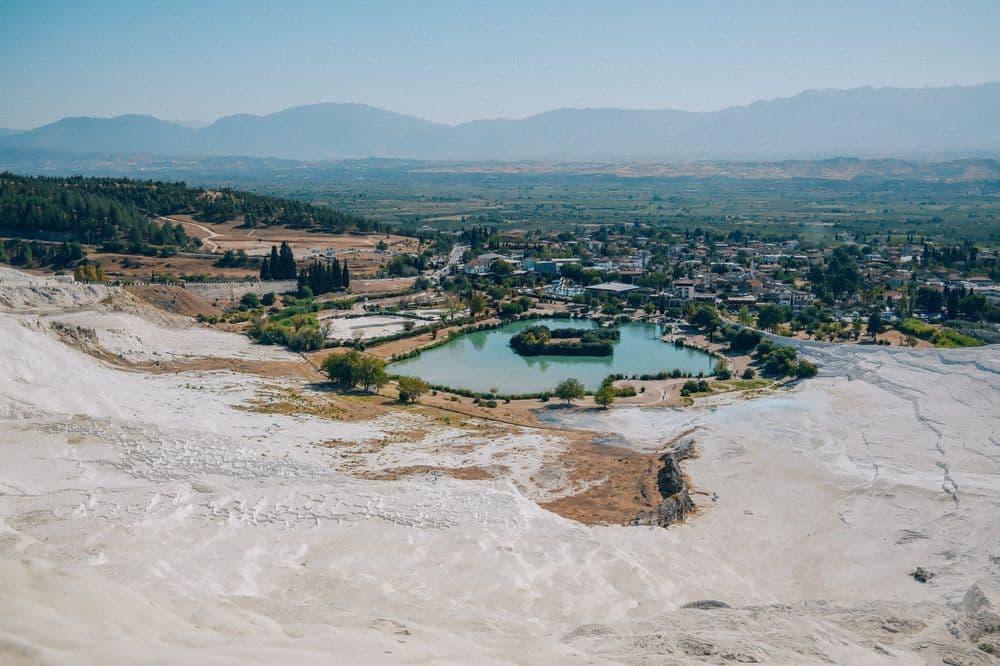
Most visitors say "Pamukkale," but you actually see two sites at once: the white **travertines** below and **Hierapolis Ancient City** directly above. Both sit inside the same ticketed area and are planned as a single visit, not two separate ones. The travertines are scenery and photos; Hierapolis is history and walking. Split your time accordingly: early on, the terraces are cool and quiet, while the ancient city makes more sense in the afternoon.
The Travertines: What to Expect, What Not to Do
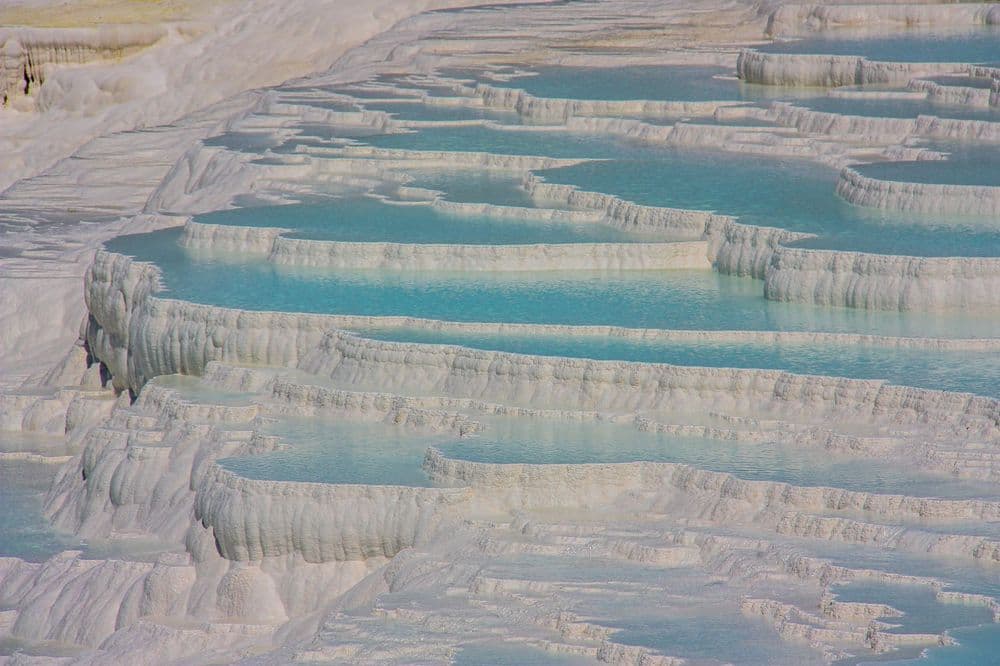
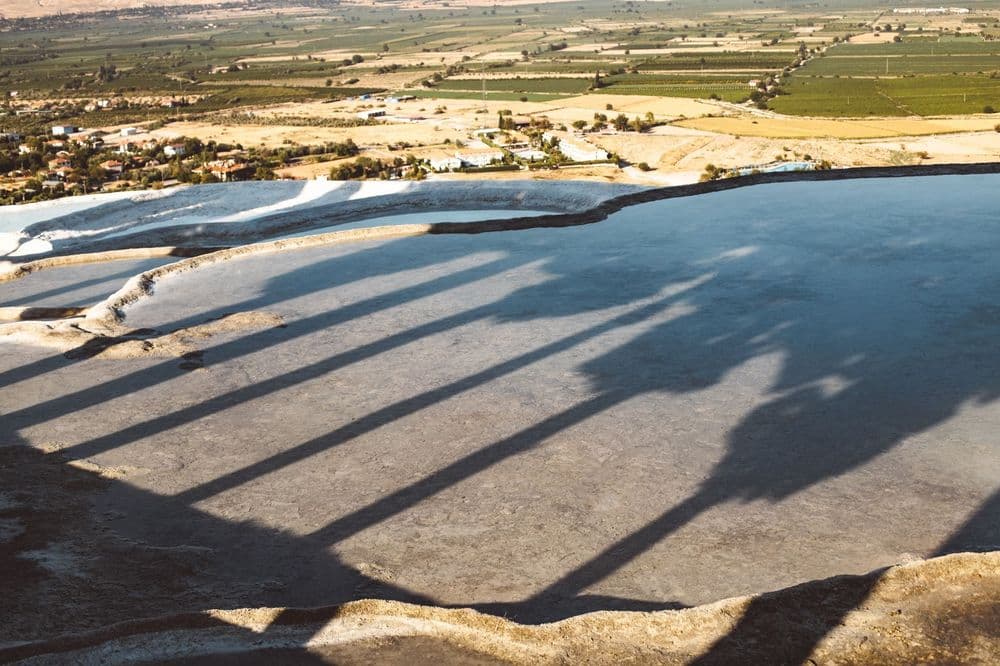
**Pamukkale's travertines** are white steps left by calcium-rich thermal water flowing down the hillside. For conservation you walk **barefoot** across the terraces. Shoes are not allowed. Water flow and the open pools you can bathe in change with the season and the day's rules; not every step is full or walkable. Read the **official signs** for where to step and stay on the marked route.
Wet stone can be slippery, so don't rush. Midday sun is both harsh and blows out the white in photos; **sunrise and sunset** are best for light and crowds alike.
Hierapolis Ancient City
Built above the travertines, **Hierapolis** is a spa-and-temple city that grew around the thermal springs. It is large with limited shade, so water, a hat and comfortable shoes are essential.
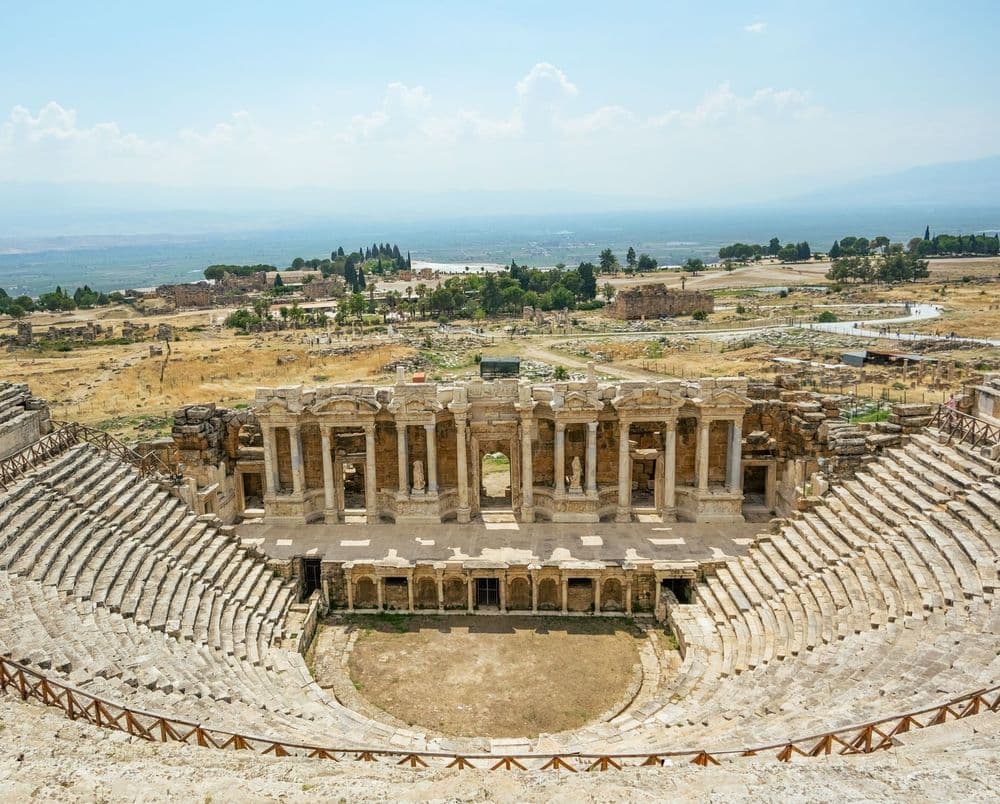
- **Hierapolis Theatre:** The most impressive structure on site; worth seeing for its stage reliefs and scale.
- **Pluto's Gate (the Plutonium):** A verified spot once dedicated to the underworld god, known for its natural gas emissions. Strictly respect the barriers and warnings.
- **The Antique Pool:** Swimming in the thermal pool inside Hierapolis, along with tickets and hours, changes from time to time; there may be a separate fee and capacity limit. Confirm your plan on the **official museum page**.
Don't reduce the site to a quick photo lap; giving time to the theatre, city gates and necropolis makes Hierapolis far more rewarding.
Tickets, Hours and Entrance Gates
Pamukkale–Hierapolis has **several entrance gates** (such as the lower/south and upper/north gates). Which gate you use decides whether you see the travertines or the ancient city first, and the walking distance from the car park varies by gate. Because ticket prices, opening hours, night-museum schedules and antique-pool conditions can change, check the **Turkish Ministry of Culture and Tourism's current museum/site page** before you go. Confirm Museum Pass (Müzekart) validity from the same source.
Best Time to Visit
- **Spring (April–June) and autumn (September–October):** Balanced heat and crowds; the ideal window.
- **Summer:** The travertines and Hierapolis are shadeless; avoid midday and drink plenty of water.
- **Winter:** Quieter and pleasant for thermal water, but days are short; watch the weather.
- **Time of day:** Opening time or close to closing is the way to dodge both tour-bus crowds and heat.
Adding Karahayıt and Laodikeia the Same Day
If you have time, two stops very close to Pamukkale round out the trip:
- **Karahayıt Red Water:** A thermal spot where iron-rich water leaves red deposits; the area's thermal hotels are also an accommodation alternative.
- **Laodikeia Ancient City:** Near central Denizli, an important archaeological site with broad streets and early-church remains; open sections vary as excavation continues.
The nearby **Akhan Caravanserai** (Seljuk stonework) can be added as a short history break along the way.
Practical Notes
- Seeing the terraces and ancient city together at a relaxed pace takes **3–5 hours**; more if you use the antique pool.
- Bring water, sunscreen, a hat and a bag to carry your shoes while walking barefoot across the terraces.
- Learn the rules for tripods and drones in advance; there may be restrictions inside the protected area.
Treating Pamukkale as only a photo of white steps is the most common mistake. Add Hierapolis, the theatre and the cultural history of the thermal water, and the visit becomes a much more meaningful day.
Planning questions
What does this Denizli guide cover?
Plan the Pamukkale travertines and Hierapolis Ancient City with the theatre, Pluto's Gate, the antique pool, tickets, entrance gates and the best time to visit.
Can I watch a 4K walking tour of Denizli?
Yes. The page links to Travel Walk Tours films so you can preview the Denizli route on a big screen before you go.
How should I use this page to plan?
Read the quick answer first, skim the route notes, then compare street texture, timing, and nearby guides through the linked city page and walking films.