A complete Denizli guide connecting Pamukkale's travertines, Hierapolis, Laodikeia, Karahayıt red water, Kaklık Cave and Honaz Mountain with realistic itineraries.
Walk this route
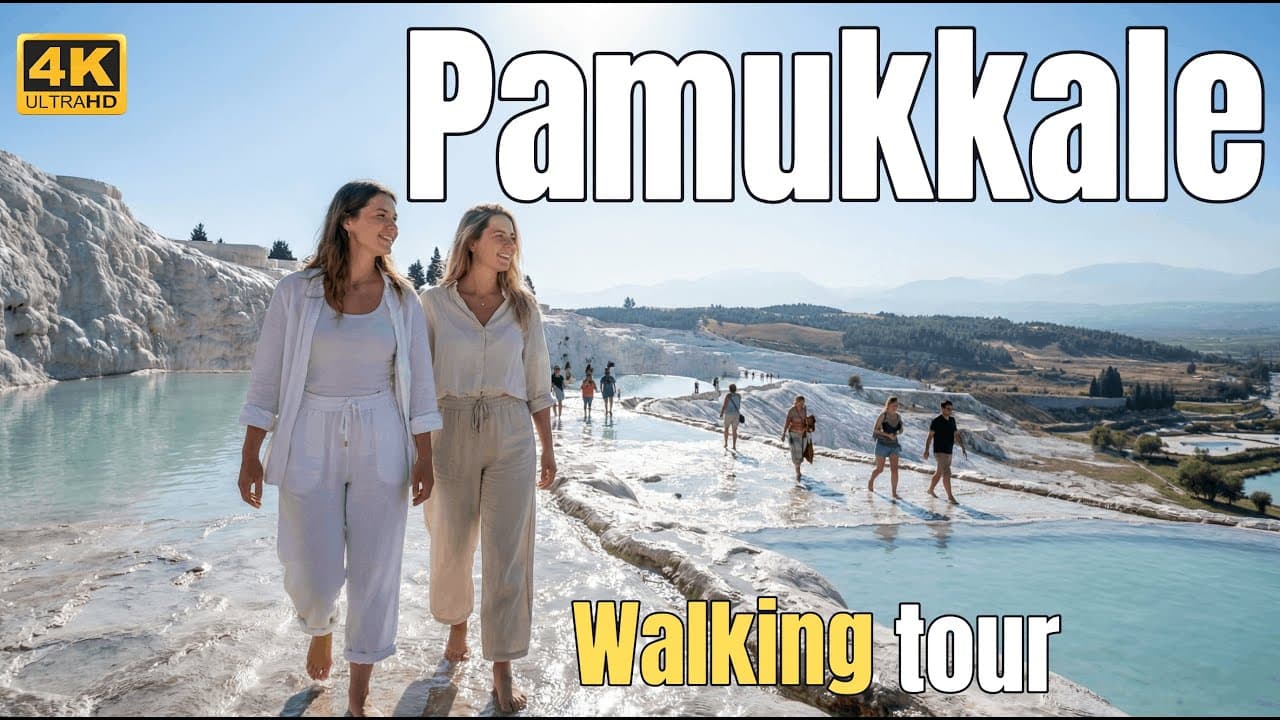
Pamukkale, Türkiye Walking Tour 4K - Stunning White Terraces of Turkey’s Cotton Castle
Watch the 4K walkPlaces on the map
14 pinsNumbers match the order in the article. Tap a pin for directions.
Is Denizli only about Pamukkale?
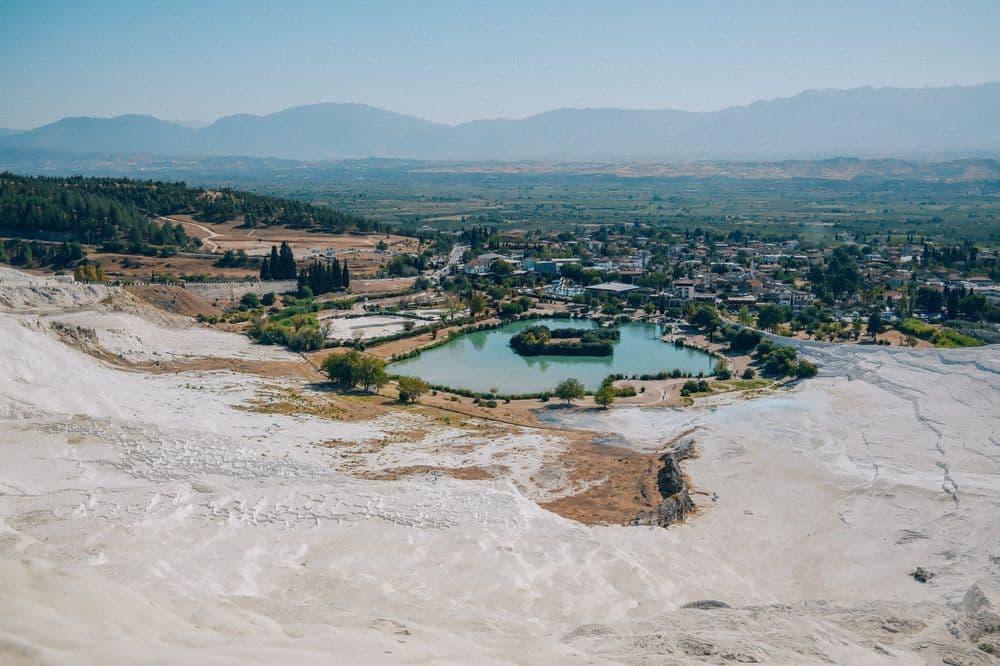
Say "Denizli" and the white travertine terraces come to mind first; but the province is far more than its icon. Inside the same borders sit the huge archaeological field of Hierapolis, the early-Christian remains of Laodikeia, the red thermal water of Karahayıt, the forests of Honaz Mountain, the weaving looms of Buldan and a Bronze Age mound out in Çivril. You can see Pamukkale in a day; thinking of the region as three layers, history, thermal and nature, produces a far better plan.
This guide has 14 numbered stops. The numbers match the pins on the map below, and tapping a pin opens the related guide where one exists. Distances are measured as the crow flies from the travertine entrance. Hours, tickets and pool conditions change; confirm on the official museum/site page before you go. Price marks are relative: ₺ budget, ₺₺ mid, ₺₺₺ expensive.
One warning: Pamukkale looks close to the bus terminal, but summer heat, tour-bus waves and connection times stretch the day. Base yourself where you will spend the most time.
Things to do in Denizli and Pamukkale
1. The Pamukkale travertines
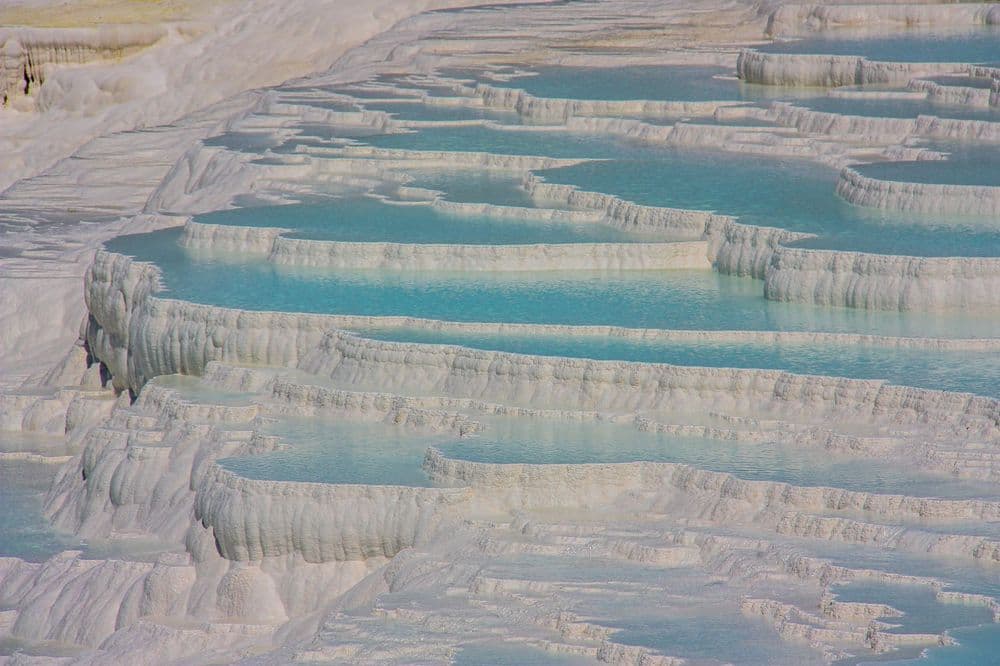
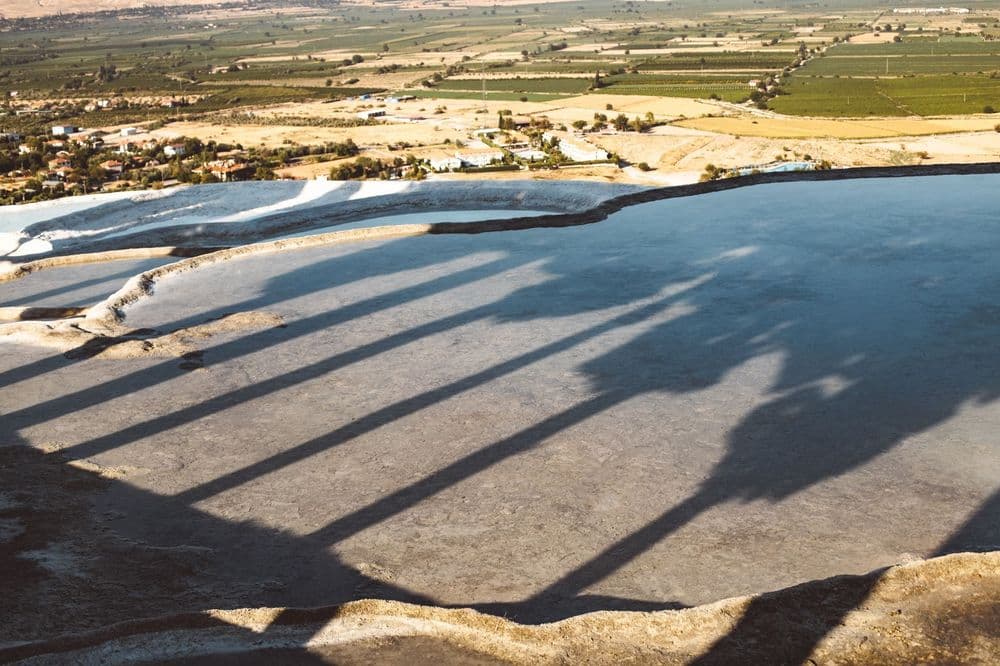
White terraces laid down by calcium-rich thermal water, among Turkey's most photographed views and, together with Hierapolis, a UNESCO World Heritage site since 9 December 1988 (both natural and cultural; reference 485). You walk the terraces barefoot; shoes are banned. Water flow and the open pools change with season and the day's rules; stay on the marked route.
- Getting there: On foot from Pamukkale village to the lower gate; ~20 min by minibus from central Denizli.
- Time: 1-1.5 hours for the terraces; half a day with Hierapolis.
- While you're here: Hierapolis (no. 2) shares the same ticketed area; they are one visit.
- Budget: ₺₺ (one ticket covers terraces and site; check Museum Pass validity officially).
- Common mistake: Going at noon. The white ground doubles the sun; sunrise or sunset is cooler and photographs far better.
2. Hierapolis Ancient City
The spa-and-temple city above the terraces, founded by **Eumenes II** of Pergamon in the 2nd century BC. After the great earthquake of 60 AD the city was rebuilt in full Roman fashion; most of what you walk through today is that renewal. Its necropolis holds more than two thousand documented tomb monuments, one of the largest ancient cemeteries in Anatolia. The apostle **St. Philip** was martyred here around 80 AD, and the martyrium built in his name made Hierapolis an early Christian centre. The site is vast and shadeless; water, a hat and good shoes are essential.
- Getting there: Same ticket as the terraces; north and south gates set your route.
- Time: 2-3 hours; more with the antique pool.
- While you're here: The theatre (no. 3) and the Plutonium (no. 4) are inside the site.
- Budget: included in the site ticket; the antique pool costs and rules extra.
- Common mistake: Shooting the terrace photo and skipping the city; the real story is up here.
3. The Hierapolis theatre
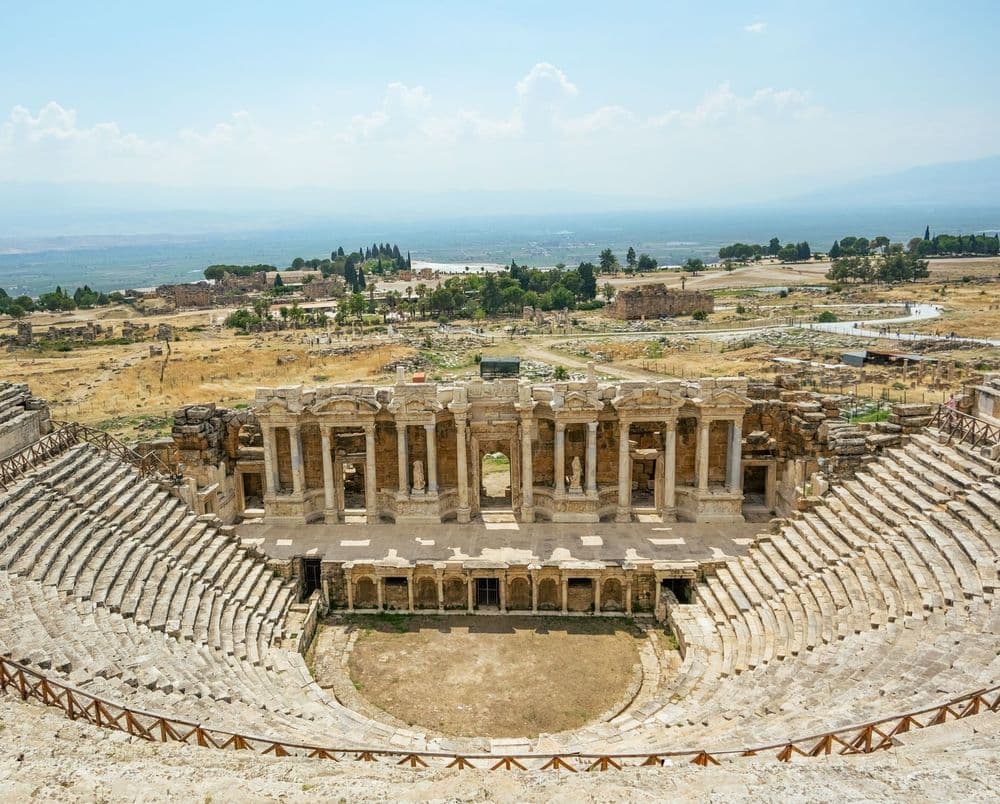
The site's grandest structure: roughly 9,500 seats, with the stage building's reliefs largely in place. Working back from that capacity, researchers put the city's population near one hundred thousand; the step you sit on belonged to a major metropolis of Roman Anatolia.
- Getting there: Inside Hierapolis, up the slope; a 15-20 minute walk from the gate.
- Time: 30-45 minutes.
- While you're here: The Plutonium (no. 4) is below; St. Philip's martyrium on the hill.
- Budget: included.
- Common mistake: Giving up on the climb; the view and the reliefs repay it with interest.
4. Pluto's Gate (the Plutonium)
One of the ancient world's eeriest addresses: a sanctuary of the underworld god, famous for its toxic gas seep. Ancient writers told of priests who withstood the fumes as if by miracle; today the spot is fenced, and should stay that way. Short, chilling, memorable.
- Getting there: Inside Hierapolis, beside the Temple of Apollo.
- Time: 15 minutes.
- While you're here: The theatre (no. 3) is just above.
- Budget: included.
- Common mistake: Leaning past the barrier; the gas is real, not legend.
5. Karahayıt red water
Four kilometres north of Pamukkale, a thermal spring whose iron-rich water lays down red-orange deposits: the white terraces' red sibling. The area around it is the thermal-hotel district, which makes it the natural base for a spa-led stay.
- Getting there: 10 minutes by minibus from Pamukkale village; 4 km as the crow flies.
- Time: An hour at the spring, plus a thermal pool if you like.
- While you're here: The travertines (no. 1) are on the way back.
- Budget: spring ₺; hotel day-use pools ₺₺.
- Common mistake: Expecting white terraces; this is a different colour and a more local scene.
6. Laodikeia Ancient City
Near central Denizli, a vast site of broad colonnaded streets, two theatres and early church remains. One of the Seven Churches of the Book of Revelation stood here, which keeps it firmly on the faith-tourism map. Excavation continues and open sections vary.
- Getting there: On the Pamukkale-Denizli road; 10 km as the crow flies.
- Time: 1.5-2 hours; the site is big, budget for walking.
- While you're here: Akhan caravanserai (no. 7) is 3-4 km on.
- Budget: ₺ (check current entry terms officially).
- Common mistake: Squeezing it into a spare half hour after Pamukkale; those street lengths are serious.
7. Akhan caravanserai
A Seljuk-era caravanserai with fine stonework, a fifteen-minute stop on the Denizli-Pamukkale road that stays in the memory; it reminds you the caravan route once crossed this plain.
- Getting there: On the Denizli-Pamukkale road; 11 km as the crow flies.
- Time: 15-20 minutes.
- While you're here: Laodikeia (no. 6) shares the route.
- Budget: ₺.
- Common mistake: Not knowing it exists; watch for the sign, it passes quickly.
8. Kaklık Cave
In Honaz district, a cave nicknamed the "underground Pamukkale" for its travertine formations: a miniature of the white terraces inside a sinkhole, with steam and running water for company. Not a repeat of Pamukkale; a curious variation on it.
- Getting there: ~35 minutes by car; 24 km as the crow flies.
- Time: 45 minutes to an hour.
- While you're here: Honaz Mountain (no. 9) is in the same district.
- Budget: ₺.
- Common mistake: Treating it as a substitute for Pamukkale; it is an extra stop, not an alternative.
9. Honaz Mountain National Park
The national park on the slopes of Honaz, one of the Aegean's highest summits at over 2,500 m: black-pine forest, trails and cool air, with Saklıgöl as a calm stop nearby. The one-move escape from travertine crowds.
- Getting there: ~50 minutes by car; 32 km as the crow flies.
- Time: A half-day walk.
- While you're here: Kaklık Cave (no. 8) is on the way back.
- Budget: ₺ (check seasonal park rules).
- Common mistake: Hitting the trail in city shoes; this is a real mountain.
10. Güney waterfall
In the province's north, a waterfall dropping into a green valley among vineyards; Denizli's classic picnic-and-photos outing. Flow varies with the season, fullest in spring.
- Getting there: ~45 minutes by car; 23 km as the crow flies.
- Time: 1-2 hours plus the drive.
- While you're here: Tripolis (no. 11) can join the same northern loop.
- Budget: ₺.
- Common mistake: Expecting a torrent in late August; the water keeps a calendar.
11. Tripolis Ancient City
Near Buldan on the Menderes, a site that excavation makes more visible every year: a colonnaded street and mosaics that earn it the nickname "Laodikeia without the crowds". Pair it with Buldan's weaving bazaar for a day of ruins plus loom-side shopping.
- Getting there: ~40 minutes by car; 20 km as the crow flies.
- Time: 1-1.5 hours; half a day with Buldan.
- While you're here: Buldan's weaving bazaar is 15 minutes; Güney waterfall (no. 10) fits the loop.
- Budget: ₺.
- Common mistake: Buying Buldan cloth without checking labels; hand-loom and machine work should not cost the same.
12. Işıklı Lake
A shallow lake on the Çivril plain, loved by photographers and patient travellers for its reeds and birdlife. You are in the headwaters of the Menderes here. Nearby, the **Beycesultan mound** holds Bronze Age layers older than the Iliad.
- Getting there: ~1 hour 15 by car; 76 km as the crow flies.
- Time: A half or full day with Beycesultan.
- While you're here: Beycesultan is 10-15 minutes away.
- Budget: ₺.
- Common mistake: Expecting a swimming lake; this is a lake of reeds, birds and stillness.
13. Keloğlan Cave
In Acıpayam, a show cave of stalactites and stalagmites with a short, easy, lit walkway. Its cool air is reason enough on a summer noon.
- Getting there: ~1 hour 10 by car; 68 km as the crow flies.
- Time: 45 minutes plus the drive.
- While you're here: It links into a southern loop across the Acıpayam plain.
- Budget: ₺.
- Common mistake: Giving it a day of its own; plan it as a stop on the southern route.
14. İncegiz Canyon
Hidden in Kale district in the province's south-west: rock walls, a stream bed and almost no tourists, one of Denizli's least-known nature cards. The walk is partly trail-less and wants some experience.
- Getting there: ~1.5 hours by car; 65 km as the crow flies.
- Time: Half a day.
- While you're here: Hard to combine with the southern loop (no. 13) in one day; plan it separately.
- Budget: ₺.
- Common mistake: Going unprepared; take water, proper shoes and a firm turnaround time.
Which stop for whom
- First visit: travertines (1) and Hierapolis (2-4); the non-negotiable classic
- History lovers: Laodikeia (6), Tripolis (11), Beycesultan (by 12)
- Thermal: Karahayıt (5) plus the spa hotels
- Nature and cool air: Honaz (9), Kaklık (8), Güney waterfall (10)
- Escaping crowds: İncegiz (14), Işıklı (12), Keloğlan (13)
- Faith tourism: the martyrium at Hierapolis (2), the Laodikeia church (6)
Five minutes of regional history
This plain is named by water: the Menderes and its branches wove lime into the slopes and built the terraces. **Eumenes II** founded Hierapolis in the 2nd century BC; after the earthquake of 60 AD the city was reborn in Roman form and grew rich on visitors chasing the healing water; a necropolis of two thousand tombs is the stone punchline to "some never went home". The martyrdom of the apostle **Philip around 80 AD** made it an early centre of Christianity, and Laodikeia was one of Revelation's seven churches. In Seljuk times the caravan road crossed the plain (Akhan is its leftover), and under the Ottomans Denizli meant weaving; Buldan cloth still carries that loom tradition. In 1988 Pamukkale-Hierapolis entered the UNESCO list as both natural and cultural heritage; that double identity is the official notice that your visit should have two layers too.
A first-timer's two days
**Day 1, the classic:** The travertines (no. 1) near sunrise, before the heat and the buses. Then up into Hierapolis (no. 2): the theatre (no. 3), the Plutonium (no. 4), the antique pool if you wish. Lunch in Pamukkale village. Late afternoon at Karahayıt's red spring (no. 5); evening in a thermal pool.
**Day 2, the surroundings:** Laodikeia (no. 6) in the morning, Akhan (no. 7) on the way out. In the afternoon choose: nature via Kaklık (no. 8) and the Honaz foothills (no. 9), or history-and-shopping via Tripolis (no. 11) and Buldan's bazaar. End the evening in Denizli's Kaleiçi bazaar.
Add a third day for the far rings: Işıklı-Beycesultan (no. 12) or İncegiz (no. 14).
Classic mistakes
1. **Seeing Pamukkale at noon.** The white ground doubles the light; photos blow out and feet burn. Sunrise or sunset. 2. **Skipping Hierapolis.** The city above the terrace is what the ticket is really for; don't leave without the theatre. 3. **Forcing everything into one day.** Terraces plus Hierapolis already fill it; give Laodikeia the next morning. 4. **Assuming the antique pool is guaranteed.** Capacity and rules change; go early and check the official page if you are set on it. 5. **Paying hand-loom prices for machine cloth in Buldan.** Ask, touch, read the label. 6. **Planning the thermal part for August.** Spa season is winter and spring; nobody craves hot water in a heatwave. 7. **Underestimating the barefoot walk.** The travertine floor is rough and slick in places; take it slowly.
No sea; so where is the cool
Denizli has no coast but plenty of cool: Honaz's forest trails (no. 9), Kaklık's underground chill (no. 8), Keloğlan's cave air (no. 13) and the water-noise of Güney falls (no. 10). In a heatwave, shift the programme to that quartet and give the terraces the first hour of the day.
Day trips
**Aphrodisias:** ~1.5 hours by car. One of Anatolia's best-preserved ancient cities and UNESCO-listed; the sculpture school and the stadium justify the drive. This is Denizli's strongest day trip.
**Lake Salda:** ~1.5 hours toward Burdur. Marketed as "Turkey's Maldives" for its white sand and turquoise; protection rules have tightened, so check current access.
**The Dinar-Işıklı line:** A quiet inner-Aegean route via Çivril (no. 12); zero crowds, and the road view is the reward.
Planning questions
**How long does Pamukkale need?** At least half a day for terraces, Hierapolis and the theatre; a full day with the antique pool.
**Where to stay?** Pamukkale village for walking distance, Karahayıt for a spa stay, central Denizli for transport and variety; see our where-to-stay guide for detail.
**Are tickets and the pool current?** They change; the official museum/site page is the only reliable source, check before you go.
**Doable without a car?** The travertine-Hierapolis-Karahayıt triangle, comfortably by minibus. Laodikeia partly; Honaz, Buldan, Işıklı and the southern stops want a car.
**Worth it in winter?** Yes, and a good idea: empty terraces, pleasant thermal water, soft light. The price is short days and a cool wind.
**With children?** Keep the terrace walk short, Kaklık (no. 8) is the kids' favourite, and a Karahayıt pool saves the day.
Planning questions
What does this Denizli guide cover?
A complete Denizli guide connecting Pamukkale's travertines, Hierapolis, Laodikeia, Karahayıt red water, Kaklık Cave and Honaz Mountain with realistic itineraries.
Can I watch a 4K walking tour of Denizli?
Yes. The page links to Travel Walk Tours films so you can preview the Denizli route on a big screen before you go.
How should I use this page to plan?
Read the quick answer first, skim the route notes, then compare street texture, timing, and nearby guides through the linked city page and walking films.