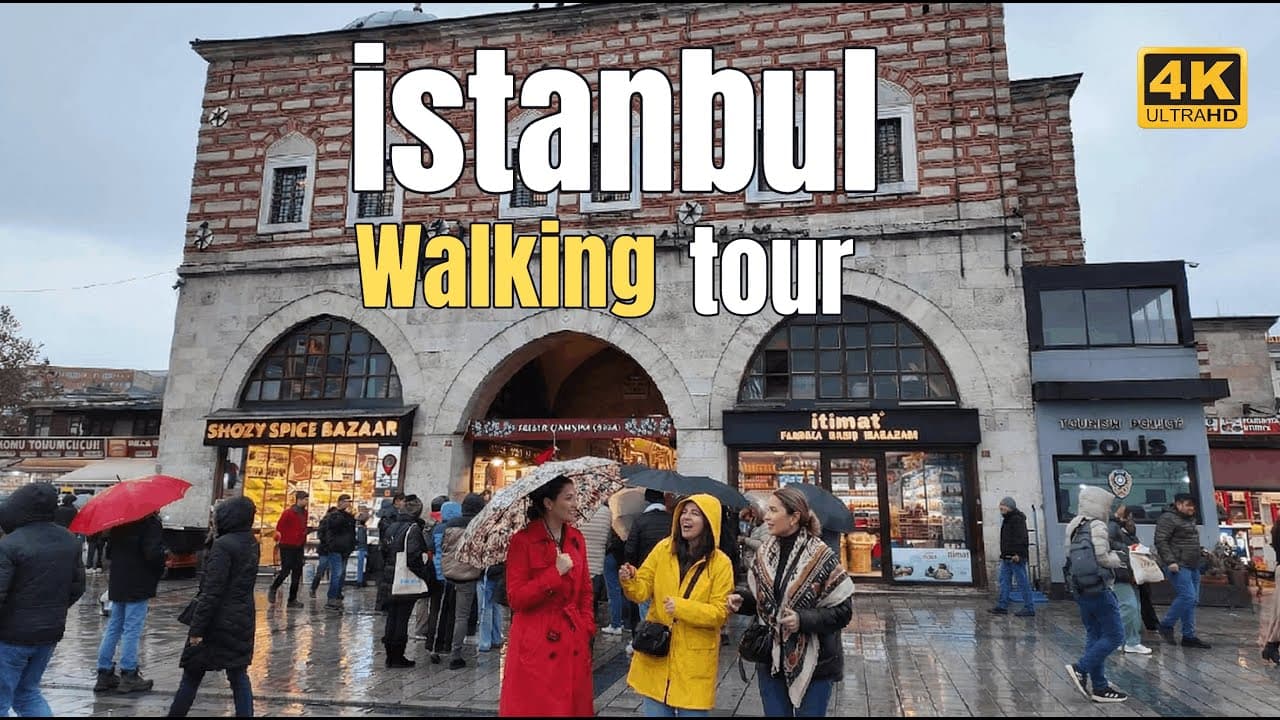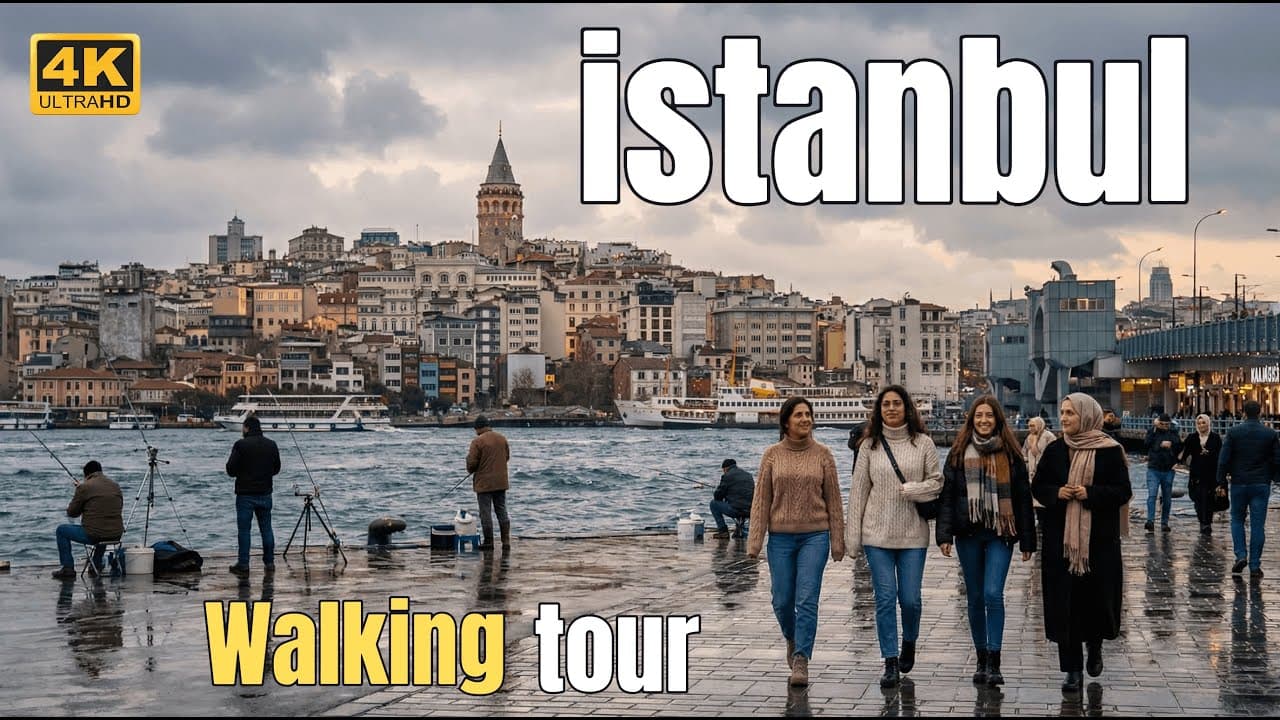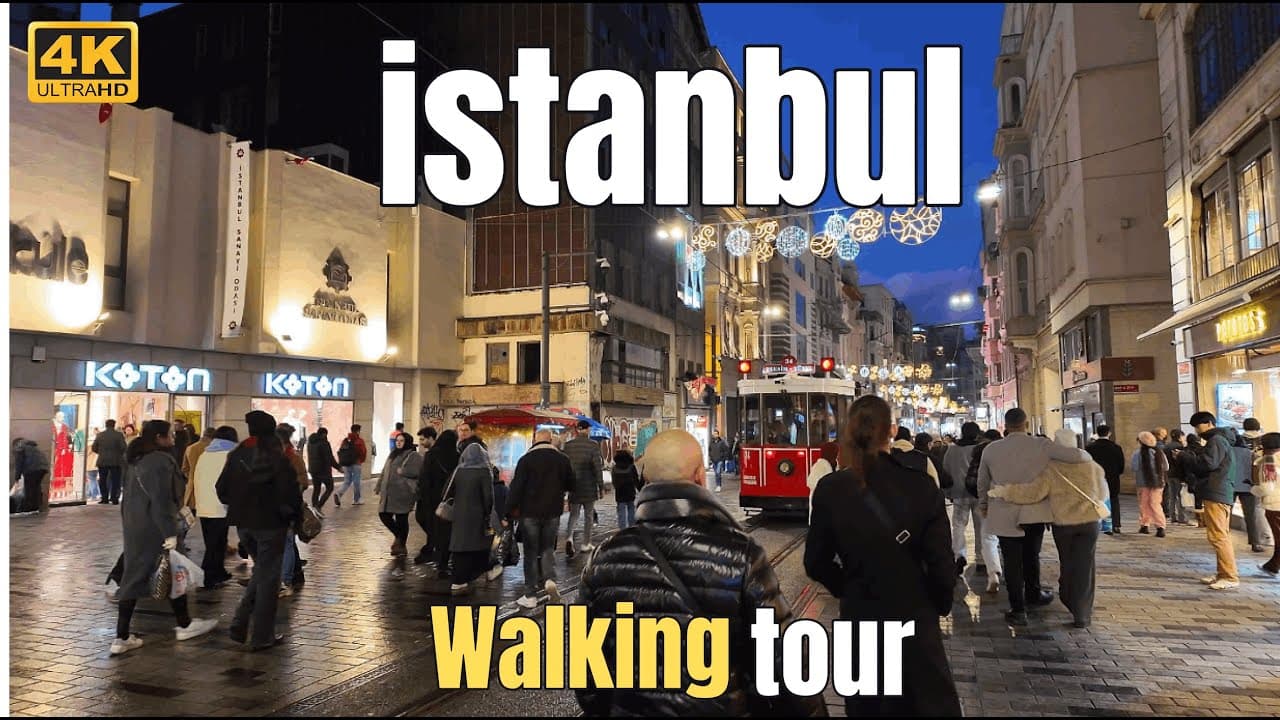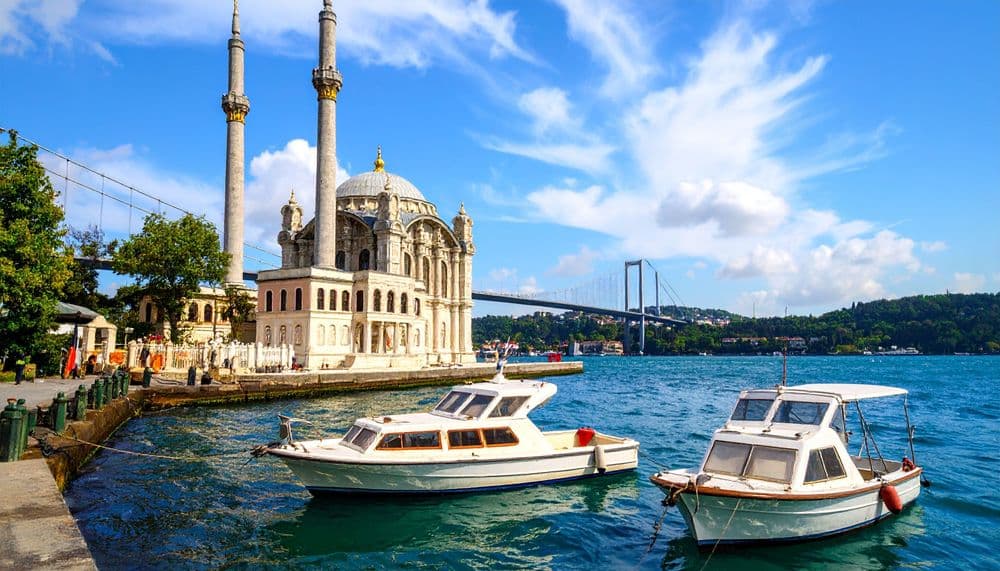
Plan Istanbul's historic peninsula area by area: Sultanahmet, Eminonu, Suleymaniye, Balat and Fener, with days, transport and a map.
Walk this route
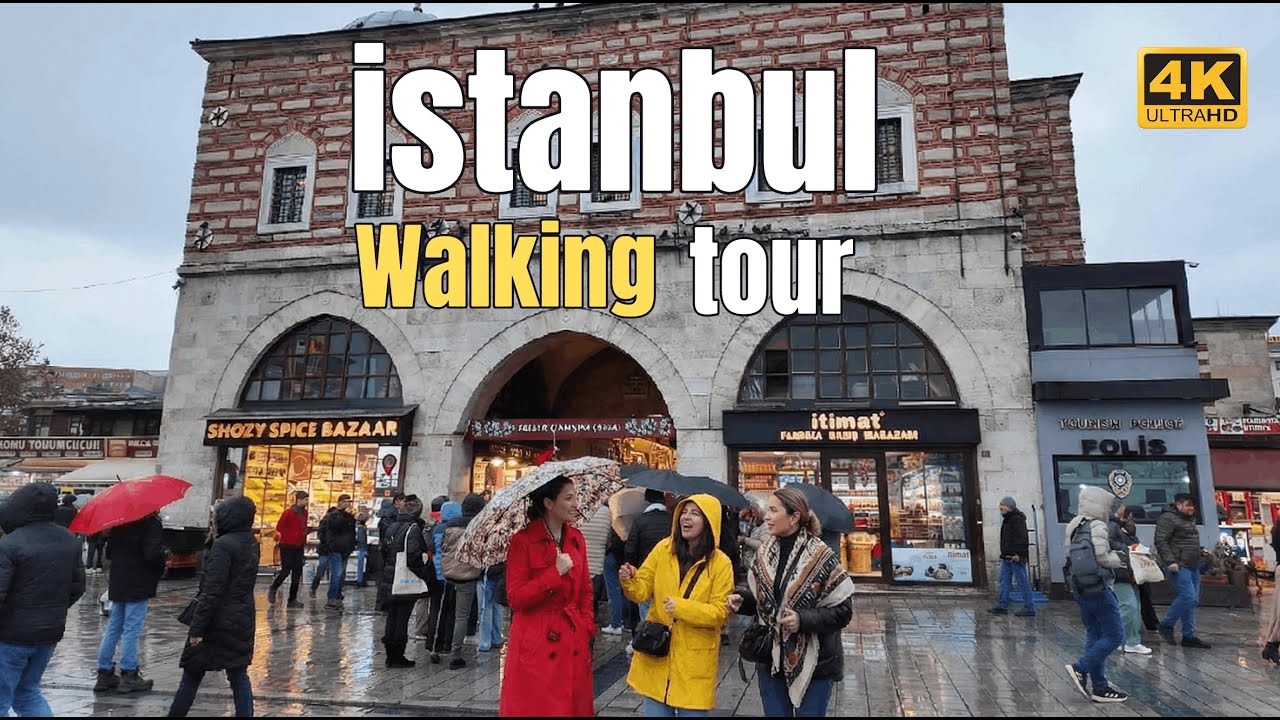
Istanbul Walking Tour 4K – Historic Streets, Crowded Bazaars & Timeless Atmosphere
Watch the 4K walkPlaces on the map
26 pinsNumbers match the order in the article. Tap a pin for directions.
Don't try to fit the historic peninsula into a few hours
Fatih is the walled old city of Istanbul, the whole peninsula between the Marmara and Golden Horn sea walls, running from the point at Sultanahmet out to the land walls. The Byzantine capital of Constantinople and the Ottoman capital that replaced it sat on the same seven hills, one layer on top of the other. The tram that passes in front of Hagia Sophia runs over fifteen centuries of city beneath it, and each hill carries a mosque, a church or a market that gives it meaning.
That is why Fatih is not one kind of visit. The monumental core clusters in Sultanahmet. Trade drops down to the Eminönü waterfront. Süleymaniye looks over the city from the third hill. Balat and Fener build their own texture on the Golden Horn slopes. All of this sits inside one district, Fatih, and the peninsula splits naturally into areas.
The most common mistake is cramming everything into a few hours, or seeing only Sultanahmet and thinking you have done the peninsula. Put Hagia Sophia, Topkapi, the Grand Bazaar and Balat on the same day and the visit turns into a sprint where none of them gets its due. A good plan splits the peninsula into areas and spreads them over two or three days. This guide gives the big picture and lays out the twenty-six numbered places on the map as walkable areas.
Quick answer
The historic peninsula is not one visit but a whole old city, best split into areas and spread over two or three days.
- Allow two or three days and focus each day on one or two areas: Sultanahmet, then the bazaars and Eminönü, then Süleymaniye with Balat and Fener.
- The T1 tram is the spine of the peninsula: Sultanahmet, Beyazıt and Eminönü sit on the same line and the stops are walkable.
- Dress modestly for mosques, take your shoes off, avoid prayer times; women cover their heads with a scarf.
- Tickets and hours change and mosques close for prayer times, so confirm officially.
1. Hagia Sophia
The heart of the peninsula and its oldest great monument. Opened in 537 under the emperor Justinian, it was the largest church in the Christian world for a thousand years, became a mosque after 1453, then a museum in the republican era, and is now a mosque again. Under the dome, Byzantine mosaics and Ottoman calligraphy stand side by side, and you see both layers at once. The interior is larger and dimmer than most visitors expect, and it is at its best in the early morning when light drops from above. As a working mosque it changes its visiting arrangements at prayer times, and women are asked to cover their heads. Queues grow through the middle of the day. Entry rules and fees changed recently, so confirm officially. The Blue Mosque faces it across the square, a few minutes on foot.
2. The Blue Mosque (Sultanahmet Mosque)
Directly across from Hagia Sophia, its six minarets define the skyline. Built for Sultan Ahmed I between 1609 and 1616, it is known in English as the Blue Mosque for the blue and green İznik tiles that line the interior. The courtyard is wide and open on several sides, and the prayer hall glows through hundreds of windows in daylight. As a working mosque it is visited outside prayer times, when the doors are given over to worship. You take your shoes off at the door and are handed a bag; women cover their heads, and scarves are available for those in short clothing. After a long restoration the interior is open again, though working areas may shift from time to time. Crowds thin out in the early morning or late afternoon. The Hippodrome runs along its western side.
3. Sultanahmet Square (the Hippodrome)
What looks today like a long, tree-lined square sits on top of the Hippodrome, the Byzantine arena for chariot races and public spectacle. Traces of the ancient structure still lie under the ground. Three monuments line the square: the Egyptian obelisk brought from Luxor, the twisted bronze Serpent Column from Greece, and the rough stone Column of Constantine. At the north end stands the German Fountain, a gift from Kaiser Wilhelm II. The square is open and free and can be walked at any hour, but there is little shade and it gets hot on summer afternoons. Early morning is both cool and quiet. The Blue Mosque and Hagia Sophia stand at either end, so three of these stops are really one walk. The Museum of Turkish and Islamic Arts sits at the southwest corner.
4. Topkapi Palace
On the crown of Seraglio Point, looking out to where the Golden Horn, the Marmara and the Bosphorus meet. Built by Mehmed the Conqueror, it was the seat of Ottoman government and the sultan's residence for roughly four hundred years. It is not a single building but a walled town of courtyards, pavilions and gardens; the treasury, the kitchens, the sacred relics and the sea-view kiosks are each visited in turn. The Harem section is usually a separate ticket. Seeing it properly takes an easy half day, so it should not be rushed. Arriving at opening is the way to beat both the crowds and the heat, as the courtyards fill toward midday. Tickets, the Harem add-on and closed days change, so confirm officially. A garden gate drops down to Gulhane Park, and the Archaeology Museums sit on the same slope.
5. The Basilica Cistern
A few steps west of Hagia Sophia, an enclosed water cistern sunk below street level. Built in the sixth century under Justinian to supply the city, its three hundred and more columns form a dim, cool, echoing hall. The two Medusa heads at the far end, one on its side and one upside down, are the most photographed corner. It stays cool even in summer, which makes it a good break from the hot midday hours. The floor is wet and the walkways can be narrow, so tread carefully. The recent lighting and sound scheme uses the space almost like a stage, which will feel like too much to some visitors and just right to others. Tickets, hours and occasional evening sessions change, so confirm officially. You come out back at the Hagia Sophia square.
6. Istanbul Archaeology Museums
On the slope between Topkapi Palace and Gulhane Park, a group of three buildings. Classical sculpture, sarcophagi, tilework and a strong ancient Near Eastern collection gather here; the carved stone tomb known as the Alexander Sarcophagus is among the best-known pieces. Unlike the busiest monuments of the peninsula, this is often a calmer visit, which makes it a good balance point for anyone worn down by the crowds. Sections may close for restoration from time to time, so not every hall will be open at once. The shaded garden is a good place to sit and rest. Tickets and open sections change, so confirm officially. From the same gate you can walk downhill into Gulhane Park and on to Seraglio Point.
7. Gulhane Park
Once the outer garden of Topkapi Palace, now a large public park open to everyone. Paths run under century-old trees, tulip beds bloom in spring, and the Bosphorus opens up from the slope, making this the easiest place to breathe on the peninsula. It is ideal for sitting between monument visits, drinking tea or having a picnic. The park is free and open through the day; it fills with locals at weekends and is quieter on weekday mornings. Paths at the upper end climb to Seraglio Point and a viewing terrace. In April, during tulip season, it is colourful but busy. The lower gate leads out to the tram line and toward Sirkeci, the upper gate to Topkapi and Hagia Sophia, so the park links two areas together.
8. Sarayburnu (Seraglio Point)
The northeast tip of the peninsula, the headland where the Golden Horn, the Marmara and the Bosphorus meet. Reached down the slope from Gulhane Park, it gives you Üsküdar, the Maiden's Tower and the far shore in one view. The Byzantine and Ottoman palaces were placed here for exactly this outlook, and it is no accident that ships round this point to enter the city. It is open, windy and free, and a good place to sit at sunset as the lights come on across the water. There are tea gardens and a walking path nearby. Tram and ferry piers are within walking distance, so this is both a rest and a transition point. From here you can walk along the shore to Eminönü and on to the bazaars.
9. The Cemberlitas Column and Bath
Standing in the middle of the road as the tram runs from Sultanahmet toward Beyazıt, this scorched red column goes back to 330, the year Constantine declared the city the new capital of Rome. Blackened by centuries of fire, it earned the local name Çemberlitaş, the hooped stone, for the iron bands that hold it together. Right beside it, the sixteenth-century bath designed by Sinan still runs as one of the city's working historic hammams. Seeing the column is free and takes a couple of minutes; a bath visit needs its own plan, and prices and sessions change, so confirm officially. This is the natural crossing point between Sultanahmet and the Grand Bazaar. A few steps on, Nuruosmaniye Mosque and its gate mark the entrance to the bazaar.
10. Nuruosmaniye Mosque
Right beside one of the grandest gates of the Grand Bazaar. Completed in the mid-eighteenth century, it is among the first major examples of the baroque style in Ottoman architecture; the plain lines of the classical period give way to curved stonework and a wide, bright interior. Its horseshoe-shaped courtyard stands out for an unusual plan. Despite sitting amid the crowd pouring in and out of the bazaar, the interior is usually calm and cool, so it offers a short escape from the noise of the shopping. As a working mosque it is visited outside prayer times, and the dress and shoe rules apply. Entry is free. One courtyard gate opens straight onto the bazaar's Nuruosmaniye gate, so the step between mosque and market is instant.
11. The Grand Bazaar
One of the oldest and largest covered markets in the world, a labyrinth of domed lanes founded under Mehmed the Conqueror and grown over the centuries. Its four thousand and more shops sell carpets, jewellery, ceramics, leather and spices, and the inner street names still carry the memory of the old guilds. Finding your way is hard, and that is really the nature of the place; getting lost is part of the visit. Prices are set by bargaining and the touristy main axes are the most expensive, while the side lanes are quieter and often better value. It is closed on Sundays and religious holidays and packed in the afternoons on open days. Early morning is both cooler and thinner. Out of the north gates, the way drops downhill toward the Spice Bazaar and Eminönü.
12. The Spice Bazaar
In Eminönü, next to the New Mosque, an L-shaped covered spice market. Built in the seventeenth century to fund the New Mosque complex, it takes its Turkish name, Mısır Çarşısı, from the Egyptian spice trade that once passed through. Today the stalls hold spices, nuts, Turkish delight, tea and cheese; the colour and scent are more concentrated than the Grand Bazaar, though the space is smaller. The main corridor is always busy and the sellers can be insistent; tasting is free, but it pays to compare prices. In the open streets around the market you will find cheaper stalls where locals actually shop. It is comparatively quiet on Sundays and easiest on weekday mornings. One gate opens onto the New Mosque courtyard, another toward Rüstem Pasha Mosque and the Galata Bridge.
13. Rustem Pasha Mosque
Raised a floor above the busy market lanes behind the Spice Bazaar, a small but extraordinary mosque. A work of Sinan, it is known for the dense İznik tiles that cover both the interior and the outer facade; red tulips, carnations and geometric patterns wrap the walls from top to bottom. Because it is small, you meet the architecture up close, with the tile detail at eye level. It is not easy to reach; a modest staircase off a market street climbs up to it, which is why many visitors walk past without noticing. As a working mosque it is visited outside prayer times, following the dress rules. It is free. Come back down and you are again at the Spice Bazaar and the foot of the Galata Bridge.
14. The New Mosque
On the square at Eminönü, right beside the ferry piers and the Galata Bridge, a large mosque. Its name means new, yet it was finished in the seventeenth century; the build stretched over half a century through wars and changes of reign, so it has a long story. The pigeons fed on its steps and the crowd passing in front make it the most familiar landmark in Eminönü. The interior is wide and bright, and the tilework carries the marks of its period. As a working mosque it is visited outside prayer times, and the dress and shoe rules apply. It is free. One side of its courtyard meets the Spice Bazaar while the front faces straight onto the Galata Bridge and the ferry piers, so this is the threshold between the bazaars and the water.
15. The Galata Bridge
The two-level bridge that crosses the mouth of the Golden Horn to join Eminönü and Karaköy. The present structure opened in the 1990s, but there has been a bridge at this point for centuries, and this is where the two shores of the city meet. On the upper deck, anglers line the rail with their rods all day; on the lower deck, fish restaurants and tea gardens face the water. Walking across gives one of the best views on the peninsula: the silhouettes of Süleymaniye and the New Mosque on one side, the Galata Tower on the other. It is windy and open, and a good time to walk is at sunset as the far shore turns red. It is free and open at any hour. From the Eminönü end you turn back to the bazaars and the New Mosque, and uphill to Süleymaniye.
16. The Suleymaniye Mosque
On the summit of the third hill, looking down over the Golden Horn and the city. Built by Sinan for Süleyman the Magnificent in the sixteenth century, it is one of the most dominant elements of the Istanbul skyline. The mosque is not alone but the centre of a complex: colleges, a bath, a soup kitchen and courtyards surround it. The interior is spacious, with balanced proportions and light falling from above, a work of Sinan's mature period. From the rear terrace of its courtyard, the Golden Horn, Galata and the Bosphorus open up together, a view worth the climb on its own. As a working mosque it is visited outside prayer times, following the dress rules; it is free. The old streets around it hold köfte places and student cafes. The way drops downhill toward the Valens Aqueduct and Şehzadebaşı.
17. The Valens Aqueduct
The stone aqueduct that cuts across the city and spans Atatürk Boulevard. Built in the fourth century under Roman rule to bring water into the city, the line stayed in use through the Byzantine and Ottoman centuries. Today a wide boulevard and its traffic run beneath it, so ancient engineering and the modern city are fully interwoven. The aqueduct stands in the open, is free and can be seen from outside at any hour; you do not go inside, but its scale, rising between two hills, is striking up close. The best angle for a photograph is from the edge of the boulevard, looking up under the arches. You reach it on foot downhill from Süleymaniye. The Sehzade Mosque sits on one side and the Zeyrek slope a little beyond, so this is the link between Süleymaniye and Fatih.
18. The Sehzade Mosque
Beside the Valens Aqueduct, a mosque notable for its balanced proportions. It is one of Sinan's early works, built in the mid-sixteenth century in memory of Şehzade Mehmed, the son of Süleyman who died young. Sinan looked back on it as an apprentice work on the road to his later great mosques, yet with its symmetrical plan and ornate courtyard it is a mature building in its own right. Its garden and tombs are quiet, and it takes far fewer visitors than the monumental core. As a working mosque it is visited outside prayer times, following the dress rules; it is free. For anyone worn down by the crowds of Sultanahmet, this area is a quiet balance point. From here you can walk toward the Fatih Mosque or up the Zeyrek slope.
19. Zeyrek (Molla) Mosque
On the Zeyrek slope, on a ridge facing the Golden Horn, a building that was in fact a Byzantine church. Built in the twelfth century as the church of the Pantokrator Monastery, it was turned into a mosque after the conquest and still serves that function today. Its brick-laid facade and the old floor pavings inside are among the comparatively few surviving traces of the Byzantine period. It is surrounded by old timber houses under UNESCO protection; the steep, narrow, authentic lanes show a non-touristy face of the peninsula. Restoration work can change access from time to time, so check whether it is open before you go. As a working mosque the dress rules apply, and it is free. Walking the old streets on the slope is worth it in itself; from here you drop to the Golden Horn shore and toward Balat.
20. The Fatih Mosque
On the fourth hill of the peninsula, the large complex that gives the district its name. Built in the fifteenth century for Mehmed the Conqueror, who took Constantinople, it was largely rebuilt in the eighteenth century after an earthquake, so the present building differs from the original. The mosque is the centre of a wide complex with its colleges, soup kitchen and the Conqueror's tomb, and it is still the heart of the neighbourhood's religious life. Compared with the mosques of Sultanahmet you see far fewer tourists and far more local congregation, so the atmosphere is more lived-in and less of a stage. The Wednesday market around it brings the area to life. As a working mosque it is visited outside prayer times, following the dress rules; it is free. From here you walk toward the Yavuz Selim Mosque and Çarşamba.
21. The Yavuz Selim Mosque
On a ridge overlooking the Golden Horn, a mosque that stands out for its plain, striking presence. Built in the early sixteenth century for Sultan Selim, its single wide dome and an interior that speaks through proportion rather than ornament make it a serene example of the classical period. The old water basin beside it and the view from its courtyard open onto the Golden Horn and the far slope. Being away from the tourist axes, it is often very quiet; this is for anyone wanting a thoughtful break from the crowds. As a working mosque it is visited outside prayer times, following the dress rules; it is free. The viewing terrace at the edge of the courtyard is a good spot for a photograph. From here the way drops toward Kadinlar Pazari and the Fener shore, so the mosque is the crossing between slope and shore.
22. Kadinlar Pazari (the market)
In the inner neighbourhoods of Fatih, near the Valens Aqueduct, a local market area around a small square. Despite its name, which means women's market, it is best known today for southeastern cooking, especially the restaurants with roots in Siirt; büryan kebab, perde pilavı and slow-cooked meat line the stalls here. Unlike the touristy bazaars, this is first of all a place where locals shop and eat, so it offers a genuine neighbourhood food experience. The square is busy through the day and liveliest at lunch and dinner. Prices are reasonable compared with Sultanahmet, and there is little pushy selling. Being an open area, it is free to walk through. From here you can head to the land walls, the Fatih Mosque, or downhill to Balat and Fener on the Golden Horn shore.
23. The colourful streets of Balat
On the Golden Horn slope, an old neighbourhood known for its painted houses and steep lanes. Home for centuries to Jewish, Greek and Armenian communities living side by side, Balat carries the traces of that mixed past in its synagogues, churches and old residential architecture. In recent years the colourful facades, cafes and antique shops have made it a photographers' favourite, which leaves the streets fairly crowded at weekends. It is at its best in the early morning, before the shops open and the tour groups arrive. The streets are steep and uneven, so comfortable shoes matter. As a neighbourhood it is free to wander, but it helps to remember that people live here and to be respectful when taking photographs. Fener, next to Balat, with the Patriarchate and the red school, is the continuation of the same walk.
24. The Ecumenical Patriarchate in Fener
Near the Fener shore, within a plain courtyard, the Ecumenical Patriarchate is the spiritual centre of Orthodox Christianity worldwide. The seat of the Greek Orthodox Church of Istanbul, it carries the tradition of the Patriarch of Constantinople, over a thousand years old, into the present. The main church of St George looks modest from outside but holds old icons, carved wood and religious objects within. This is not a tourist monument but a working religious centre, so quiet and respectful dress are expected, and visiting arrangements change during services. Entry is usually free, but hours can change, so confirm in advance. You reach it on foot from the colourful streets of Balat. Just up the slope, the large red-brick school building, the Phanar Greek College, marks the skyline.
25. The Phanar Greek College (the Red School)
On the Fener slope, a large school building whose red brick commands the Golden Horn view. Known locally as the Red School or the Red Castle, it was built at the end of the nineteenth century and is the most visible symbol of a Greek educational tradition that has continued for centuries. With its monumental facade, its tower-like mass and its hilltop position, it is one of the most recognisable silhouettes in the area. As a working school it is generally closed to visitors inside, but the outside view and the walk up the slope are worth it in themselves. The best photo angle is from the streets below, looking up. The building sits within a neighbourhood, and its surroundings are quiet and keep their local texture. From here you can continue uphill toward the land walls and the Chora Mosque.
26. The Chora Mosque and the land walls
Near the western end of the peninsula, just inside the land walls, a building that was in fact a Byzantine church. Built as the church of the Chora Monastery, it is counted among the most important examples of Byzantine art for the richness of its mosaics and frescoes dating to the fourteenth century; scenes from the lives of Christ and the Virgin cover the walls and domes from top to bottom. It was turned into a mosque after the conquest, served long as a museum, and was recently given the function of a mosque again; this change affects the visiting arrangements and the visibility of the mosaics, so confirm the current situation officially. It is far from the core, and reaching it needs a bus or taxi. Right beside it, the Theodosian land walls run on, the remains of the line that guarded the city for a thousand years.
How many days and how to see it
Spread the peninsula over two or three days and give each day one or two areas. Rushing is the biggest mistake; most of the monuments take a long time inside and the ground is hilly.
A suggested plan. **Day one, Sultanahmet.** Hagia Sophia, the Blue Mosque, the Hippodrome, the Basilica Cistern, Topkapi and the Archaeology Museums, then Gulhane and Seraglio Point. This area is a full day on its own, and Topkapi alone takes a half day.
**Day two, the bazaars and Eminönü.** From Çemberlitaş and Nuruosmaniye into the Grand Bazaar, then downhill to the Spice Bazaar, Rüstem Pasha, the New Mosque and the Galata Bridge. In the afternoon, uphill to Süleymaniye. The balance of shopping and mosques sits well on this day.
**Day three, Süleymaniye to Balat and Fener.** After the Valens Aqueduct, the Sehzade Mosque, Zeyrek, the Fatih Mosque and Yavuz Selim, eat at Kadinlar Pazari, then drop to the Golden Horn shore for Balat, Fener and Chora. This day takes the most walking, so comfortable shoes are essential. If you only have two days, shorten the second half of the third day, but keep Sultanahmet to a day on its own.
Getting there
The T1 tram is the spine of the peninsula and links the core areas: Sultanahmet, Çemberlitaş, Beyazıt (for the Grand Bazaar) and Eminönü sit on the same line, a few minutes apart. From most of the city you can connect to this line.
For anyone coming from the far shore, the ferry is the most enjoyable way; regular ferries run from Kadıköy, Üsküdar and Beşiktaş to Eminönü, and the pier lands you right at the foot of the bazaars and the New Mosque. Sirkeci connects to the European and Asian sides via the suburban train and the Marmaray.
Most of the areas are within walking distance of each other, but the ground is uneven and steep; Süleymaniye, Zeyrek and Balat mean steep lanes. Balat, Fener and Chora are far from the core, so a bus, a ferry along the Golden Horn or a taxi saves time getting there. Confirm current lines and hours officially.
Mosque and visiting etiquette
Most of the great monuments on the peninsula are working mosques, that is places of worship rather than tourist sites. A few simple rules are both a matter of respect and a way to make entry easier.
Dress modestly: clothing that covers the shoulders and knees suits both women and men. Women cover their heads with a scarf, and many mosques keep loan scarves and skirts at the entrance. You take your shoes off at the door, and in most places a bag is provided; you can carry your shoes in hand.
Avoid prayer times. There are five daily prayers, and during these, especially the Friday midday prayer, visiting either stops or the space is given over to worship. Keep quiet inside, do not walk in front of people praying, and ask permission if people are in the foreground of a photo. These rules apply to all working mosques, including Hagia Sophia, the Blue Mosque, Süleymaniye and Chora.
Frequently asked questions
**How many days should I allow for the historic peninsula?** At least two, and three for a relaxed visit. One day for Sultanahmet, one for the bazaars and Süleymaniye, and one for Balat, Fener and Chora is the way to see the peninsula without turning it into a sprint.
**Which area should I start with?** Sultanahmet. The monumental core gathers here and it is the place that takes the most time; it is best to arrive early and see Topkapi and Hagia Sophia before the crowds build.
**Is one day enough?** For the whole peninsula, no. In a single day you can only do the Sultanahmet core justice. If you have one day, focus on Hagia Sophia, the Blue Mosque, the Basilica Cistern and Topkapi and leave the rest for another time.
**What is the dress code for mosques?** Shoulders and knees should be covered, and women cover their heads. Most mosques keep loan scarves and skirts at the entrance, and shoes come off. Visiting arrangements change during prayer times.
**What is the best time to avoid crowds?** Early morning and late afternoon. The monuments are thinnest at opening and fill toward midday. Weekdays are quieter than weekends; the Grand Bazaar is closed on Sundays, and some mosques close to visitors during the Friday midday prayer.
Explore nearby towns and neighbourhoods
Planning questions
What does this İstanbul guide cover?
Plan Istanbul's historic peninsula area by area: Sultanahmet, Eminonu, Suleymaniye, Balat and Fener, with days, transport and a map.
Can I watch a 4K walking tour of İstanbul?
Yes. The page links to Travel Walk Tours films so you can preview the İstanbul route on a big screen before you go.
How should I use this page to plan?
Read the quick answer first, skim the route notes, then compare street texture, timing, and nearby guides through the linked city page and walking films.